Jackson County has been rocked by another round of federal criminal charges stemming from bribery allegations involving current and former officials.
These charges seem to resemble and could potentially give context to corruption claims that surfaced this summer around county real estate projects. More broadly, they raise questions about how prevalent the type of cronyism alleged in the court filings has been in the county government in the months before new leaders are set to take over.
A federal grand jury indictment unsealed last week accuses John Carnes, a former Jackson County legislator and Independence attorney, of engineering a scheme to bribe an unnamed county legislator over the summer to support a development project on an abandoned county property.
It’s the second criminal case relating to the Jackson County government to materialize in the last four months. Authorities unsealed an indictment against interim County Executive Phil LeVota in August, alleging he illegally offered government jobs to influence this year’s county executive race.
The two indictments are separate and only charge Carnes and LeVota, respectively. However, descriptions of unnamed parties in the court filings suggest a potential investigatory overlap: LeVota’s indictment outlines interactions with two unnamed people, “Individual 1” and “Individual 2,” while the indictment against Carnes details exchanges with four more people starting with “Individual 3” through “Individual 6.”
Details in the case against Carnes hew closely to high-profile and widely publicized allegations that Jackson County Legislator Manny Abarca made earlier this summer. Abarca publicly claimed that a legislative aide offered him a political contribution of $10,000 to $50,000 to support a developer’s housing project, and that another legislator, DaRon McGee, had accepted $50,000 under similar circumstances.
The charging documents against Carnes do not name Abarca or McGee, but they illustrate how a $50,000 sum might have moved around in an effort to influence multiple county real estate deals and legislative processes this year. They also show how the public bidding process officials use for selling and redeveloping county-owned properties could have been vulnerable to undue outside influence.
Fallout from the cases will loom over Jackson County government as County Executive-elect Stacy Lake and a slate of newly elected legislators take office in January after running campaigns focused on rebuilding public trust.
Charges against John Carnes
Carnes, 71, of Sugar Creek, faces felony counts of honest services fraud, federal program bribery and Travel Act violations. If convicted, the former county legislator faces up to 20 years in prison.
The new indictment is not the first, or second, but the third filed against Carnes over his more than 40 years of involvement in Independence and Jackson County politics. In 1989, he admitted to bank fraud and paying a bribe to an Independence councilman for a favorable zoning vote. He served two years of a five-year prison sentence.
Carnes was still in custody in Leavenworth finishing his sentence from his second set of federal charges — after pleading guilty to tax evasion in 2024 — when the events described in this latest indictment allegedly took place. He was released in September.
The Beacon tried to reach Carnes for comment on Monday. An automated voicemail for his cell number advised that phone calls would not be returned, and a previous email address produced an “address not found” response.
The new charging documents allege that Carnes schemed to advance real estate projects that he would profit from in Jackson County, starting in May and stretching through July.
In May, Carnes allegedly started talking with an unnamed real estate developer deemed “Individual 3” about how to move their projects forward quickly due to “the changing composition of the Jackson County government.”
Charging documents say the two discussed falsely portraying their projects as headed by a minority or women-owned firm as “a PR thing,” and working with another unnamed person with apparent ties to Jackson County officials called “Individual 4” to help bribe a legislator to garner support for the projects. The person called “Individual 4” allegedly offered that bribe in mid-July.
While it was a separate series of events, the timeline laid out in Carnes’ case falls right in the middle of when the federal case against LeVota was also playing out. LeVota’s case revolves around a conversation in March between LeVota and another official whom LeVota has identified as McGee, during which LeVota allegedly offered McGee a county job in exchange for dropping out of the county executive race.
LeVota’s indictment became public in early August. He has pleaded not guilty, insisting his actions amounted to “political logrolling,” not bribery.
A developer with ‘intertwined’ history
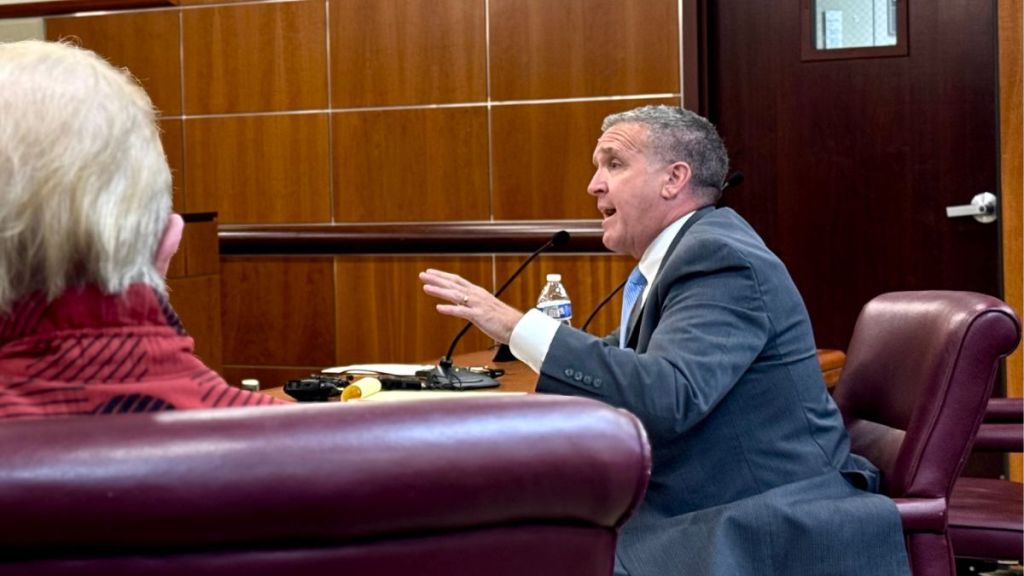
The charging documents against Carnes describe a meeting on July 2 between Carnes and someone described as “Public Official A” that revolved around real estate projects that Carnes was working to advance with an unnamed developer.
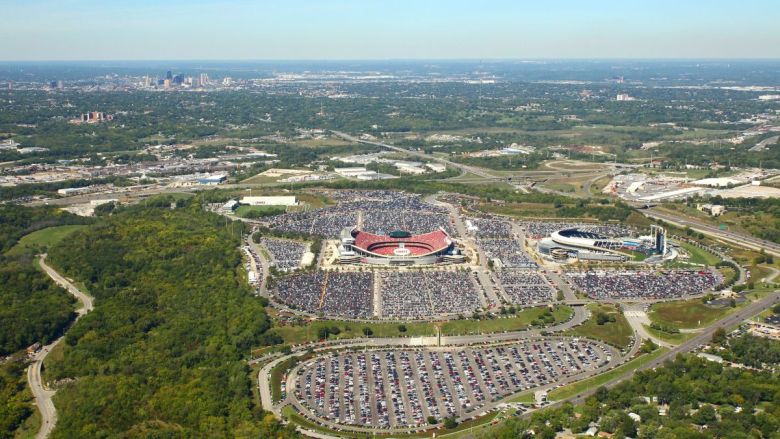
In a phone call Monday, LeVota told The Beacon that he met with Carnes in July and discussed two development projects on county-owned properties — an inactive project involving affordable housing near the Truman Sports Complex and another at the shuttered McCune School for Boys in Independence.
The indictment says that Carnes was working alongside “Individual 3,” a real estate intermediary, to advance projects at both of those sites. One of the projects, according to the charging documents, called for a lake at the old McCune School site. The documents said “Individual 3” submitted a bid to buy and redevelop that site in late August.
The Beacon filed an open records request with Jackson County to obtain documents relating to the McCune site, including all respondents’ bid submissions. A bid summary listed Pate-Campbell Properties, owned by Olathe developer Joseph Campbell, as the only qualifying respondent. Its submission in late August pitched a “lake community surrounded by affordable housing” in place of the school.
The charging documents say that “Individual 3” also discussed “intertwined” family history with Carnes.
Carnes and Campbell go back a number of years, according to past reporting. Campbell previously drew attention in 2017 after another of his companies, Titan Fish, sold Independence a former golf club for almost twice what it had paid a few months earlier. Years later, in 2024, Carnes said that income concealed in his tax evasion case included a commission earned for legal services during that golf club sale.
On the phone Monday, LeVota told The Beacon that Pate-Campbell Properties was also the developer behind the inactive housing project near the stadiums that LeVota had discussed with Carnes over the summer.
According to the charging documents against Carnes, that project stalled in the Jackson County Legislature earlier this year because of scrutiny from a prior criminal indictment against “Individual 3.”
Last December, Campbell was federally indicted in Kansas on counts of wire fraud, money laundering and making false statements about $2 million in funds received through pandemic-era loan programs. He has pleaded not guilty and has not been convicted of a crime.
The day after Campbell was indicted, Pate-Campbell Properties submitted a bid to build a “comprehensive affordable housing project” on county land near the Truman Sports Complex, the Kansas City Business Journal reported earlier this year.
Pate-Campbell’s affordable housing submission had internally scored the lowest out of four entries, but legislators still considered granting a valuable 99-year land lease to the firm in February. Legislators tabled the measure after some raised concerns of a rushed process. McGee was the lone vote against tabling.
Reached by phone Monday, Campbell declined to comment on the indictment against Carnes or the projects described in the charging documents.
‘The same $50,000’
Just because county legislators tabled that proposed affordable housing project near the stadiums does not mean it went quietly into the night.
The Carnes indictment says that between May 13 and July 14, Carnes, the real estate intermediary “Individual 3,” and “Individual 4” discussed how to leverage $50,000 in the intermediary’s control to secure favorable legislative votes on their real estate projects.
On July 13, “Individual 4” messaged an unnamed Jackson County legislator whom the charging documents described as having “dim” prospects in the August primary to offer $10,000 or more to back the housing project. The unnamed legislator told the person, “I’m game, let’s go,” per the Carnes indictment.
Two days later, on July 15, Legislator Manny Abarca sent an email to Jackson County Sheriff Darryl Forté, which was widely reported in area news media at the time, alleging that Calvin Williford, then a legislative aide for Jackson County, had offered Abarca $10,000 to $50,000 for his support on a housing project.
Abarca said in the email, published in local media, that Williford told him that McGee had received $50,000 contingent on approval of a project by a company that “received a federal indictment for something in Kansas.” Abarca said at the time that the company asked for the contribution back from McGee after the project did not advance. Williford has previously denied Abarca’s claims.
Weeks later, in late July, the Kansas City Business Journal reported from state campaign finance records that McGee’s political action committee had been paid an identical $50,000 amount in March from a St. Louis political organization. Then in April, the St. Louis group was paid $50,000 in the name of Campbell’s wife.
“That whole $50,000 seems to me to be the same $50,000 that keeps floating around in between different entities,” LeVota told The Beacon Monday.
Abarca, McGee and Williford did not return requests for comment on this story.
In the months following these alleged exchanges, Jackson County legislators approved new campaign contribution limits for candidates running for elected offices.
Legislator Sean Smith introduced the measure in October, citing concerns about $50,000 contributions made during the Democratic primary for county executive in the summer. Kansas City, too, sets campaign contribution limits for mayoral and City Council candidates.
Off-loading county properties en masse?
The indictment against Carnes referenced two requests for proposals for the vacant McCune School site that the county issued in July. One was for buying and redeveloping the empty structures, and another was just for demolishing it.
Municipalities issue requests for proposals — RFPs for short — to try to find developers that can revitalize buildings or land sites they no longer need. Officials recommend responses based on how well proposals would meet certain goals. Kansas City, for example, has noted in RFPs for underutilized lots that it would favor plans with affordable housing. But Jackson County did not specify what a project at the former McCune School ought to entail.
In its 27-page submission to the first RFP, Pate-Campbell offered to buy or lease the McCune site from Jackson County for its proposed “lake community.” But county staff who scored the proposal found it deficient in several areas, and ended up canceling the RFP on Oct. 1 due to having no “satisfactory” bids. One internal reviewer wrote that the company’s proposal “(lacked) substance.” Another wrote that its offer to lease the property was not allowed under the RFP.
In the second, separate RFP to demolish the McCune buildings, legislators voted Oct. 19 to award a $600,000 contract to a different company, Industrial Salvage and Wrecking Co.
The two McCune RFPs were far from the only ones issued by Jackson County this year for county-owned land.
Since May, the county put out at least 10 other RFPs seeking to sell 22 properties legislators declared to be “surplus,” The Beacon found through an analysis of the county’s bidding database. So far, the county has sold an Oak Grove manufacturer a sliver of former public road from one RFP. And it has canceled another for more than 100 acres in the Blue River Glades area after widespread community outcry.
The rest of the RFPs are still open or in different review stages. Properties that could be sold include the old house across Gillham Road from the planned new Royals stadium, empty lots near Independence Square and a downtown Kansas City block housing the county’s former jail.
LeVota previously told The Beacon that selling some surplus properties could be an opportunity for the county to earn millions of extra dollars — all the more important when officials face a budget gap from 2023-2024 property tax credits promised to homeowners.
“I’m trying to figure out how I get $7 million to the county before I go out the door,” LeVota said during an interview earlier this month. “How do we fix that $7 million budget deficit that they’re going to have next year, and one of those ways was to explore what opportunities we could have with sales of properties.”
Despite the outside attempts to influence county projects described in the Carnes indictment, LeVota said Monday that he’s confident in the county’s RFP processes. He said proposals are scored securely and professionally by county staff, and he makes a point not to get involved.
But how individual legislators handle those proposals definitely is fair to scrutinize, LeVota said.
“None of the allegations that are out there have anything to do with any administrative problems (or) anything that’s been alleged that the administration did wrong,” he said. “It’s the individual legislator acting inappropriately under the allegation.”
LeVota later continued, “We’ve got some good things going here. But every time we keep giving ourselves a self-inflicted wound, the public goes, ‘See? Jackson County stinks.’ And I get it.”