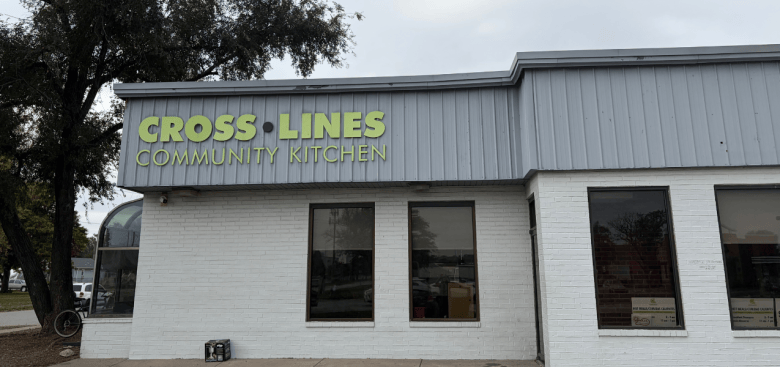
When Vanessa Matt visits with Wyandotte County residents experiencing homelessness or on the brink of falling into it, she doesn’t make sweeping generalizations about what landed them there.
Instead, Matt understands that each person, and their suite of needs, is entirely different. And she recognizes that many of the resources someone may need to get back on their feet don’t exist in their community.
Matt, the senior manager of housing stabilization at Cross-Lines Community Outreach Inc., is one part of a larger system of area nonprofits and organizations trying to eliminate chronic homelessness in one of the Kansas City area’s poorest counties.
Their efforts come as homelessness and the cost of living climb in Wyandotte County, where nearly half of households can’t afford essential expenses, according to a recent analysis from United Way.
And the absence of key resources locally — like a year-round shelter, more affordable housing options, more expansive mental health services and an inpatient substance abuse treatment facility — make it harder to help, advocates told The Beacon.
Recent local election results won’t make it any easier.
By a narrow margin, Wyandotte County voters turned down a quarter-cent sales tax initiative that would’ve directed $12 million in annual sales tax dollars toward under-resourced homeless and healthcare services.
Some of those voters told The Beacon that deep tax fatigue within Wyandotte County, particularly over rising property taxes, could be standing in the way of meeting the need.
Even so, some advocates remain hopeful that the results, which showed the county was relatively split on the subject, could pave the way for future public investment to decrease the amount of chronic homelessness in the area.
It’s something that county residents, although not yet fully committed to paying for, have long asked for.
Growing homelessness
At least 164 people across the county were sleeping outside during the coldest months of 2026, an uptick from last year’s count of 115, according to a 2026 report by The Greater Kansas City Coalition to End Homelessness.
Following a recent local ordinance that bans outdoor camping on public and private property, residents may have to participate in community service, pay hundreds of dollars in fines or even spend up to a month in jail if they’re repeatedly caught sleeping under overpasses or in private woods behind homes or businesses.
The ban came after residents and business owners told county commissioners that people who were sleeping outdoors were affecting public safety, harming local business and leaving behind blight. Before commissioners approved the ban, several advocacy groups came forward asking for the government to instead invest in wraparound services, like support securing long-term housing.
Given that Wyandotte County doesn’t have its own shelter, the camping ban doesn’t give people many options in terms of places to go.
More often than not, people will pick up their belongings and set up a new camp just a few blocks away. And clearing homeless encampments has proved to be costly for the local government, costing thousands of dollars each time and happening several times each year.
No shelter in KCK
Wyandotte County officials have millions set aside to build a new, year-round shelter. But the government doesn’t have the funding to hire a comprehensive team to run it in a way that would successfully move people into permanent housing, Matt said.
The Unified Government has also struggled for years to find a spot to put the shelter. Local leaders have said a main hurdle has been finding a location that residents can agree upon, noting that many people have said they don’t want a shelter near their homes and schools.
The Unified Government in its 2027 budget carved out funds for a full-time homeless services coordinator position, a government role designed to work on homelessness issues like finalizing a shelter and working with community organizations to increase the community’s affordable housing stock.
The Wilhelmina “Willa” Gill Services Center, operated by the Mount Carmel Redevelopment Corp., is a local food kitchen that connects homeless residents with various local services. It also serves as the county’s lone warming center during the coldest months of the year.
Willa Gill is due to close after the Unified Government secures a year-round shelter in order to make way for the new downtown Kansas City Kansas Community College campus.
‘A system of care’
Wraparound supports — like access to food, shelter and mental health and treatment for substance abuse — are essential in helping someone secure and maintain long-term housing, advocates say.
Revenues from the Unified Government’s homelessness sales tax would’ve helped address gaps in many of those essential services, including ensuring that any future homeless shelter offers those diverse supports within it, said Randy Callstrom, president and chief executive officer of Wyandot Behavioral Health Network.
Offering those services would play a major role in ending chronic homelessness in the area.
“That is the vision that we have in Wyandotte County, is to have a system of care in place to eliminate chronic homelessness,” he said. “So people may become homeless, but you have the safety net in place to help them move into housing again and be able to sustain that housing.”
Susila Jones, the executive director of Cross-Lines Community Outreach, echoed Callstrom. She said a quality shelter and safe and affordable housing are two of the biggest needs in Wyandotte County.
But that shelter has to be well-staffed, and it has to offer wraparound supports and services if it’s going to help end homelessness. A shelter on its own can’t do that.
“We cannot end it with just a shelter,” Jones said.
Her organization, which connects people with food, eviction assistance, treatment and more in the Armourdale neighborhood, sees firsthand the different kinds of support a person needs to successfully transition out of homelessness.
Any future shelter has to offer a clear pathway that lands people in stable housing situations, Matt said. That means quality data tracking, case management and a well-staffed organization at its helm.
“As we’re having the conversation of having a shelter, which is super important, we have to simultaneously be planning and thinking about very creative and innovative ways of making sure that when that shelter gets established, it needs to have a system that is going to have more outflow than inflow,” Matt said. “So, having more people going out and being placed into housing options and less people falling back into homelessness.”
Comes back to property taxes
As bills continue to rise in the county, advocates and voters alike have said that general frustration among property owners contributed to the sales tax item’s failure.
As prices at the grocery store, gas pump and monthly bills continue to be more expensive than they were even a year ago, people feel every dollar they spend on new taxes, said Frank Ramirez, a KCK resident who ran Mayor Christal Watson’s 2025 campaign and who formerly served as her chief of staff.
Ahead of the election, Ramirez actively told people to vote against the homelessness sales tax item or a separate tax that would’ve supported area public parks and also failed.
People who are low-income and facing the possibility of falling into homelessness themselves can’t afford to pay more for their goods and services, Ramirez said. More costly payments when shopping could decide whether someone can still afford to keep their lights on at home, he said.
Although Ramirez supports people from out of town bringing their sales tax dollars into the county, he doesn’t think that residents struggling to get by should also need to foot the bill. He suggested that the Unified Government consider diverting funds from different investments toward addressing the matter of homelessness instead.
Among the cuts he suggested were highly paid administrators and personnel.
“But adding more taxes isn’t solving the problem,” Ramirez said. “Yeah, we can build a shelter, and it would certainly help some people. But then, who is it hurting that we’re not reporting because of the fiscal inefficiency for a local household?”
Michael Vazquez, a KCK resident who alongside his brother runs PCKC Computer Repair, attributed the sales tax’s failure to a mix of distrust in the government to responsibly manage public funds and exhaustion within the community over high taxes.
Residents are frustrated because they want to feel the effects of their property tax dollars being put to use in ways they want to see, such as through road and street improvements, Vazquez said. They also want to see major developers, particularly out in western Wyandotte County, pitch in more revenue.
And people want property tax relief that has been promised to them at the local and state levels in recent years.
“Why should the people who are just trying to live, just trying to survive, be then forced to face these property taxes and basically just continuously paying on homes that they own, or are trying to own?” Vazquez asked. “So people don’t want to see increases in their sales taxes when they can’t get relief on the property tax.”
Vazquez acknowledged that the government needs tax money to pay for and offer its services. But he wishes that leaders would take a harder look at the property tax system before asking voters for more, or that they can find money elsewhere in the budget to help address issues like homelessness in the county.
Advocates, like Jones and Callstrom, get that people feel overtaxed right now.
Jones said she was sad when the homelessness tax item failed but was not surprised. She knows people are limited in how much they’re willing to contribute right now.
But she also knows that the need isn’t going anywhere.
“We need to work together to figure out the solutions,” Jones said.
Callstrom called the tax item’s first time on the ballot a “launching pad” for future conversations about how to get the funds needed to lock down those services.
“It’s disappointing in the short term, obviously, from my perspective,” Callstrom said. “But I think it’s an opportunity to better engage the community. And, we were close.”