


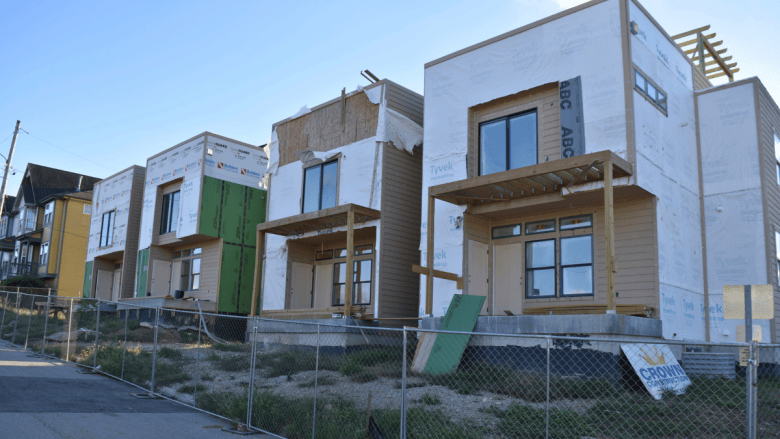
Wyandotte County has a shortage of more than 4,000 affordable homes. About 23,000 households in the county can’t afford more than $400 a month for rent, according to a report from the county’s health department.
Some local leaders say making more housing types available could help.
Takeaways
- Kansas’ By-Right Housing Development Act, or SB 418, took effect July 1. It requires cities to approve certain homes on a deadline — 30, 60 or 90 days — without a hearing or a commission vote, as long as the project follows existing zoning rules.
- The clearest local change is that accessory dwelling units, also called granny flats or in-law apartments, would become broadly legal in Kansas City, Kansas.
- The Unified Government Board of Commissioners takes up two ordinances Oct. 1 — one legalizing ADUs, and one bringing the zoning code into compliance with the state law.
- The law covers four housing types. Several others the county’s own zoning analysis flagged as needed — tiny homes, shared housing, multifamily — aren’t included, and homeowners association rules stay fully enforceable.
However, some lower-cost housing options such as accessory dwelling units — often called backyard cottages, granny flats or in-law apartments — are difficult to build under the current local zoning code, which regulates what kind of structures can get built and where.
An analysis commissioned by the Wyandotte County Health Department found “significant structural barriers” to affordable housing within local zoning laws, meaning those regulations are making it harder to build more homes that residents need. The zoning code in the county’s largest city, Kansas City, Kansas, was written in the 1980s and has not been substantially rewritten since.
At this point, many looking to build say the rules to do so in KCK are out of date.
“The current zoning code makes it really difficult to develop in the very neighborhoods that we’re most committed to redeveloping,” said Brennan Crawford, CEO of the nonprofit developer Build WyCo, which builds, renovates and repairs homes in some of the county’s most disinvested neighborhoods.
Local officials have known the policies need a closer look and some updates. They’re working on it. But now, a new state law is speeding up some of those initial changes.
The By-Right Housing Development Act — also known as SB 418 — took effect July 1, and seeks to address affordable housing by streamlining the municipal approval process for building homes. The new law applies to single-family homes, duplexes, townhomes and accessory dwelling units, with some exceptions.
Embedded in the new law’s name, “by right” suggests that approving building plans should be the local government’s default approach. It means that if a proposed project follows the written rules and meets certain conditions, it gets approved without a commission hearing or zoning vote.
The law also gives municipalities a ticking clock for these “by-right” projects — 30, 60, or 90 days — and if the city or county doesn’t respond in time, the project is automatically greenlit.
This new state law comes as the Unified Government of Wyandotte County and Kansas City, Kansas, was already in the process of rewriting KCK’s zoning code, a multiyear project that began in 2025.
“In the context of our code update and our comprehensive plan, housing has always been a big issue that we’ve wanted to address, and SB 418 has been a bit of a catalyst for us to jumpstart that process,” said Alyssa Marcy, the UG’s long-range planner.
In response to the new state law, the City Planning Commission voted unanimously Sept. 14 to recommend an ordinance broadening the availability of accessory dwelling units and voted 6-to-1 for a package of zoning changes. The two ordinances are set to be heard Oct. 1 by the UG Board of Commissioners.
Crawford said the intent of the changes to state law makes a lot of sense in principle, but he remains cautious. He says how the law is implemented and other local details will determine whether it actually leads to more affordable housing.
“This is not a silver bullet,” Crawford said. “It’s still going to be marginal improvements, but it’s a step in the right direction, at least as far as I can see now.”
Here’s what’s changing, which housing issues the new law doesn’t touch and what comes next.
Accessory dwelling units
Marcy describes by-right availability of accessory dwelling units (ADUs) as the most significant change in KCK prompted by the new state law.
ADUs are small, separate homes on the same lot as a house. These can be a basement apartment, a converted garage, a backyard cottage or an attached second living space.
Right now, KCK zoning allows them in very limited situations. To adhere to the existing rules, an ADU would have to be built above a garage, in new construction and on a lot that qualifies for the city’s narrow-lot design guidelines.
“The complexity creates its own barrier to entry,” Crawford said.
People have built them anyway. Those units are technically illegal, Marcy told The Beacon, and the UG has had to tell some owners to remove elements from the units on their properties.
Near her own home, Marcy said, a previous property owner converted a portion of an old barn into an apartment. A couple wanted to buy the house so a relative with health issues could live close by but still have their own space. The seller’s real estate agent called the UG and learned the unit wasn’t allowed.
“It’s a sad thing for me to have to tell them, ‘No, you can’t have that,’” Marcy said.
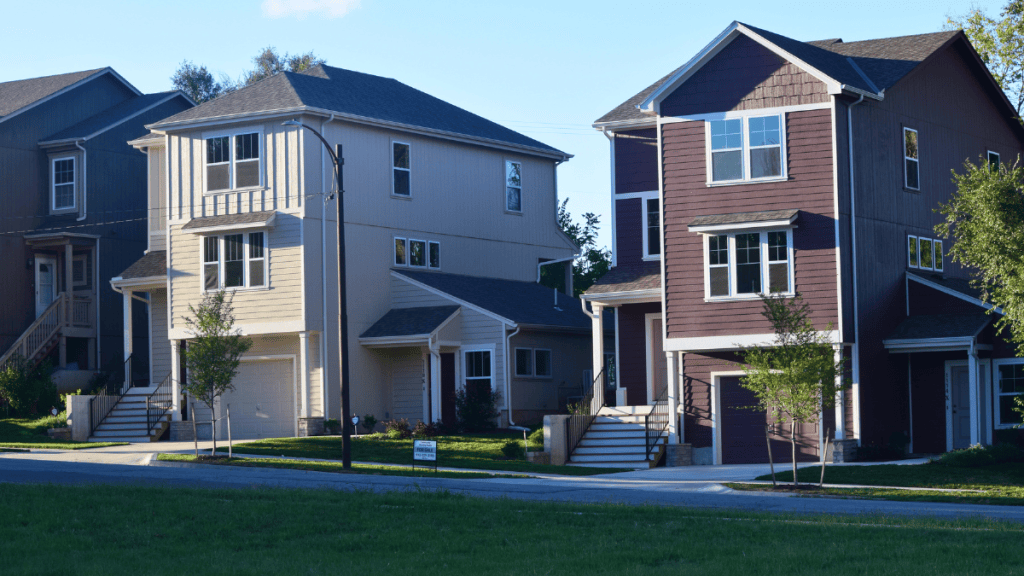
Marcy said that in one week this summer, a single UG planner fielded eight calls from people asking how to build an ADU. Since SB 418 requires by-right development for ADUs but doesn’t directly define standards, the UG decided to update their local zoning rules with definitions and guidelines around the accessory units.
The ordinance heading to the board of commissioners defines and allows ADUs anywhere a house is currently allowed. The size is capped by half of the size of the primary residence or 1,000 square feet, whichever is larger, and it can’t be taller or larger than the primary house. No extra parking would be required, and a complete application to build one would be automatically approved in 30 days unless the UG denied it for not adhering to these rules.
The proposed ordinance would allow for ADUs to be rented out. In most cases that would look like a long-term rental, because although short-term rentals like an Airbnb are allowed, separate city laws restrict such rentals.
Crawford says that allowing ADUs can change financial calculations for many families.
“Any time you can permit, particularly an accessory dwelling unit as either a place for extended family or as an income generating unit, that has massive implications for low-to-moderate-income families,” Crawford said.
He said that a rental unit on the property can help a buyer qualify for a mortgage and a second unit spreads the infrastructure building costs across two homes instead of one.
ADUs have seen a push in the region. They can already be built “by right” in Kansas City, Missouri. The Regional Housing Partnership is in the midst of an ADU design competition with the aim of producing accessible designs with a cash reward.
Faster approval, smaller lots, and looser design rules
The by-right Kansas law calls for firm deadlines for city approvals.
- 30 days for a building permit review for a qualifying single-family home, duplex, townhome or ADU.
- 60 days for a qualifying project that needs platting or dividing land into lots.
- 90 days for a subdivision of more than 40 homes that requires platting.
Most of the law’s deadline pressure lands on permitting rather than planning in KCK, Marcy said. The exception is subdivisions, which currently go through the planning commission on a schedule that can take more than 60 days.
To comply, the UG would let its planning staff sign off on qualifying by-right subdivisions of 40 or fewer homes without a commission vote.
Marcy said that the ticking clock would be likely to affect smaller cities more than it would a larger one like KCK. She said she didn’t view the speed of receiving a permit as “necessarily the biggest hurdle to housing development” in KCK.
“Typically when you see something that’s complicated or if it takes time, it’s usually because the permit wasn’t complete, or maybe there’s another issue,” Marcy said. “Like it’s in a floodplain or it’s a historically listed property. And all of that language is included in SB 418 that says if these things occur, this timeline doesn’t apply.”
If a housing project deviates from the written code — such as seeking a setback variance that would place a home closer to the street or their neighbor than zoning allows — the project is no longer “by right” and would need to go through the existing processes. Crawford did note that this can send projects sideways.
The UG’s proposed package of zoning and compliance changes cuts setback distances sharply compared to its earlier rules, but the requirements still vary by zoning district.
For residents, the trade-off for the by-right housing law is less say when someone specifically wants to build single-family homes. When a property owner asks to rezone land for single-family use, allowing homes to be built on land that was previously set as agricultural or industrial, for example, the law removes the requirement that the UG mail notices to neighbors and prohibits neighbors from filing a protest petition for homes that follow the letter of zoning codes. Notice will still be published and a hearing would still be held.
The state law also limits what cities can ask for in appearance. A house under 2,500 square feet needs an architectural finished exterior on just one side. That would override some neighborhood design standards.
“We can encourage houses to look a certain way, but they do not have to,” UG attorney Mike Farley told the planning commission.
The new state law also lets homes under 2,500 square feet sit on lots as small as 3,000 square feet. The proposed compliance ordinance reduces lot minimums to match the state requirement. Marcy said this change has less practical effect in KCK because the city’s preexisting narrow-lot guidelines already allowed buildings on smaller lots.
What the by-right housing law doesn’t touch
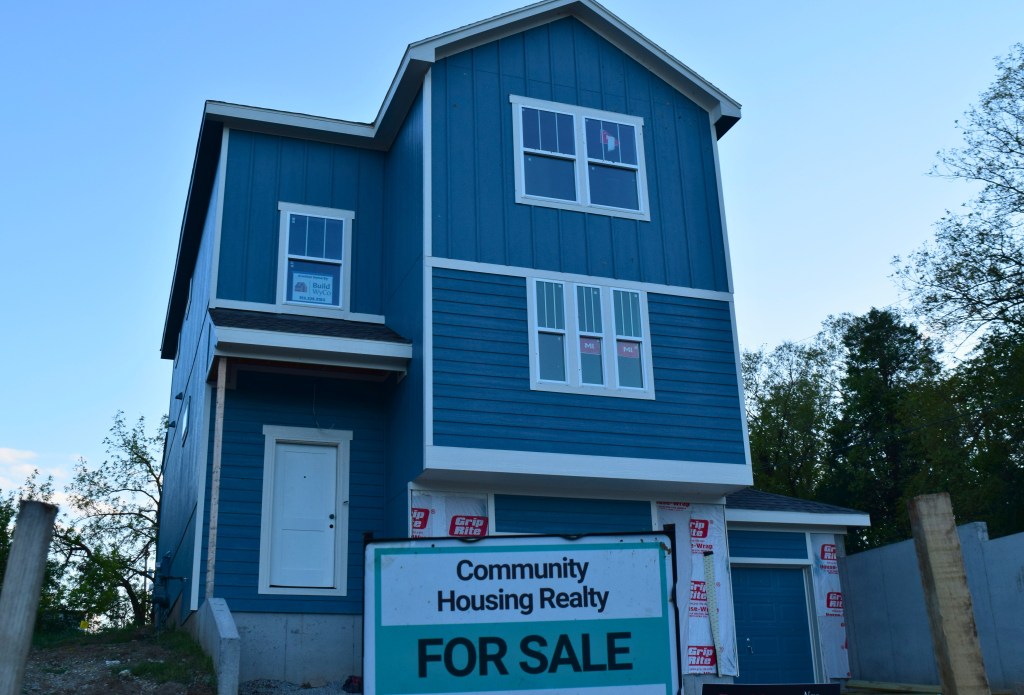
The By-Right Housing Development Act includes four housing types — single-family, duplexes, ADUs and townhomes. That leaves out several housing types that are key to achieving the UG’s affordable housing goals.
Any home shared by more than five unrelated adults is classified as a group dwelling and requires a special use permit and hearings before both the planning commission and Board of Commissioners in every zoning district.
Tiny homes have no definition or dedicated approval path in the current KCK code. The closest available classification is a mobile home park. An expansion plan from Eden Village, a tiny-home community in KCK built for people leaving chronic homelessness, needed a rezoning and four separate variances to get approved.
Crawford described the state’s approach as a familiar one with a “not super effective” track record. Just changing the laws about how buildings get approved doesn’t get at some of the biggest barriers to building more, he said.
“In some ways, this is kind of a very classic supply-side approach,” Crawford said. “It doesn’t take into account the actual mechanics of how things come to be.”
Those mechanics start with building costs. Construction costs have climbed faster than incomes, he said, and in some neighborhoods a new home still costs more to build than it would be appraised for. He added that often land bank properties or vacant lots come with their own problems.
“Many of these infill lots that have been vacant for a long time have deficient infrastructure or they have foundations that were collapsed into basements when the city demolished a bunch of houses 30 years ago,” Crawford said.
He noted that even where there is demand for homes, the current construction workforce is strained.
“We do not have enough qualified subcontractors and homebuilders working in this market,” Crawford said.
Build WyCo builds roughly 50 units a year, he said, in a county that he estimates needs another 3,000 to 5,000 more.
The new state law also leaves homeowners association rules and other housing covenants fully intact. The statute directly says courts should still enforce them even if municipal zoning would allow looser rules.
That means that neighborhoods with more robust or restrictive HOAs are the least affected by the new law.
“The impact of these changes will not be felt evenly,” Crawford said. “Our neighbors of limited means deserve the same kind of say in how the built environment works around them.”
What happens next
While the Board of Commissioners is set to take up the SB 418 compliance and ADU ordinances Oct. 1, the broader zoning rewrite will continue afterward.
Recommendations released in June call for consolidating the city’s 67 zoning districts, letting staff approve more projects administratively and rezoning parts of the city to match PlanKCK, the city’s 2023 comprehensive plan.
Marcy said the government plans to revise its land use permitting procedures next, while continuing to weigh what other housing types the code should allow. She hopes to finish the full rewrite by the end of 2027.
Against the full zoning code rewrite, Marcy considers the modifications accelerated by the new state law to be modest. But she hopes the new rules can help bring about positive change.
“We have a housing crisis in the metro and we need all of the solutions we can get,” Marcy said.
Asked what he’d expect to see in KCK if the changes work, Crawford described a return to how neighborhoods were originally built.
“You would see something that more closely resembles the way that neighborhoods developed in the first place,” Crawford said, pointing to a mix of housing options including duplex and fourplex walk-ups and carriage houses.

