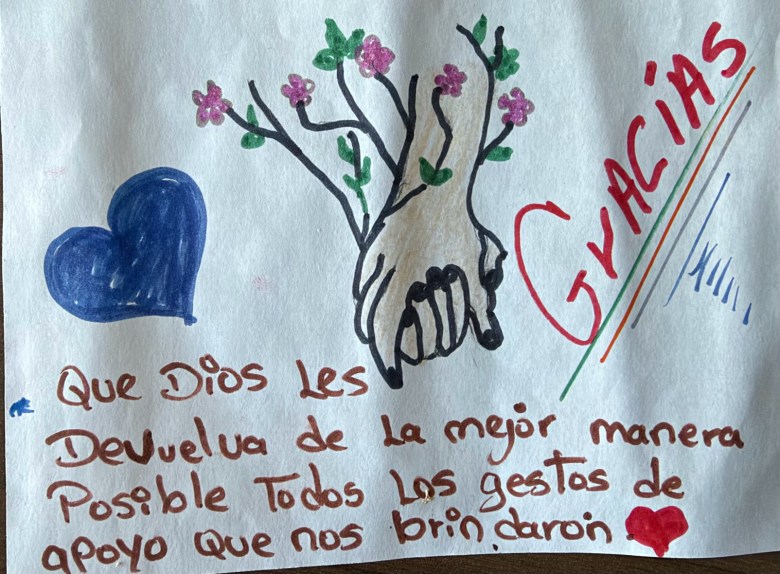
They’re the immigrant children long considered to be the most vulnerable.
Many traveled to the U.S. alone, unaccompanied by a parent or guardian. Some were trafficked for labor or sex. A state judge has ruled that each of them has experienced serious abuse, neglect or abandonment and is in need of the state’s care.
For decades, the U.S. treated these foreign-born youth from a child protection perspective. Policy, law and federal funding acknowledged their unique needs.
A special immigration status was available for them, which opened up the pathway to a green card. And while their cases moved through the country’s clogged-up immigration system, policy gave them protections from being deported.
But many of those protections have disappeared under President Donald Trump’s administration, affecting up to 150,000 children nationwide.
And now, at least two dozen such children in the Kansas City area are in active removal proceedings and could soon be ordered deported. And the organizations supporting the children have lost the federal funding that helped provide counseling and legal representation.
Hearings before immigration judges have been abruptly pulled from 2027 dockets. Some have been rescheduled for mid-November, leaving attorneys scrambling to jam six months or more of legal work into a matter of weeks.
“It’s nonsensical and it’s cruel because these children had already been told by the government that they wouldn’t be pursued for deportation,” said Aly Englander, senior staff attorney at the Asylum Clinic Kansas City.
Englander manages 113 immigration cases, about 80% of which are for children, including those whose deportations are being expedited.
The Trump administration maintains that it is focused on countering what it characterizes as Biden-era fraud within programs for unaccompanied children, and decreasing backlogs in immigration proceedings.
In a statement to The Beacon, federal officials with the Executive Office for Immigration Review (EOIR) said they’re just doing their job.
“Prior leadership may have allowed certain cases to languish indefinitely in violation of the law, and EOIR is working hard to correct those violations,” the statement read. “However, there is nothing novel about EOIR trying to ensure that cases are resolved as expeditiously as possible.”
October change-ups
The Kansas City-area children most at risk of being ordered deported have either been granted or have a case pending to receive special immigrant juvenile status, a humanitarian designation for abused or neglected children that can lead to a permanent legal status, Englander said.
Previously, children with this legal classification were granted deferred action, an aspect of immigration law that allows for a suspension of deportation proceedings while cases progress. Since 2022, the children were also allowed to legally work, which provided them a government-issued identification as they waited for a green card to become available.
The Trump administration canceled those protections for new grantees and renewals of the special status, effective May 10, 2026.
In October, Health and Human Services Secretary Robert F. Kennedy Jr. issued statements saying changes had been necessary to counter Biden-era fraud within the unaccompanied children programs.
Also in October, the government began offering $3,000 to unaccompanied children who are willing to self-deport, an increase of the $2,500 the administration set in 2025.
Around that same time, some of the children’s cases handled by the Asylum Clinic and assigned to the Kansas City immigration court were abruptly shifted to the docket of a Chicago immigration judge, worrying the children’s lawyers.
In addition, some of the families housing the youth, considered sponsors, have been put under heightened scrutiny by U.S. Immigration and Customs Enforcement.
”They’ve started sending ICE to the houses of sponsors,” Englander said. “A lot of our clients have experienced ICE just going up to their house.”
The escalating tensions have left the local immigration attorneys, caseworkers and therapists scrambling.
”We took about 24 hours to freak out, and then we have not stopped since,” said Meaghan Fanning, youth program manager at Jewish Vocational Service, or JVS, which is coordinating with the Asylum Clinic to provide case management and therapy for some of the children.
“They’re kids,” Fanning said. “Either their life is unsafe, the people in their lives are unsafe, or they don’t have anybody else in their life at this point.”
The attorneys were told to appear with the youth in court in Kansas City on Oct. 29, despite the fact that such hearings were typically conducted virtually.
At the hearing, Judge Shawn Abraham appeared by teleconference and said he couldn’t access the Kansas City case files, pushing the cases back several weeks. Abraham agreed that at future hearings, the children could appear by video.
Court challenges to many of the administration’s new policies have also been filed.

Who are Kansas City’s kids at risk of deportation?
The Beacon is not identifying the Kansas City youth by name or complete biography, but attorneys and therapists outlined some of their circumstances.
One teenage girl lives in a Kansas City homeless shelter. She escaped what her attorney described as “intense labor trafficking.”
The girl doesn’t have steady access to food, an outcome of the Trump administration eliminating SNAP benefits for many immigrant classifications. Advocates deliver gift cards to her every two weeks, so she can purchase meals at Walmart.
One boy was homeless in Honduras from the ages of 6 to 10. He walked and hitched rides to the U.S. with a group of friends who were also homeless. The trip took several months until they approached Homeland Security agents at the southern border.
The boy was detained for a year in a U.S. government shelter for youth.
He’s 11 now, living with a relative and thriving at a local middle school.
Others among the children came to the U.S. as siblings. Older siblings often care for younger brothers and sisters as they walk across borders.
Some of the children have worked long hours in construction, roofing, drywalling and restaurants, with an adult confiscating their wages. A few have been unpaid nannies. Lawyers say at least five have been sexually exploited.
Many of the Kansas City children are Honduran or Guatemalan, but they also come from Vietnam, Mexico and several countries in Africa. The youngest is 6, and the oldest is 18.
Several are disabled, physically or intellectually. Some do not have a parent or other close relative in the U.S. and are in foster care.
For most, formal schooling was severely interrupted because of the abuse they fled or the exploitation they endured after entering the U.S.
A departure from the status quo
The situation these children and their lawyers are navigating marks a major shift in how the government handles such cases, according to Mary Giovagnoli, a Kansas City native who is the former ombudsperson for unaccompanied children at the Department of Health and Human Services.
Giovagnoli, whom Trump removed from his administration last year, said she worries that the government is disregarding some of the children’s rights.
“They’re pushing these kids out the door so fast, there needs to be some attention paid to ensuring that their return to their home countries is safe,” Giovagnoli said.
That is not happening, she said, which comes up against provisions of the Trafficking Victims Protection Reauthorization Act of 2008.
The act expanded protections for trafficking victims, including setting standards to ensure they would not be persecuted or experience trafficking again if returned to their native countries.
In September 2025, Giovagnoli testified before a Senate subcommittee in oral and written comments. Her testimony outlined changes under the Trump administration that have shifted the care of vulnerable children from child welfare strategies to immigration enforcement.
In particular, she testified that decades-old positive approaches to funding work to protect children from trafficking were “all but abandoned in the provisions of the One Big Beautiful Bill Act of 2025.”
The Asylum Clinic is part of a network of agencies nationwide that received federal grants to represent abused and neglected children during their immigration cases. Those grants have been canceled by the Trump administration.
Similarly, some federal allowances for medical treatment for the children, therapy for trauma and help with food and housing have also been rescinded.
“The Trump administration’s policies pose the greatest risk to unaccompanied children in the U.S. today, as it systematically eliminates the protections and resources put in place by Congress to keep unaccompanied children safe,” reads a portion of Giovagnoli’s submitted testimony.
She accuses the Trump administration of “using children as pawns in its mass deportation agenda,” echoing a common charge by legal associations, nonprofits and some members of Congress.
“We really need this next Congress to put a stop to this egregious treatment of unaccompanied children,” Giovagnoli said. “It should be, as with so many immigration issues, something that’s nonpartisan that everybody can agree on.”
The administration, in reply to such criticism, has released statements, often arguing that changes are necessary to correct fraud.
A statement released Oct. 1 said the government found fraudulent documentation, manipulated photographs, misrepresented or unverifiable addresses, problems with fingerprints and ages submitted and a failure to disclose household members of homes where the unaccompanied children were living.
“The Biden Administration failed in its most basic responsibility: protecting vulnerable children in federal care,” said Kennedy in a news release. “It weakened safeguards and prioritized speed over scrutiny, leaving children exposed to fraud, exploitation, and abuse.”
Looking toward an uncertain future
Many of the children around Kansas City understand what is happening in their legal cases, or at least that their future is less certain, advocates told The Beacon.
“They can’t actually dream ahead because they either have lost their status or could lose their status at any time,” Fanning said.
Fanning said some of the students she worked with had a hard time starting school this fall.
Young people had absorbed the daily drum of news, she said, seeing video of ICE agents arresting people, sometimes in violent confrontations. Some of the children isolated themselves during the summer months, hesitant to be too far from home.
The administration’s actions upended how JVS therapists help the children process trauma.
“We work with kids on the stuff that they don’t want to say out loud,” Fanning said.
Talk therapy guides the youth in telling the story of their lives. They learn to speak about the abuse, the neglect, everything that they have faced until they arrive at surviving all of it, versus suffering.
Then they can set goals: graduating high school, obtaining a green card, planning for college.
The process also prepares the children for immigration hearings, where they’ll need to share details to an immigration judge and be ready to answer the questions of government attorneys.
“But how do you heal from your past when you cannot see a future?” Fanning said. “Now, it’s so unstable for them.”
Many of the youth lean into faith, often saying that God brought them this far in their lives and he will see them through, even if they don’t like the eventual legal outcome.
One child recently said this to Fanning: “‘I went through way too much to get here to just give up now.’”