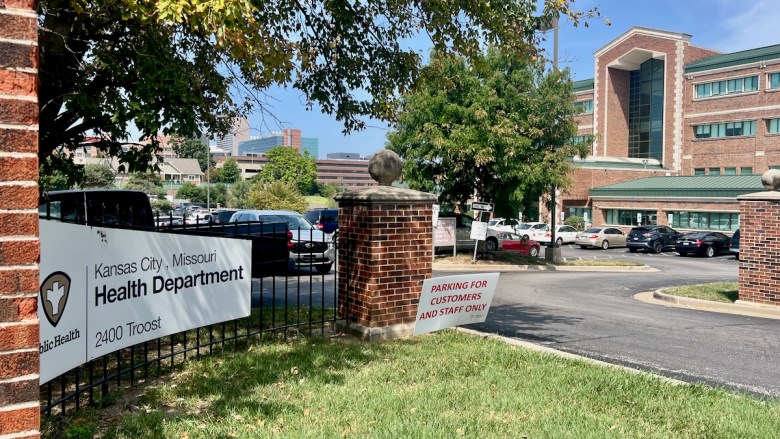
A resolution headed to the Kansas City Council is meant to resolve a nearly yearlong dispute about how more than $30 million collected through the city’s health levy is distributed.
The Kansas City Health Commission voted at its Aug. 24 meeting to recommend that the health levy funding continue going to six existing safety-net providers, while opening access to the city’s $400,000 Health Innovation Fund to healthcare providers that currently don’t get any health levy dollars.
The resolution also calls for new accountability measures on health levy contracts, directing the city manager to shift to a reimbursement-based model on future health levy contracts. It also would require contractors to provide ZIP code-level data reporting, a measure meant to resolve a struggle to get timely and accurate information from some providers about the patients served using the taxpayer funds.
Councilman Johnathan Duncan, who serves on the Health Commission, said the plan paves the way to strengthen the city’s safety net by bringing in new providers while also protecting existing ones.
“What this does is satisfy the City Council’s want to open up our health levy,” Duncan said after the meeting. “It provides a preference to folks not currently receiving health levy dollars to fill gaps in care … while also not disrupting the care currently being provided in the midst of federal and state funding cuts.”
Duncan said he will introduce the resolution at the Sept. 3 City Council meeting. It will likely be referred to the Neighborhood Planning and Development Committee.
Kansas City Health Director Marvia Jones said the City Council’s response to the resolution “will determine the Health Department’s next steps.”
“The KC Health Department remains committed to ensuring that public dollars are awarded effectively, through a transparent and data-driven process,” Jones said in an emailed statement. “Today’s decision by the KC Health Commission, an advisory board to the Mayor and Council, does not impede this commitment.”
The changes affect next year’s health levy contracts, which are typically awarded in May, but this year were finally approved in July. If the resolution is adopted, the Kansas City Health Department would issue a request for supplier qualifications inviting new providers to apply for the Health Innovation Fund dollars.
The health levy, which brings in about $70 million in annual revenue, also funds the health department and other city programs. The levy has been on Kansas City property tax bills since 1955.
For years, the same six safety-net providers — University Health, Children’s Mercy, Swope Health, Samuel U. Rodgers Health Center, KC Care Health Center and Northland Health Care Access — have received a portion of the health funds intended to offset the cost of healthcare for uninsured and underinsured individuals.
Last November, the Health Department issued a request for supplier qualifications in an effort to evaluate which providers should receive health levy contracts. But after a backlash from existing providers, the City Council voted in January to halt that process and passed a resolution calling on the Health Commission to study the disbursement process before future contracts were awarded.
Duncan led the subcommittee that conducted that study, which included listening sessions held in June and July. Duncan said the group heard from all of the existing providers along with Mattie Rhodes, which operates La Clinica, a primary care clinic, and Care Beyond the Boulevard, which cares for people in Kansas City who are unhoused.
Bob Theis, CEO of Sam Rodgers, called the Health Commission’s resolution “a positive outcome.”
“It preserves continuity for the organizations currently serving the community while strengthening accountability through enhanced reporting requirements,” Theis wrote in an email response. “At the same time, the innovation grant process creates opportunities for new ideas and partnerships. We encouraged this approach last year, and I am pleased the commission chose to move in this direction.”
Jaynell “KK” Assmann, the founder and CEO of Care Beyond the Boulevard, said she is happy to see a small opportunity for organizations like hers that care for the city’s poorest residents without the help of health levy funds.
“I think that it’s a start,” she said. “I absolutely think that they need to look harder at how they distribute millions of dollars to take care of the poor and uninsured and homeless of the community.”
But she called on the city to require better accountability from every provider.
“Here’s the thing,” she said. “If those millions of dollars were taking care of the community, you wouldn’t need free and charitable clinics like mine. That’s a lot of money.”
Assmann also questioned the wisdom of adding a reimbursement-based payment model to health levy providers. That will require organizations to float money upfront, which can be a burden for small organizations, she said.
The Health Commission approved the plan for future health levy contracts following recent reporting by The Kansas City Star about lawsuits filed against Swope Health. The lawsuits allege that CEO Jeron Ravin created a hostile work environment and misspent the nonprofit’s money, according to the reporting. Ravin did not immediately respond to an email from The Beacon.