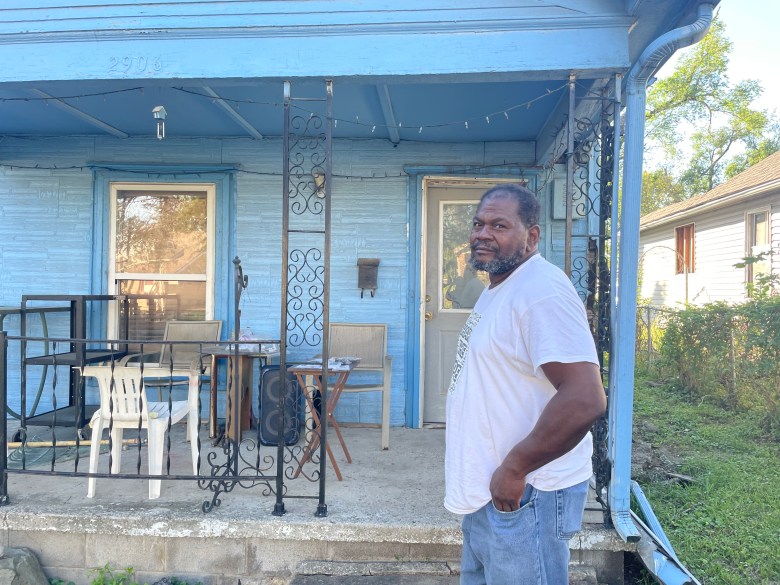
James Mays grew up in the Wyandotte County home that he is now desperately trying to save from being sold to the highest bidder.
He recently canceled full insurance coverage on his car to put money toward payment on the home’s overdue property taxes, bringing the debt total to under $2,500.
“I never entertained the thought of leaving, or of losing my home,” Mays said.
But the outstanding balance, dating back at least three years, means the property was set to be auctioned off Oct. 14, along with other owner-occupied homes, vacant lots and commercial properties.
The Delinquent Real Estate department of the Unified Government of Wyandotte County and Kansas City, Kansas, holds such sales twice a year.
For the past five years, a group of Wyandotte County residents has come together to try to help people keep their homes out of the sale. In the past, they’ve raised enough money to pay back delinquent taxes for 85 families so they could stay in their homes.
This year could be different.
The KCK Neighbors Alliance, a grassroots group that grew out of these efforts a couple years ago, says it still needs about $79,000 to pay off the debt of 10 owner-occupied homes facing the auction. At minimum, the group needs $34,000 to place all of the homes on payment plans, staving off a tax sale.
While scrambling to raise the money, the Neighbors Alliance is also pushing county leaders to make changes that could keep more people in their homes.
“There’s got to be something that the Unified Government can do to make sure that things like this aren’t happening,” said Dustin Hare, who has been helping coordinate volunteer canvassers.
Unified Government officials did not respond to multiple requests from The Beacon to discuss the upcoming tax sale.
10 homes at risk
Many of the properties on the tax sale list are vacant lots where homes once stood, abandoned homes or commercial properties.
For a residential property to be auctioned off, the owner must be at least three years behind on property tax payments.
KCK Neighbors Alliance teamed with Advocates for Immigrant Rights and Reconciliation (AIRR) to go door-to-door to reach every person at risk of losing a home. The volunteers narrowed the list down to about 10 owner-occupied properties without the ability to pay the debt.
Mays’ was one of them.
Mays inherited the little blue house from family, but didn’t realize it was delinquent on taxes until the day that someone knocked on the door offering to buy the property outright. He thinks that was a scam.
Each homeowner’s situation is unique, but the canvassers say they’ve noticed patterns. Many of the homeowners with property tax debt are elderly, have a disability or are also digging themselves out of medical debt.
Mays said he owes money first from a stroke, and more recently a hospitalization for a blood clot.
A new analysis by the Urban Institute found that one in four U.S. adults owed medical debt themselves or had family members who did in 2025. The findings included 26% of adults with health insurance.
One person the canvassers contacted said they had inherited a home after a parent died of an illness. The property came with owed back taxes.
In other instances, canvassers said people reported mailing checks to out-of-state addresses, believing they were paying their taxes.
Fundraising woes
Fundraising has fallen short as foundations and agencies are committed to other causes or tapped out after responding to recent storm damage in the northern portion of the county, said Hare.
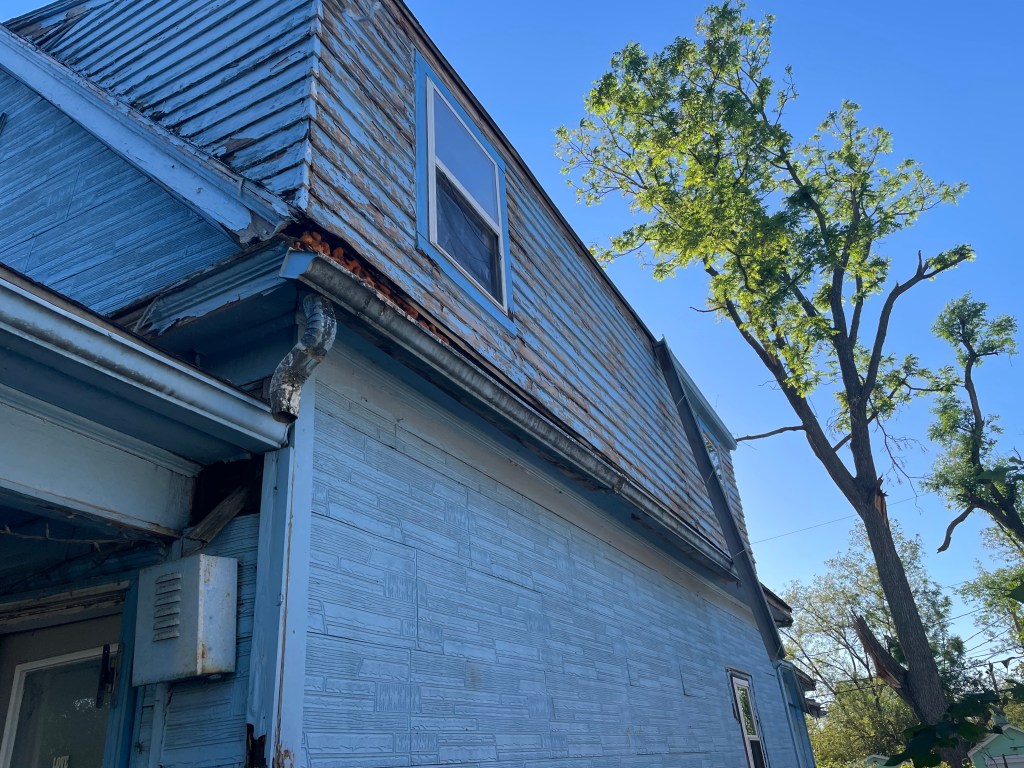
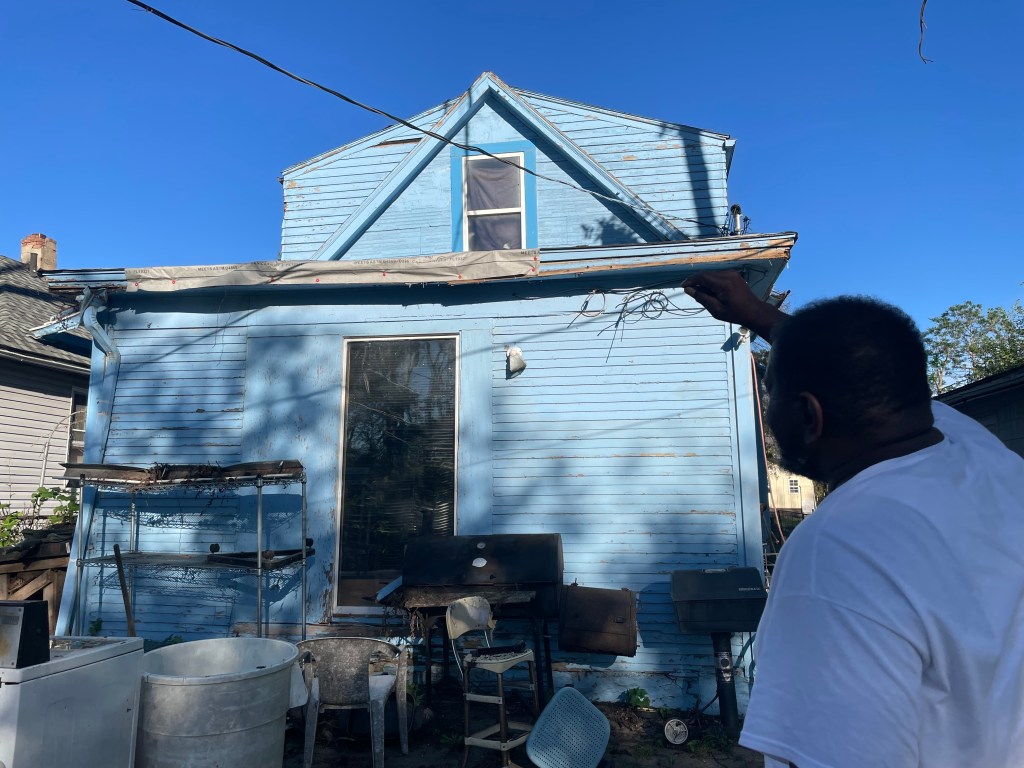
The storm hit Mays too. Gutters on the back of the home blew off, a 100-year-old tree fell on the back of the house, and hail damaged the roof and his car.
“It was like somebody dropped a bomb over my house,” Mays said.
And while wages remain stagnant, or residents are on fixed incomes, the amounts that people owe are rising, Hare said.
“When we were trying to pay people’s taxes off in 2021, the average tax debt was between $3,000 and $4,000,” Hare said. “Now that average tax debt is $9,000.”
A September fundraiser brought in more than $2,700, said Taisia Sarazov from the Neighbors Alliance.
Mays said that his faith community offered some help with a down payment on his tax debt. That allowed him to get on a payment plan so he can pay off what he owes over the next few years — and stay in his home.
“I don’t believe the Lord brought me this far in life to go without,” he said. “I’ve got a strong community around me.”
Policy changes
The KCK Neighbors Alliance is advocating for three changes they say would keep families’ homes out of public auction: reversing a policy that directs payments to a person’s most recent tax bill instead of their oldest one; dedicating $100,000 to a Tax Sale Foreclosure Mitigation Fund to offer assistance to people who qualify; and hiring an ombudsman to help tax-delinquent homeowners navigate systems and take advantage of tax credit programs.
They say a simple change to the way tax payments are applied would make a big difference.
About 10 years ago, the Unified Government changed their rules so a tax payment would go toward an owner’s most recent bill, in an effort to keep commercial property owners from gaming the system.
At the time, some owners, especially of commercial properties, would pay off the oldest debt first to remove their property from the tax sale list, without ever paying off everything they owe, said Eva Garcia-Meza, who canvassed for AIRR.
“There was a big practice amongst businesses and some commercial entities and rental properties as well,” said Garcia-Meza. “They were using the mechanism of paying off the oldest debt first as a kind of business practice to keep a cash flow on hand.”
Owner-occupied residential properties should have been excluded from that change, she said.
Hare and other advocates say that since it’s a fairly consistent, and low, number of people each year who need help to get off the tax sale list, it should be possible for the local government to intervene so people can stay housed.
Studies have shown that providing homeless services can cost far more than a one-time payment that could help a family save their home, Hare said.
“This is a problem that we should be able to figure out how to handle because the numbers are small,” Hare said. “If these people lose their homes, where are they going to go?”