


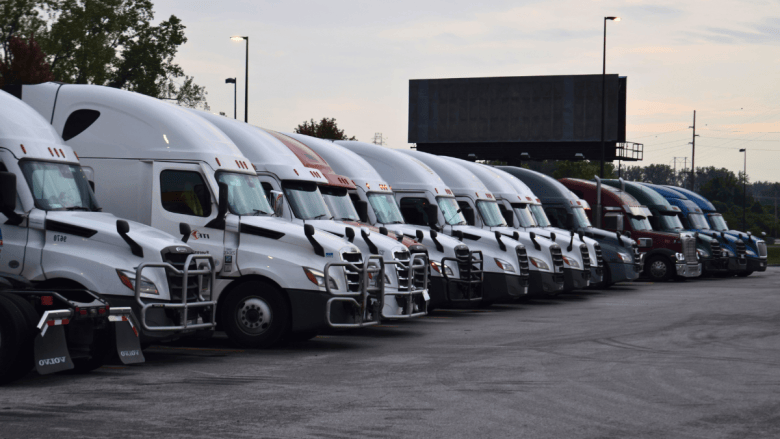
Ryan Schmuhl started his trucking business — Schmuhl Brothers Inc., based in Kansas City, Kansas — in 1995 with his brother Ty and two big rigs. In 2000, he estimates, a 360-mile round trip cost about $90 in diesel. He said that the same trip, on the same lanes, costs about $490 today.
“I used to take $500 bucks cash, and I had that in my pocket, and that’s what I spent for the whole week,” Schmuhl told The Beacon. “It’d be pretty hard to put something like $6,000 cash in my pocket to get fuel done for the week.”
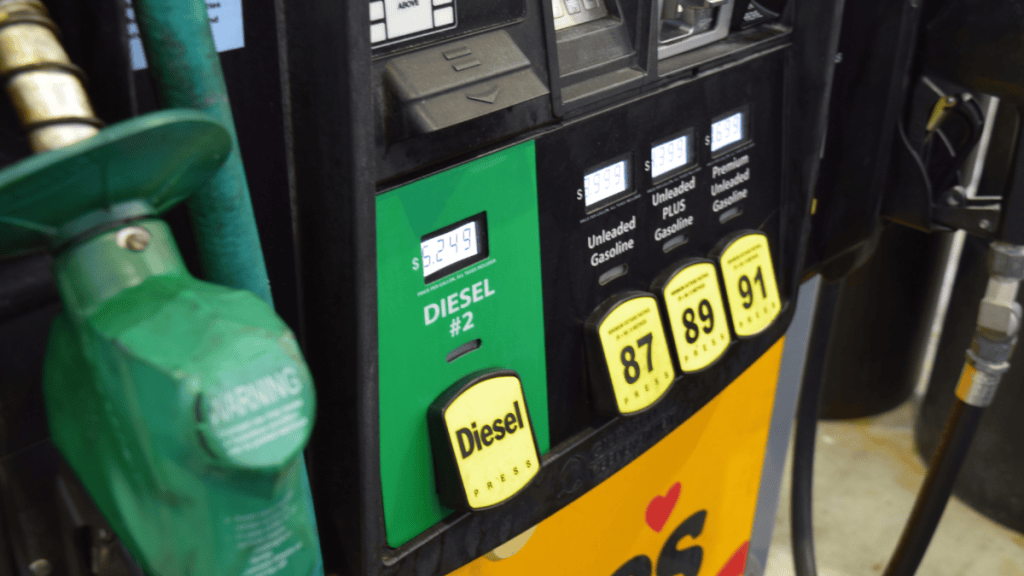
A gallon of diesel averaged $6.53 the week of Sept. 28 in the Midwest, according to the U.S. Energy Information Administration. That price is nearly double from the first week of January 2026, when a gallon of diesel averaged $3.39.
Takeaways
- Higher diesel costs are likely to show up in consumer prices.
- Midwest diesel averaged $6.52 a gallon the week of Sept. 28, nearly double the $3.39 average in the first week of January.
- Small trucking businesses often work load to load and can’t raise rates quickly when fuel jumps.
- Heavy-truck drivers in the area average $61,850 a year, making it one of the better-paying jobs that don’t require a degree.
- High diesel prices are delaying some drivers’ plans to go into business for themselves.
That price shock most immediately hits anyone paying for diesel fuel. In Kansas City, that affects a lot of people and one of the area’s core industries.
Nearly one out of every 10 workers in the Kansas City area works in transportation and material moving jobs, according to the most recent employment and wage report from the Bureau of Labor Statistics.
That includes the area’s 26,250 light- and heavy-truck drivers, a profession that often is viewed as one of the better-paying jobs in the region. The average salary is $61,850 for heavy-truck drivers, and it doesn’t require a degree. That is on top of the nearly 4,000 single-employee trucking businesses in the area.
The record prices at the pump have risen so sharply that a viral online video promised a nationwide trucker strike starting Oct. 1, though no union or trade group backed the idea and it doesn’t seem to have happened.
However, sustained higher diesel costs have other consequences. They could mean added inflation or fewer drivers buying a truck to get into business for themselves, as Schmuhl did over 30 years ago before building a company that supports 75 employees today.
“You’d obviously have to have more cash flow to get started,” Schmuhl said, pointing to higher costs and other hindrances. “So I wouldn’t suggest just anybody to get into it today.”
Given the thin profit margins of trucking companies — 1% to 5%, Schmuhl estimated — the added fuel costs that aren’t absorbed are likely to make their way through the supply chain and show up on store shelves.
Diesel prices hit the trucking career ladder differently
The Beacon spoke to truck drivers filling up at three different Kansas City area truck stops in recent days. The conversations revealed that how the price hits depends largely on who owns the truck and who’s ultimately responsible for buying the fuel.
Generally, there are four different truck driving career types.
- Company drivers: Truck drivers who are W-2 employees and are generally paid by the hour or mile. Insurance, fuel, maintenance and overhead are paid by the company.
- Independent and leased-on owner-operators: These drivers own or finance the truck independently and pay for all equipment and associated costs. Often this looks like a single-employee trucking business, and drivers can make more money but also assume more risk.
- Lease-purchase drivers: These drivers rent a truck from a company with the option to buy it, gaining equity while working. This arrangement is akin to a hybrid of the company driver and owner-operator models. In most cases the driver is affiliated with a carrier and splits payment from shippers by percentage with the carrier. Most lease-purchase drivers also pay for fuel and overhead costs not covered by the truck’s warranty.
- Fleet owners: Own multiple trucks and hire drivers. Depending on scale, fleet owners may spend more time managing the business rather than driving full time.
Each type is hit by elevated diesel costs differently.
One regional owner-operator, who asked to be identified only as Mike G., told The Beacon that he’s been driving for 25 years and he’s never seen anything like this.
Since he owns his truck and covers all costs, he said he now buys only enough diesel to get as far as he’s driving on an individual run.
To fill his two 100-gallon fuel tanks from empty, it could cost more than $1,300 at current prices. He said his truck gets about 7 miles to the gallon and his price at the pump for a 900-mile drive came to $763 on Wednesday morning.
“It doesn’t look good,” said Mike G. “But everybody’s got to eat, so you do what you’ve got to do.”
He’s not the only trucking entrepreneur to feel the costs hit his pocket book.
The Owner-Operator Independent Drivers Association — a trade group representing over 150,000 owner-operators and small-fleet owners from its national headquarters in Grain Valley, Missouri — told The Beacon that fuel is one of the biggest operational costs for the truckers they represent.
In an emailed statement, association Executive Vice President Lewie Pugh said that small-business truckers make up more than 90% of trucking companies in America and that they are the first to feel increases at the pump.
“Our members often work load-to-load and can’t simply raise their rates when fuel spikes the way their larger competitors can,” said Pugh. “While big oil companies have seen their profits nearly double this year, the sharp increase in diesel cost has quickly eaten up what little margin mom-and-pop trucking businesses have left.”
Several company drivers told The Beacon that they are less concerned about diesel prices because they do not personally take on the cost of gas. However, Jerry Wood, president of Teamsters Local 955, said employee drivers could feel the effect in the future.
“If we end up in negotiations with companies with drivers, I’m sure (fuel costs) will be part of their (arguments) to say they can’t afford to pay more wages,” Wood said. “I’ve not heard it yet, but I’m sure I will.”
Schmuhl said that diesel prices complicate his company’s cash flow. His business has a fuel surcharge attached to shipping costs that it adjusts weekly. But diesel costs have been changing daily, meaning his company has to eat the cost while waiting to be paid by invoice 30 to 45 days later.
Deterring business
The rising cost of diesel could discourage or delay truckers from getting into business for themselves.
Brandon Jamison is a company driver from North Carolina who was passing through Kansas City last week and filling up before shutting down for the night. He told The Beacon that he wants to own a truck and be an owner-operator — just a few weeks prior he put the business to paper — but current prices mean he needs to take it in steps.
“I plan on starting my own business soon, so diesel prices are gonna affect me,” said Jamison. “I’m trying to wait for prices to go down first, because if I do it right now, I’d be screwed.”
Jamison said in the coming months he intends to rent a truck, then shift to leasing to own before he hopes to ultimately own the truck and work independently. But from the lease-to-own phase onward, he has to take on the cost of diesel himself.

So for now, he’s waiting.
“I need to have enough money for the truck (payment) because that would come out no matter what,” Jamison said. “With truck prices (combined with) diesel prices, you can’t make no money right now.”
Hitting store shelves
Diesel costs don’t just hit truckers.
Farming, construction and transportation equipment all run on diesel. If sustained, the higher cost could lead to broader inflation.
Gregory D. DeYong, an associate professor of operations management at Southern Illinois University Carbondale, told the Springfield Herald News in Illinois that retailers and consumers are already seeing higher prices for meat and produce because of the high cost of diesel.
“Because so much of transportation utilizes diesel, higher prices for fuel translate to higher consumer prices fairly quickly,” DeYong told the Herald News, noting that diesel prices could continue to climb without geopolitical change.
In April, The Beacon reported that spiking diesel has affected the local food supply chain, including for the community food network Harvesters. Diesel is now roughly $1 a gallon more expensive and KCUR reported that the record fuel prices are raising the costs of feeding Kansas City.
Schmuhl agreed that increased fuel costs will get passed on and could affect prices broadly.
“Trucking companies just don’t have a margin to go ingest hundreds of dollars per load — it’s just not there,” Schmuhl said. “The end user ends up having to pay for this.”

