


For months, the Kansas City Council has been clear about how much money it intends to spend on a new Royals stadium at Crown Center: $600 million.
What has been less clear is where the city plans to find that money. But council members — and their constituents — are finally getting an answer this week.
An ordinance sponsored by Mayor Quinton Lucas would designate an area of the city, called the “stadium impact area,” from which the city would pull a portion of tax revenue to pay off debt for the ballpark. The proposal will go before the council’s Finance, Governance and Public Safety committee on Oct. 6.
If approved, the ordinance would draw a boundary extending beyond the radius of the planned stadium including all of the Crossroads, Union Hill and the Westside, as well as the southern half of the West Bottoms.
Within that boundary, any increase in revenue from several different taxes over the next 30 years — including increases due to inflation — would be redirected to pay for stadium construction and related costs.
The goal, city leaders say, is for the stadium to pay for itself. Or, at least, for new development and other spending prompted by the stadium to help pay for it.
“I want you to picture a lake, and you throw a stone out in the middle of the water,” City Manager Mario Vasquez told The Beacon in August. “It makes a big impact in the middle, but there’s a ripple. So what is this ripple? That’s what we’re trying to capture.”
To help illustrate how that plan would work, The Beacon compiled a list of specific things that would be considered “stadium impact,” which means they’d help pay for the city’s contribution to the ballpark if council members approve this plan.
But first, a little background information
This deal is structured similarly to a “TIF,” which stands for tax-increment financing.
Essentially, the city is setting a baseline for how much tax revenue it collected in the designated stadium impact area in 2025. Then, for the next 30 years, the city will take any additional tax dollars it collects above that baseline amount and redirect that money toward the stadium’s construction, rather than spending it on police, street resurfacing or other city services.
Not all taxes would be set aside for the stadium, just those coming from the following sources:
- Any increase in license tax revenues on electricity or natural gas.
- Any increase in convention and tourism sales tax revenues from prepared food and beverages sold at businesses in the stadium impact area.
- Any increase in earnings tax revenues from the Internal Revenue Service offices or Union Station.
- Any increase in sales tax revenues from the capital improvement sales tax, the parks sales tax or the public safety sales tax, which together are 1.75% and make up slightly more than half of the city-imposed sales tax rate of 3.25%.
- Half of any increase in convention and tourism sales tax revenues collected from hotel and motel rooms.
- All of the money the city collects from paid street parking within the stadium impact area on days when an event is held at the stadium.
It’s important to remember that the baseline the city would use to calculate what it considers additional tax revenue does not factor in inflation. That means if prices go up for food, electricity, natural gas or other goods, that increase in prices will be considered “stadium impact” and will go toward the stadium.
The area the city will pull revenue from for the stadium would be bounded to the north by Interstate 670 or Truman Road, to the south by 31st Street, to the west by the state line and to the east by Brooklyn Avenue. (An exception is the 18th and Vine Historic Jazz District, which will mostly be carved out.)
Since public financing plans can be hard to make sense of, here are 12 tangible examples of some of the places where that city tax money for the stadium would come from.
1. A burger and hash browns from Town Topic
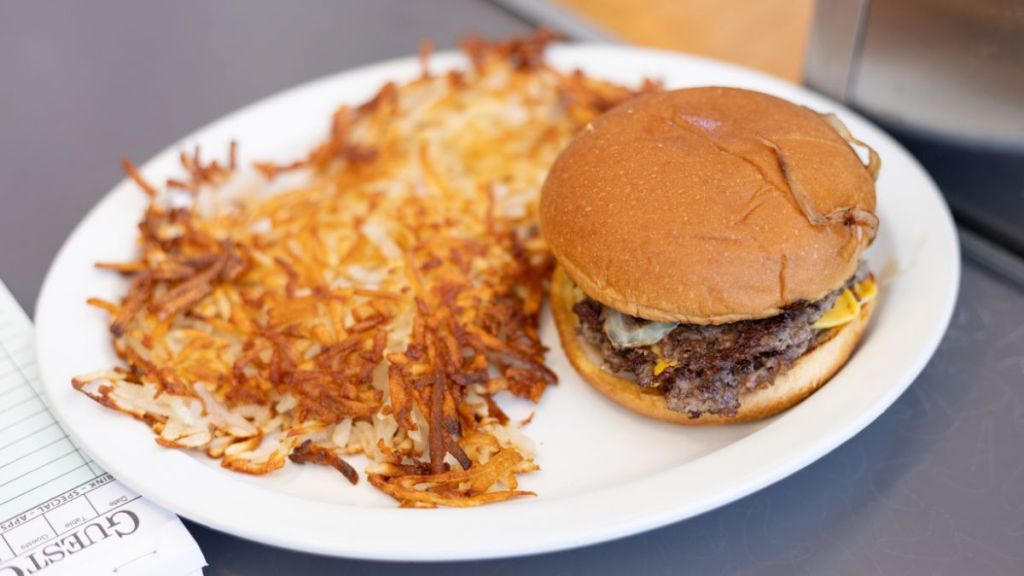
The city’s proposal calls for 100% of any increase in food and beverage sales taxes within the impact area to be redirected to pay for the stadium.
That includes taxes paid on extra burgers bought at Town Topic. If the burgers become more expensive at any point before 2056, that will also be considered stadium impact.
And notably, beef prices have increased at more than double the rate of inflation over the past 12 months.
2. A succulent purchased at Roots KC in the Westside

The stadium impact area stretches west past the Crossroads into the Westside neighborhood.
Any increases in capital improvement, parks and public safety sales tax revenues over the next 30 years will go to the stadium. Together, those three taxes total 1.75 cents for every dollar you spend, or about 61 cents for a $35 cactus.
Roots KC is a 30-minute walk uphill from the Crown Center ballpark. Using the streetcar shortens that to a 15-minute walk, still uphill.
3. A sweater from Arizona Trading Co.

Again, any increase above the amount those city sales taxes generated in 2025 would be directed to the new Royals ballpark for 30 years.
That could include sales taxes on a sweater from Arizona Trading Co.
The clothing consignment store is a 20-minute walk from the proposed Crown Center ballpark.
4. Roasted lamb from Green Dirt on Oak
Kansas City charges a 2% sales tax on prepared food and beverages as part of its convention and tourism tax. That’s in addition to the already mentioned city sales taxes, which are also redirected to the stadium.
If you go to Green Dirt on Oak and order a $48 plate of roasted lamb, that adds up to a little less than $2 in sales taxes — more if you order a cheese kitchen martini.
Insofar as that tax revenue is an increase from 2025, that money will help pay off the debt for the new Royals ballpark instead of paying for city services.
5. Any increase in electricity prices over the next 30 years
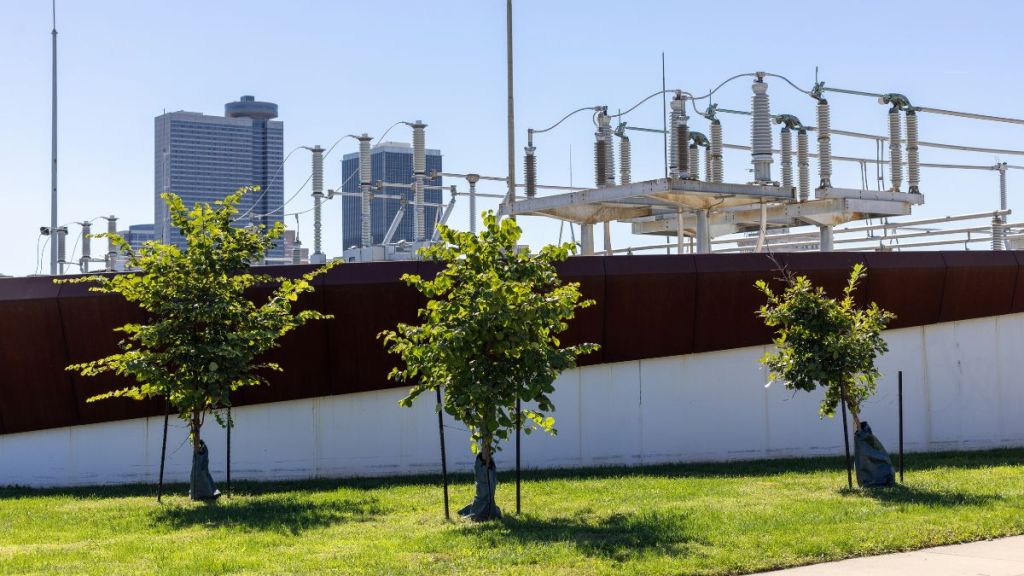
Evergy pays what’s called a “license tax” to Kansas City every three months. It’s a 6% tax on all of the electricity it sells to customers.
The more Kansas Citians spend on electricity and gas every month, the more Evergy has to pay the city.
Any increase in that tax revenue within the stadium impact area over the next 30 years will be directed back to pay for the stadium.
If electricity rates go up for any reason, customers in the Crossroads, Westside, West Bottoms and Union Hill will spend more money on their utilities.
Those utility bills are taxed, and all of that increase in tax revenue will be labeled “stadium impact” and redirected to pay off the stadium debt.
6. Parking at this spot in the West Bottoms on game day
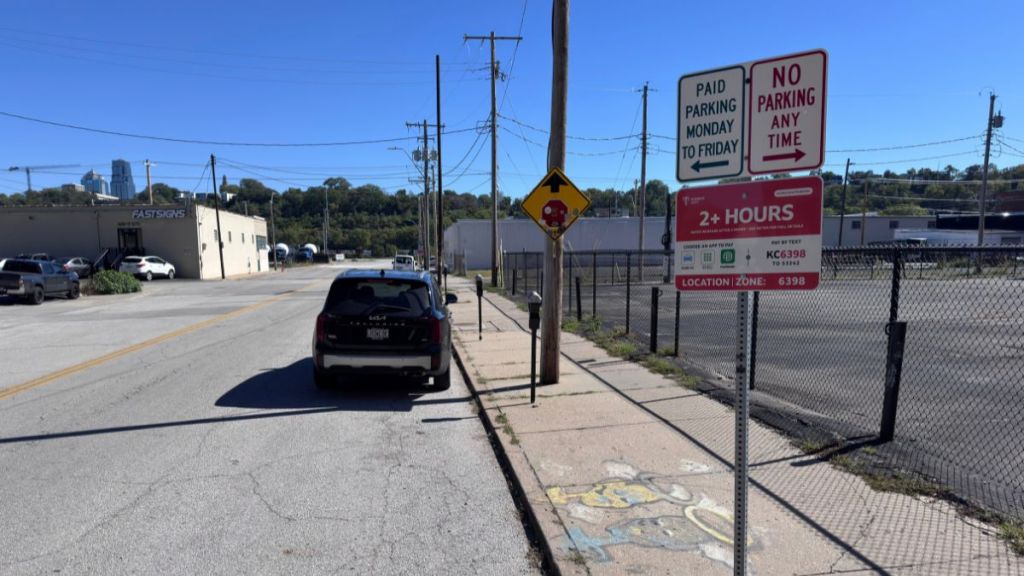
(Or on any other dates “as determined by the Director of Public Works.”)
Kansas City will use parking revenue from the entire stadium impact area to pay off the $600 million in bonds for the Royals ballpark.
Unlike the other city sources contributing to the stadium, the city will redirect all of the money it makes from its parking — not just the increase above baseline.
That includes whatever you pay for this parking space in the West Bottoms.
It’s a 2.5-mile walk from the Crown Center ballpark, or about 40 minutes at a brisk pace. If you take the 12th Street bus to Main Street and then take the streetcar the rest of the way, you can get the trip down to 30 minutes.
7. A mocktail from The Campground in the West Bottoms
You’ll probably be parched after that 2.5-mile walk back to your car after the game.
If you grab a mocktail from The Campground, you’ll pay a 2% tax on that prepared beverage, plus 1.75% in other city sales taxes.
If those taxes end up being more than they were in 2025, they’ll go toward the stadium debt.
8. All of the proceeds from the new Alma Mader taproom and Korean fried chicken restaurant
Within the next few months, Alma Mader is planning to open an expansion of its Westside brewery to include a new taproom, patio space and a Korean fried chicken restaurant.
Because it’s a new business that did not exist when the city set its 2025 baseline, all of the food and beverage tax dollars, as well all the revenue from those three sales taxes, would be considered stadium impact and would help pay down the Royals debt.
9. A glass of wine you bought at the Kauffman Center before a symphony concert
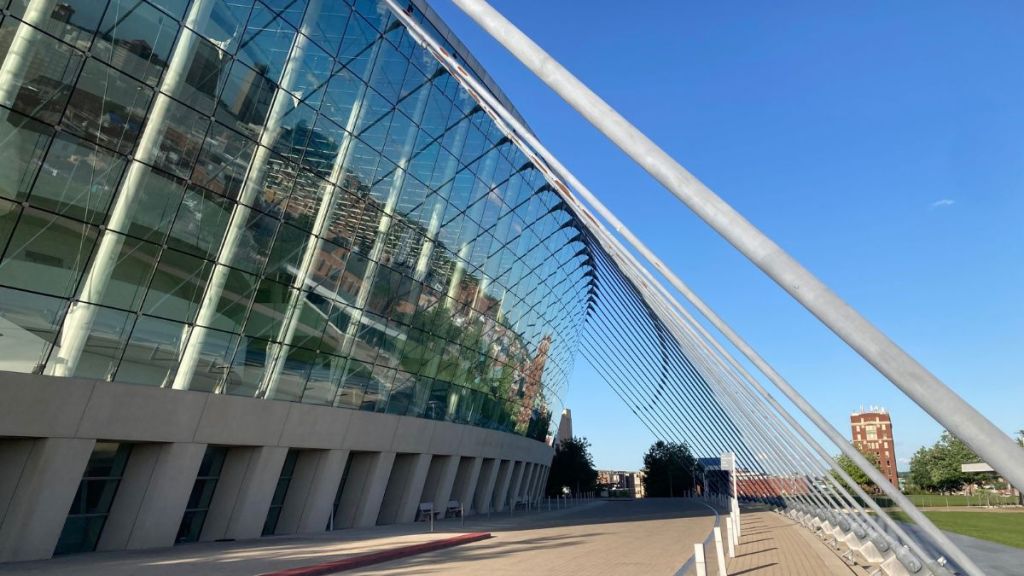
The Kauffman Center is two streetcar stops away from Crown Center, and it’s entirely within the stadium impact area.
If you pay for parking at the performing arts center parking garage, that parking revenue is explicitly excluded from the stadium impact area. (Only on-street parking can be redirected to pay for the stadium.)
But any sales taxes you pay on a glass of wine at the venue are fair game.
10. A bag of weed gummies from a dispensary at 31st Street and Southwest Boulevard
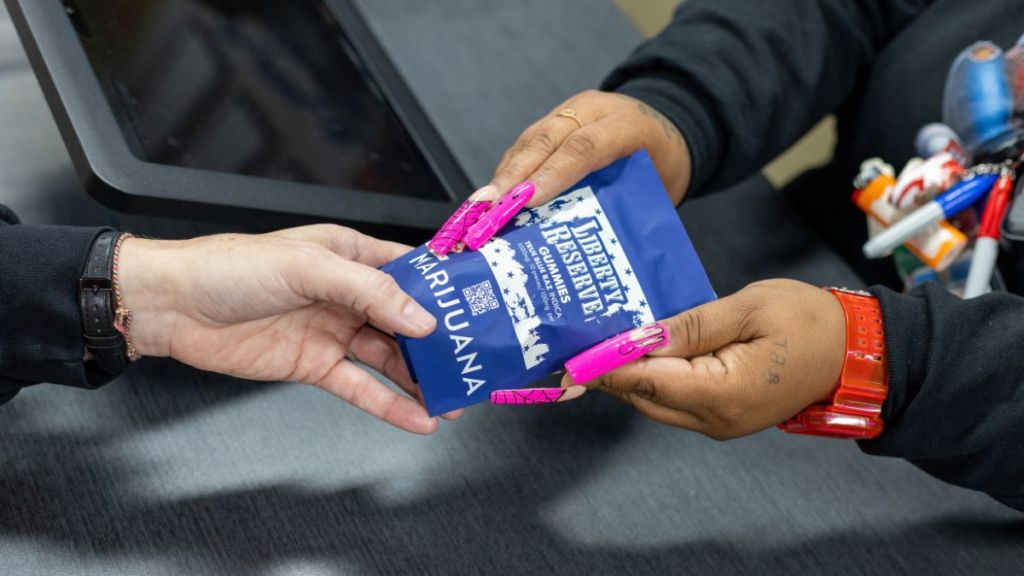
The From the Earth location on Southwest Boulevard is included in the stadium impact area, and when you buy a bag of gummies, you pay a 1% sales tax for capital improvements, a 0.5% sales tax for parks and a 0.25% sales tax for public safety.
If that’s an increase from the 2025 baseline, whether because of increased sales or because of higher prices, the Royals will get all of the excess.
From the Earth is roughly a 30-minute walk from Crown Center.
11. Natural gas used to heat the Livestock Exchange building in the West Bottoms
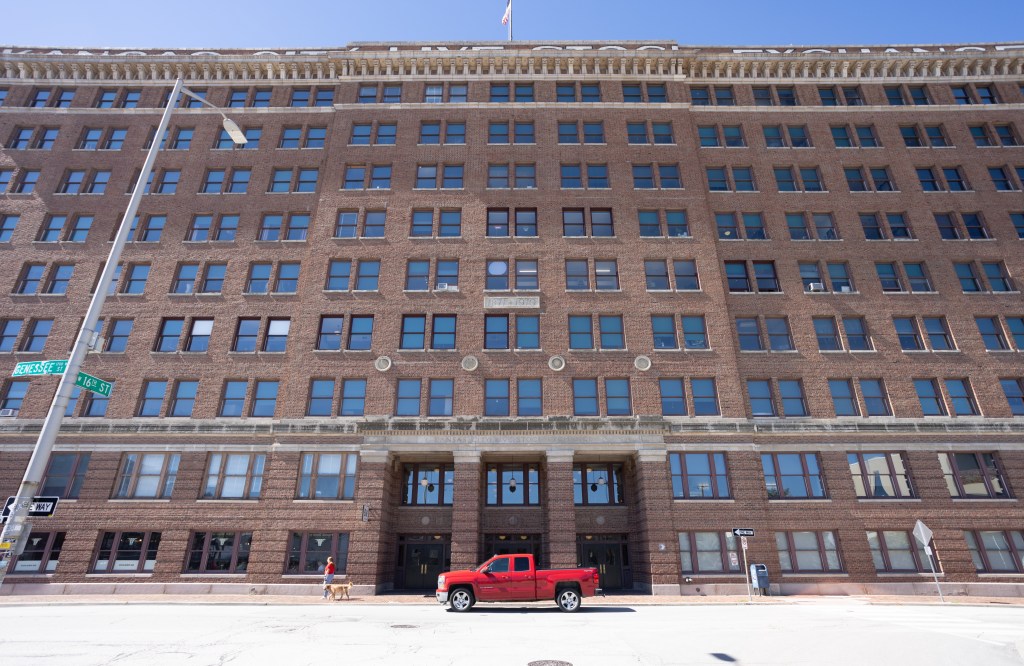
Like Evergy, Spire also pays utility license taxes on natural gas sales.
Natural gas prices are estimated to increase by nearly 6% over last year for the coming winter season, according to the National Energy Assistance Directors Association.
The Livestock Exchange building might end up paying 6% more for natural gas used to heat its 225,000 square feet of office and commercial space.
But instead of paying for city services, the extra utility license tax revenues generated by the higher cost of natural gas would be labeled “stadium impact” and redirected to pay for the debt on the Crown Center Royals ballpark, about 2.5 miles away.
12. A salary increase given to an IRS employee in 2049
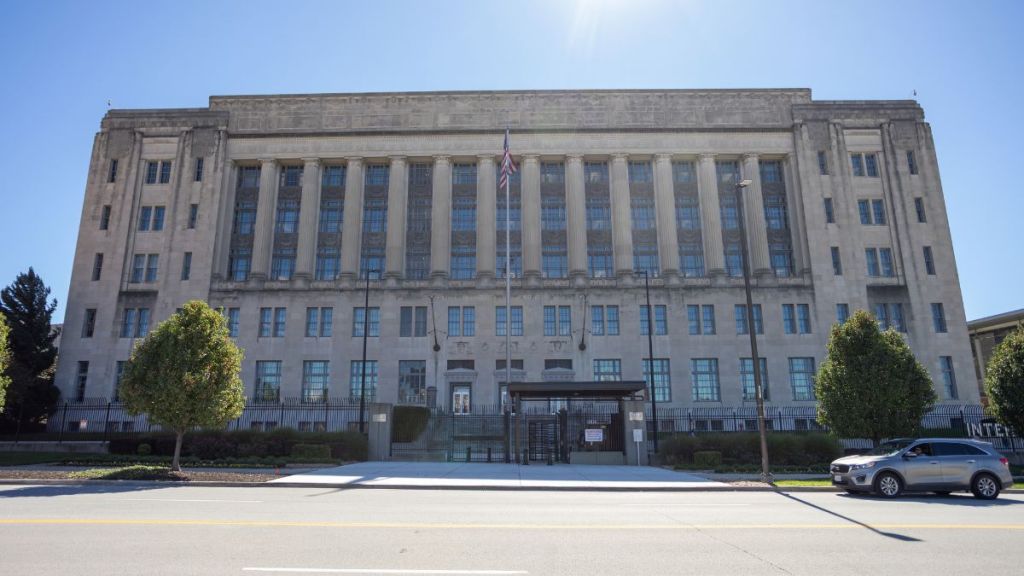
Imagine that you’re an employee at the Internal Revenue Service offices just south of Union Station. The year is 2049, and the federal government announced that it is giving all IRS employees a $2,000 bonus for extra hard work during tax season.
When Kansas City collects its 1% earnings tax from that bonus, or $20 per employee, that money will be redirected to pay for the stadium.
And when you go to Jack Stack after work with your IRS co-workers to celebrate a job well done, the sales taxes on your beer and your burnt ends will also be redirected to pay for the stadium. The same goes for the $10 you’ll spend on street parking that night and the taxes you’ll pay on your electricity bill in your Westside apartment.
Because in 2049, Kansas City will still have seven years left on its 30-year debt schedule.
And the city will still likely owe more than $200 million on the Royals ballpark, assuming at least a 2.5% interest rate on its yearly payments.

