


Mounting evidence that hotel reservations for the upcoming World Cup are lagging far behind expectations is prompting a provocative theory.
Might some soccer fans pay top dollar to traverse the globe just to camp in Kansas City?
Mayor Christal Watson of Kansas City, Kansas, floated the notion during the April 28 board of directors meeting of the Mid-America Regional Council.
“I met with the consulate from Argentina just last week,” Watson said. “He kind of verified that about 100,000 will be coming just from Argentina but they will not be staying in hotels.”
Officials at KC2026, Kansas City’s nonprofit World Cup host committee, have said that 100,000 fans from Argentina are expected to visit the U.S. and not just Kansas City. They have also projected more than 650,000 visitors coming to the Kansas City area over the course of the tournament.
Takeaways
- Nearly 90% of hotels in Kansas City report lower than expected reservations during the World Cup.
- Mayor Christal Watson of Kansas City, Kansas, told area leaders that the consulate of Argentina expects many visitors will come without hotel reservations.
- Area campgrounds contacted by The Beacon have not seen an overwhelming uptick in reservations.
- Cities and park rangers plan a communication-first strategy to discourage overnight camping in public parks where it is prohibited.
Watson asked the group whether other local municipalities have heard about fans camping out.
“Have you heard of anything as such, where they plan to use open public spaces to camp?” Watson asked. “Are (we) prepared for that?”
Several people attending the MARC meeting indicated that they had at least heard about the possibility of fans camping.
Given the high prices for tickets and airfare, devoted fans wanting to save on lodging isn’t such a far-fetched idea.
The Beacon spoke with area officials and campgrounds to explore the likelihood of fans camping during the event and heard a mix of expectations and results so far.
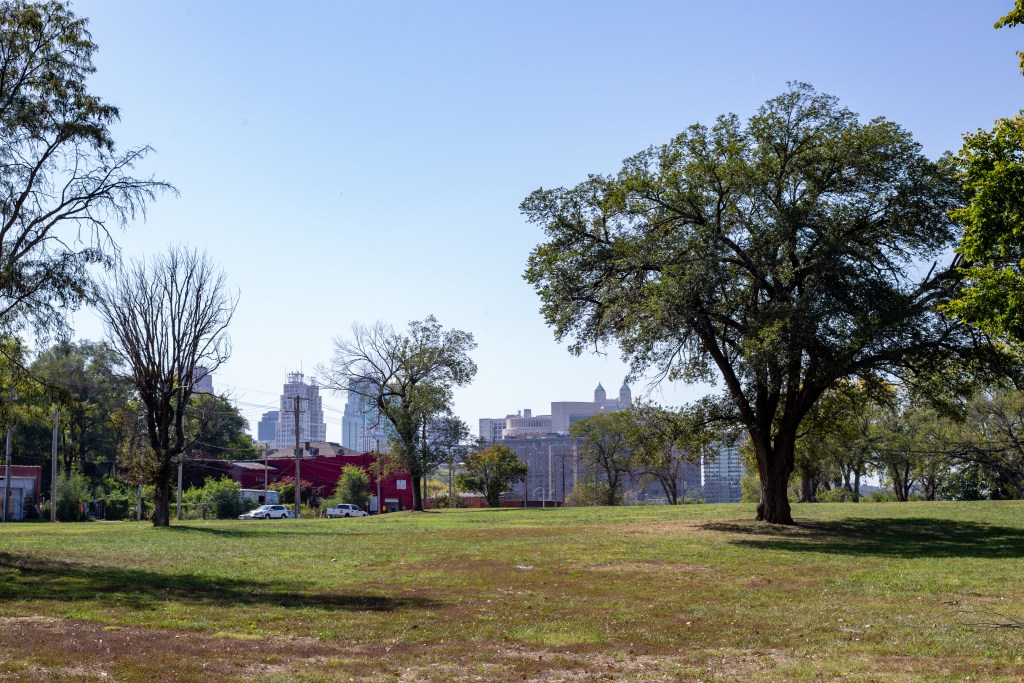
Overnight camping at city parks in Kansas City and KCK isn’t allowed, and area municipalities have also discussed how to handle possible encampments of fans during the World Cup.
Economics and passion could be cause for camping
Camping at the World Cup isn’t anything new. Passionate fans from around the world have been known to show up, support their team and sometimes forgo traditional accommodations.
“It is definitely pretty standard World Cup behavior,” Toni Zibert, public information officer for the Kansas City, Missouri, Parks Department, told The Beacon. “It is something that has been observed at previous World Cups — attendees will kind of camp out during the games.”
While many countries have fan bases that travel well and sometimes camp near match sites, Argentine fans camped out en masse in 2014 when the World Cup was hosted in Brazil.
Argentina’s national team is also the reigning World Cup champion and is led by Lionel Messi, one of the most popular athletes on the planet. Kansas City is hosting the team’s base camp and at least one match — suggesting much of their supporter base is likely to head to Kansas City.
Whether they — or supporters of other teams — will be camping in Kansas City is unknown. But given conditions, it could make financial sense for some fans.
This year’s World Cup tickets are often much more expensive than in the past. At press time, the cheapest ticket to see Argentina play Algeria in Kansas City is over $1,000 on Ticketmaster.
“I think that (concern about public camping) stems from the fact that fans spend a lot of their money just getting tickets to the games and getting tickets for flights,” Zibert said. “And so basically, they spend all of their money just trying to get here, but they are so determined to go to these World Cup games that they will do everything that they need to, including just camping out in whatever spot is available.”
That general notion of passion clashing with economic reality among soccer fans is prevalent. Tracy Whelpley, director of regional impact for KC2026, told a recent meeting of Kansas City-area labor leaders that the level of fan devotion is difficult for Americans to fully grasp.
“The embassies have told us, in Qatar and at previous World Cups, that people will sell their cars to get a ticket and come over,” Whelpley said.
A video posted this month from The New York Times illustrates the point. Global sports correspondent Tariq Panja traveled to Buenos Aires, Argentina, where he spoke with a gathering of fans who attended previous World Cup matches together.
“This country lives and breathes soccer. It is a very, very important thing, almost like a pilgrimage, to go to the World Cup for some of these people,” Panja reported. “But this is the most expensive World Cup in history.”
The group was reckoning with how to afford attending the matches given the high ticket prices and the spread-out nature of this year’s World Cup, in three host countries and 16 cities.
FIFA, the organization that runs the World Cup, has instituted dynamic pricing for matches. The effect is that tickets for the most popular teams are much more expensive than other games. Tickets to see Ecuador vs. Curacao in group-stage play are listed for half the price of the first match at Arrowhead (called “Kansas City Stadium” during the World Cup) featuring Argentina.
Further, hotel rooms that are available on World Cup match days are also much more expensive than usual. For example, the Loews Downtown Convention Hotel has rooms listed at nearly $700 a night during the first World Cup match in June, compared to roughly $219 for a standard day.
The surging cost of jet fuel — in part due to the war in Iran — also has caused airlines to raise ticket prices for flights.
With game day tickets, airfare and lodging costs creating the “most expensive World Cup in history,” it could mean more fans will look to camp out when visiting Kansas City for the tournament.
What’s happening on the (camp)ground
While the logic and history may be there, evidence that there will be widespread fan camping in Kansas City is modest at best.
“With RVs and camping … we had several different campgrounds ask if they should increase their capacity,” Whelpley with KC2026 said. “But there won’t be public camping allowed in public spaces. I’ve started to hear about Facebook groups that are opening up, thinking of letting people camp in their yard.”
The Beacon contacted several area campgrounds near match sites and teams’ base camps. Online reservations are still amply available for campsites in the area, including during World Cup matches. This is despite tent or cabin camping sites that are priced significantly less than traditional lodging, as low as $35 a night, that may appeal to cash-strapped soccer fans.
A manager of the KOA campsite near Lawrence — featuring traditional camping as well as RV parking — said they have seen a slight uptick in reservations, but nothing crazy so far. The site is between the Algeria and Argentina base camps and they say they have some bookings from international World Cup fans during June but the bulk of their business hasn’t been World Cup-driven.
“We don’t have a mass influx of World Cup participants staying,” the manager said.
Jackson County Parks and Recreation also offers camping and RV sites that are available for rent. A county parks public information officer said they anticipate interest during the World Cup but are still compiling data on reservation trends. They also noted that the county’s campgrounds are typically busy during the summer.
The three Jackson County campgrounds are within a few miles of Arrowhead, where the World Cup matches will be played in the city. Despite this, online reservations for county campsites as of press time — just over a month away from the first match — are broadly available on World Cup game days.
Kansas City and KCK have hundreds of public parks between them, but overnight camping is not allowed. Zibert with Kansas City’s parks department said that camping isn’t a huge concern for the city, but it is on their radar even if they aren’t sure what to expect given the unprecedented nature of hosting the World Cup.
“We could get through the entire summer and not see anybody camping in our (city) parks or we could see thousands of people camping,” Zibert said. “It’s completely up in the air, but our park rangers are ready for anything.”
How cities plan to handle overnight camping
Across the Kansas City area, cities aren’t changing or loosening rules around public camping for the World Cup.
At the MARC meeting, when Watson asked whether cities were considering ordinance changes, Shawnee Mayor Mickey Sandifer was direct.
“We’re not changing any ordinances,” Sandifer said. “And we really don’t have a place for a tent city.”
Dan Manley of MARC’s emergency services division said jurisdictions should review their ordinances as a matter of preparedness, but cautioned that there is also “a lot of misinformation being circulated” about what to expect.
In Kansas City, Kansas, the Unified Government recently convened a meeting with public safety officials including its chief of police, sheriff, fire chief and legal counsel to discuss the issue.
“From a capacity standpoint, it’s a health and safety concern,” Krystal McFeders, public information officer for the UG, told The Beacon. “Unfortunately we wouldn’t be able to welcome any camping” in public spaces like parks.
McFeders said visitors can use UG parks during operating hours but cannot stay past midnight. She said that the UG is working with agencies to provide resources directing visitors to legitimate lodging and campgrounds and said that those resources would be translated into multiple languages.
“We’re going to try to work to make sure international guests that come are aware of the cities and counties that do have ordinances against camping,” McFeders said. “I’m going to work on making sure that FIFA pushes that information out as much as they can.”
McFeders added that Johnson County and the city of Lawrence had similar discussions and also decided against changing their ordinances, citing the same capacity and safety concerns.
Kansas City, Missouri, oversees 213 parks, none of which allows for overnight camping. The city’s parks typically close at midnight or earlier.
As Fox4 reported this month, Kansas City Chief Park Ranger Rick Castillo said that camping under city ordinance isn’t limited to tents — it extends to any structure, including motor vehicles, which can be classified as “a covered wagon” under the ordinance.
Kansas City homelessness prevention coordinator Josh Henges told The Beacon that if an encampment is reported in the city during the World Cup, the city’s approach is unchanged compared to the rest of the year.
“It won’t change even 1% for the World Cup,” Henges said.
He said the camp would be assessed a score measuring the danger to those in the encampment and to the nearby community, then prioritized from there. Henges noted that any public camping in city parks by soccer fans would be referred to the city’s park rangers.
Both Castillo and Zibert described an enforcement approach built on conversation rather than confrontation. Rangers will talk to people first, try to gain compliance and give them time to relocate. The goal is not to punish visitors who may have traveled thousands of miles to be here.
Zibert said the department has also moved key park ordinances from a PDF onto its main website, which includes a translation feature for several languages commonly spoken by expected visitors, so people can look up the rules in their own language before they arrive.
“They’re not looking to arrest anybody, but they just want to make sure it’s a positive experience for everybody,” Zibert said. “They understand too — these people are spending a lot of money to be here, to go to these games. These are once-in-a-lifetime experiences for some people, and they want to make sure everybody’s having a good time.”

