


Mid-America Regional Council: Board of Directors Meeting (April 28, 2026)
By Connye Griffin, Kansas City Documenter
These notes were produced through Kansas City Documenters, which trains and pays community members to take fact-checked notes at public meetings, strengthening transparency and accountability in local government.
See more about this meeting at Documenters.org
Summary
- MARC has scheduled workshops to inform interested parties about changes in eligibility requirements for Opportunity Zones.
- MARC contracted with the KC2026 (World Cup) Host Committee to manage $59.5 million in grant funds, including providing fiscal oversight and compliance support services.
- Board members learned about the updated Smart Moves Transit Plan, a white paper on e-mobility (including electric bikes, scooters, skateboards and unicycles) and a Comprehensive Safety Action Plan.
Notes
Competitive Economy
- MARC is informing community organizations and government leaders about changes to Opportunity Zones made through the One Big Beautiful Bill Act of 2025. MARC said the legislation made changes to eligibility and allowed for a new round of Opportunity Zone designations. The first round of designations came out a decade ago. The new Opportunity Zones take effect Jan. 1, according to Amanda Graor, MARC’s director of data and digital services and chief innovation officer.
- As outlined by the Missouri Department of Economic Development (DED):
- “Opportunity Zones are federally designated, economically distressed census tracts that attract private investment through capital-gains tax incentives. Investors who reinvest their gains into Qualified Opportunity Funds (QOFs), which finance businesses, housing, or infrastructure within designated zones, can reduce and defer capital-gains taxes and eliminate taxes on new appreciation if they hold the investment long enough. The goal is to channel long-term capital into communities that have the potential for growth but struggle to access traditional financing.”
- The DED said changes made by the One Big Beautiful Bill include enhanced rural benefits.
- Graor said there will be 131 tracts designated in Missouri and 53 designated in Kansas.
- MARC this month shared information about the changes with the Greater Kansas City Chamber of Commerce and the Civic Council of Greater Kansas City.
- Graor said MARC is hosting workshops for “member governments and interested parties to coordinate . . . and strengthen their competitiveness for the state (Opportunity Zone) selection processes.”
- The Missouri workshop took place Tuesday. The Missouri application deadline is May 17. Kansas’ workshop is set for May 1. The Kansas application deadline is June 1.
World Cup Preparations
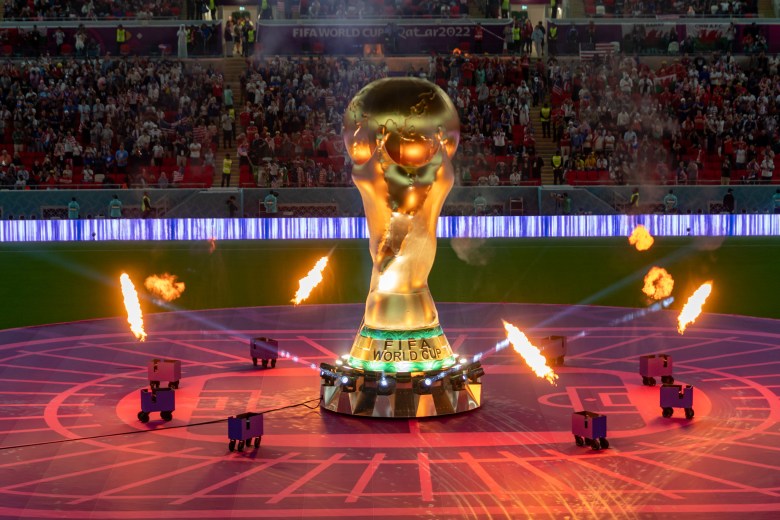
- The board approved a $400,000 contract to administer $59.5 million in public safety funds on behalf of KC2026, the organization coordinating the World Cup matches in Kansas City. The work includes overseeing procurements, invoicing, payments and reimbursements. The pass-through funding from the FIFA World Cup Grant Program is coming from the Missouri Department of Public Safety/Office of Homeland Security.
- Information about that contract, other special preparations for the World Cup and responses to board member questions came from Dan Manley, MARC’s emergency services project manager and senior planner:
- MARC already manages the regional Homeland Security Coordinating Committee so it was a “natural fit” for KC2026 to work with the MARC emergency services group.
- The emergency services group has held dozens of extra meetings and trainings to prepare for the World Cup.
- Regional public information officers are collaborating, “recognizing that we’re going to have new audiences coming into our region from an international community, and how we can be best prepared to help engage and have that cultural competency as those partners are coming into the community.”
- The community calendar lists more than 400 events planned throughout the region in June and July that are occurring in jurisdictions all across the region.
- Security officials are setting up a Regional Coordination Center to assist with needs like emergency mutual aid resources.
- The potential issue of fans camping in public places is one issue that has been discussed in monthly operational coordination meetings between all the public safety partners
Smart Moves Transit Plan
- Martin Rivarola, MARC’s transportation planning director, outlined the 10-year vision for public transit with a report drawn from the Smart Moves Transit Plan.
- For most transit districts or counties, fares with 80% of trips paid and a three-eighths cent sales tax would provide funds sufficient to maintain and enhance transit services.
- It would cost about $217 million annually to run a system based on the 10-year vision.
- The plan would increase ridership, employment opportunities for households with no vehicle, environmental benefits and a 2-to-1 return on investment.
E-Mobility White Paper
- Patrick Trouba with MARC introduced a report titled “E-Mobility Devices in the Kansas City Metro: A Review of Codes, Infrastructure Principles and Educational Efforts,” referred to as the E-Mobility white paper.
- It was undertaken on behalf of area stakeholders facing an increase in e-mobility devices. The white paper offers an analysis of product definitions and safety challenges resulting from their use. Due to different prohibitions and regulations across the counties and states, MARC suggests education will have the most immediate effect in safeguarding riders, drivers and pedestrians.
- Other conclusions from the paper include:
- Electric mobility devices that should be considered electric mopeds or motorcycles (e-motos) are being confused with electric-assist bicycles (e-bikes). A first step to better e-bike safety would be to recognize and regulate e-motos as motor vehicles.
- Cities in the Kansas City region have a variety of regulations related to e-mobility devices. They differ on topics such as the definition of an e-bike, whether e-scooters may operate on city streets, and what kinds of devices are allowed on trails. As cities pass more ordinances on this topic, regulations across the region will have an increasingly patchwork character.
- There is no specific infrastructure guidance around e-mobility devices. What makes for good bicycle infrastructure is likely what makes good e-mobility infrastructure.
- Police officers prefer to educate residents before punitively enforcing the law.
- MARC is collaborating with Johnson County, Kansas, to gather interested city staff and elected officials for a workgroup to develop a model e-mobility policy for the region. This workgroup is scheduled for May 14.
Destination Safe
- The board unanimously approved the Destination Safe: Comprehensive Safety Action Plan. Rivarola said the adopted plan would enable grant funding to help prevent fatal and serious injury crashes by improving post-crash healthcare and by designing safer roadways while implementing safer speeds in safer vehicles.
Executive Director Search Update
- MARC Executive Director David Warm announced late last year that he would retire this year after 36 years in the role. The search committee reported that applications have been received and reviewed. Interviews start next week.
Consent Agenda
- The board approved all agenda items (7a-h) listed for consent.
Observations & Follow-Up Questions
- Are traffic deaths preventable, as the Comprehensive Safety Action Plan asserts?
- How quickly will cities, counties and states move to safeguard e-mobility riders and their roadway or sidewalk partners?
- Will the planning and preparatory communication systems serve the public well through the World Cup?
If you believe anything in these notes is inaccurate, please email us at documenters@thebeacon.media with “Correction Request” in the subject line. Learn more about Documenters on our website.

