


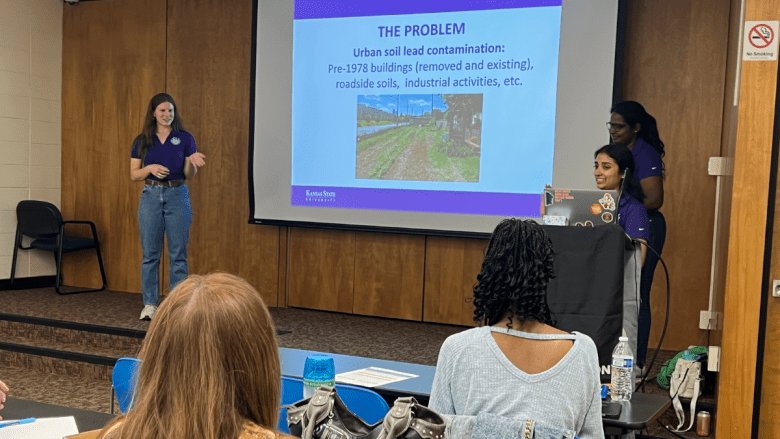
At The Beacon, we often say our reporting starts where the community is talking. But this spring, our reporting started at a public meeting and ended up in Dottie’s backyard.
For 55 years, Dottie has grown food like peppers, sweet potatoes and okra in the same plot of soil behind her home in Kansas City, Kansas. It’s a space that helped feed her family for decades. But on April 30 at our Brownfields event at the South Branch Library, she learned that soil also held something else — elevated levels of lead.
This wasn’t a discovery made by chance. It was the result of a deliberate chain of civic empowerment that began in a quiet committee room and ended with a grandmother getting the answers she deserved.
The power of public records
The trail began on March 2, 2026, when Kansas City Documenter Connye Griffin attended a meeting of the Unified Government Neighborhood & Community Development Committee.
Her notes went beyond recording the discussion, surfacing scale and risk. The Wyandotte County Land Bank was reviewing hundreds of parcels, including 220 vacant lots in the Douglass-Sumner neighborhood, for possible contamination. Of the 163 properties already assessed, dozens remained flagged for lead or petroleum concerns and were being withheld from redevelopment.
That public record snapshot became the foundation for deeper reporting by Beacon health reporter Suzanne King. Her work found that in Kansas City, Missouri, 60% to 65% of tested vacant residential lots exceed safe lead levels, with some older neighborhoods exceeding 80%.
Together, these signals pointed to a pattern of contamination, embedded in older urban neighborhoods.
Bringing the reporting into the room
Brownfields reporting is often framed around industrial sites or large redevelopment projects. But community conversations made it clear that people are worried about their own soil.
We identified a gap. While large sites can access federal cleanup funding, individual homeowners often have no comparable path to test for or address contamination on their own property.
So we brought the reporting directly into the community.
In partnership with Kansas State University’s Department of Agronomy, we hosted a soil-testing event where residents brought samples from their own yards. Using X-ray fluorescence (XRF) technology, graduate student researchers provided on-site testing and immediate results.
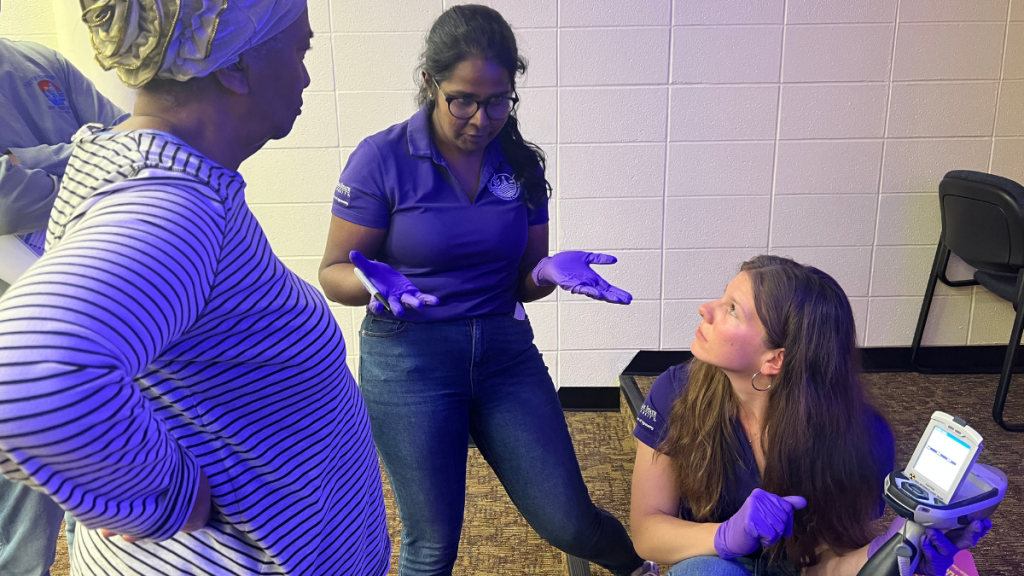
For residents like Dottie, the impact was immediate. Instead of uncertainty, they left with data and next steps for the safety of their families.
A network built around answers
The event connected residents to both critical information and to people working across the issue:
- Environmental support: Nikki Richardson, executive director of Justice for Wyandotte, provided resources and context on neighborhood-level environmental risks, including a tire disposal and recycling program paid for by her organization.
- Government coordination: Alyssa Marcy, brownfields coordinator for the Unified Government, oversees assessment of hundreds of parcels across KCK and helps connect residents to remediation pathways.
- Scientific research: Dr. Ganga Hettiarachchi and Kansas State University researchers are studying phosphorus-based treatments that may help stabilize lead in soil as a lower-cost alternative to full excavation.
By the end of the night, more than a dozen residents had real-time results about their soil and a clearer understanding of what comes next.
Why this work matters
Dottie needed information she could act on.
Public records, reporting and community engagement came to life in real homes, real soil and real decisions about safety and land use.
Become a Documenter
Dottie received this important information about her yard because a Documenter showed up at a public meeting that would otherwise go unnoticed, let alone covered by local media. You can be that person. We are looking for more citizen journalists to help The Beacon shine a light on local government and ensure no important detail goes unnoticed.
Our next Documenters onboarding event is May 12.
Join the public conversation
Local meetings remain one of the most direct ways to understand how land use, funding and environmental decisions are made. You can learn more about upcoming meetings and make plans to attend on our Kansas City Documenters meeting page.
Lead contamination is a lived reality in Kansas City. Our job at The Beacon is to sit at the table with you, in the library or in the garden, to help you figure out what to do next. Every resident deserves to know what’s in their soil.

