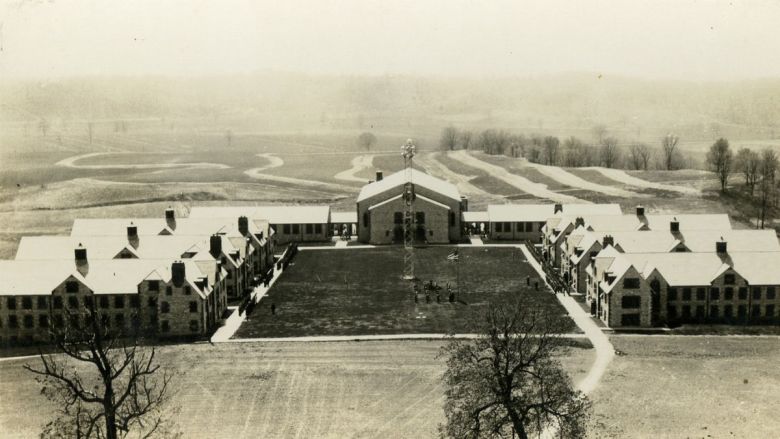
Throughout the summer of 2024, six people in prison at Missouri’s Algoa Correctional Center experienced temperatures and humidity levels that violated their constitutional rights, a new lawsuit alleges.
Inmates described conditions at Algoa Correctional Center, a nearly 100-year-old building without air conditioning, as a “coffin with a heat lamp.” Even through the nights, when temperatures drop, inmates would “pray to survive to the next day.”
Heat indexes, which account for temperature and humidity levels, reached 120 degrees outside the minimum-security Jefferson City facility during 2024, the lawsuit states. It was the hottest recorded year in the United States, and climate scientists aren’t predicting the high temperatures will decline any time soon.
Now, attorneys at the MacArthur Justice Center in St. Louis are hoping their lawsuit will spur action for those in solitary confinement and those with certain medical conditions, as we enter what is predicted to be a warmer-than-average May. According to records attorneys obtained from the state Department of Corrections, about 400 people are estimated to be in the heat-sensitive class, while another 86 are in solitary confinement.
“We know that it’s getting hotter every year,” said Shubra Ohri, senior counsel at the MacArthur Justice Center. “Our hope would be that this would prompt (Missouri Department of Corrections) to reconsider their practices here and understand that they are unconstitutional and inhumane.”
The Department of Corrections follows a heat mitigation plan that includes access to showers, ice and the ability for inmates to purchase a personal fan from the commissary, which cost about $25.
The Department of Corrections told The Beacon Monday it cannot comment on pending litigation, but said that all facilities have industrial fans, misting fans and sprinkling stations.
Algoa is one of a few Missouri prisons that have no central air conditioning. Of the state’s 17 prisons, 10 are fully air conditioned. But even in air conditioned housing units, inmates report air conditioning that doesn’t function properly, with cases of blowing warm air and dust.
The Missouri General Assembly determines funding for the department and has invested in air conditioning at state prisons in recent years. Fulton Diagnostic and Reception Center is in the middle of a $14.3 million project to install air conditioning in its housing units. The funding was set aside as part of the state’s 2024 budget.
The dangers of heat in prison in Missouri
Research shows that because of their location and type of building materials, like brick and concrete, prisons and jails are particularly difficult to keep cool. They’re often constructed in places where land prices are low and weather conditions aren’t ideal, Cascade Tuholske, a researcher at Montana State University, told The Beacon last summer.
Algoa Correctional Center and Jefferson City Correctional Center, which share a campus, are close to the banks of the Missouri River. Parts of Algoa were constructed in 1919, and additional housing units were added to the campus in the early 1930s.
The federal Bureau of Prisons sets target internal temperatures at 76 degrees during the summer, but those guidelines don’t apply to state jails or prisons.
Tuholske’s research found that from 1982 to 2020, jails and prisons had an average of 5.5 days more exposure to wet-bulb globe temperatures (which account for heat, humidity and wind speed) higher than 82.4 degrees Fahrenheit, a threshold used by the U.S. National Institute for Occupational Safety and Health to limit humid heat exposure.
And for those with certain medical conditions — such as mental illnesses, cardiovascular disease, hypertension or diabetes — the warmer temperatures and humidity can take a toll on their bodies as they try to keep themselves cool. Medications associated with these conditions, like some medications prescribed for anxiety or depression, can make it more difficult for people’s bodies to thermoregulate, research shows.
Heat stress is the leading cause of weather-related deaths. And because people with medical conditions and older people are disproportionately represented in prison populations, they’re more at risk of complications from extreme heat.
“The risk of dying on a very hot day increases with age,” said Julie Skarha, an environmental epidemiologist at Brown University, last year. “And then I also find a delayed effect with suicide. After a really extreme heat day, suicides increase about two days later, and they increase by 20%.”
A 2018 report from the head of the union that represents Texas correctional officers noted that suicide attempts among inmates rose in the summer months, as inmates stopped taking their medication to attempt to avoid heat-related illnesses.
Southern states like Texas have started adopting official heat-related protocols in their prisons. From April 15 to October 1, the Texas Department of Criminal Justice takes precautions, including screening inmates for medical conditions or medications that make them susceptible to the heat, allowing inmates to use respite areas 24 hours a day, and providing water, ice and electrolytes.
“It is reaching hazardous thresholds regularly,” Ohri said of the heat at Missouri’s Algoa prison. “What makes it more concerning in Missouri, as opposed to elsewhere in the South, is that we’re not ready. The Missouri Department of Corrections is not ready for it, and it will be at the sake of someone’s life and health that they are not prepared.”
How Algoa inmates deal with the heat
In the lawsuit, one inmate stated that other incarcerated friends who worked in HVAC services in the facility told him that temperatures reached 111 degrees Fahrenheit.
Incarcerated Missourians who are a part of the class-action lawsuit say that their medical conditions are often worse during the summer months.
Anthony Russell, an inmate at Algoa, has several chronic health conditions, the lawsuit says, including respiratory conditions. In the lawsuit, Russell says he passed out three times during the summer heat and reported more heat-triggered seizures during the summer months.
Another inmate named in the lawsuit has chronic obstructive pulmonary disease and limited lung capacity. He reported struggling to breathe in the summer months and told attorneys that he fainted in his bunk due to overheating last summer.
“When it gets hot, I don’t leave my housing unit. In the summer, it is hot all day long,” James Burris said in the lawsuit. “I can’t sleep until 4 or 5 in the morning because I have trouble breathing in the heat. I don’t feel like eating or doing anything… I just lay in my bunk and sweat.”
For those in solitary confinement, the heat can feel even more stifling. Those inmates have more limited access to showers, smaller windows and fewer ways to safely notify correctional officers if they are experiencing an emergency, the lawsuit alleges.
The solitary confinement cells have no electrical outlets, the lawsuit alleges, so inmates who may have a personal fan cannot use it. They also have no emergency buttons, meaning there are fewer ways to notify correctional officers if they were to experience a medical emergency.
One inmate who stayed in solitary confinement last summer said he was never able to escape “what felt like an oven… not even for a few minutes.” The inmate told lawyers that a correctional officer once told him that it was 107 degrees Fahrenheit inside the cells, the lawsuit said.
In the lawsuit, attorneys allege that the Department of Corrections is aware of the dangers of the heat. The department posts heat advisories and warnings and limits movement of inmates on extremely hot days, the lawsuit states.
Attorneys also pointed to the installation of window air conditioning units in staff or medical areas as an acknowledgement from the department that the conditions are unreasonable.
“There is air conditioning in staff areas,” Ohri said. “What more proof do you need to know that they understand how hot it can be?”
Because Algoa is a minimum-security facility, incarcerated people often aren’t serving long sentences there. To Ohri, that means Missourians serving time for lower-level crimes are leaving prison unhealthier than when they entered.
“They’re sicker and worse off,” Ohri said. “They go back to their communities in that state, which is not what they were sentenced to. They were not sentenced to die or become extremely ill.”