Takeaways
- Missouri and Kansas investigators are working backward through a vast produce supply chain to identify the source of cyclospora illnesses in the region.
- Tracing contaminated produce requires long interview processes and weeks of coordination among local, state and federal health officials.
- Supporters of regional food systems say shorter supply chains could limit the reach of future outbreaks and simplify investigations.
The same food supply chain that lets restaurants serve nearly identical produce in Missouri, Michigan or California can also make it remarkably difficult to figure out where contamination began when Americans get sick.
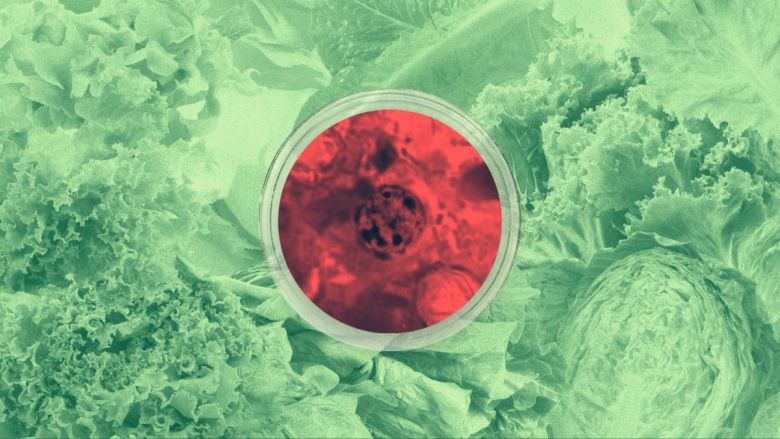
As cyclospora cases climb across Missouri and Kansas, public health investigators are working backward through a supply chain that can stretch thousands of miles and cross international borders before fresh produce ever reaches our table.
Every confirmed case of cyclospora, which is famously afflicting patients with “explosive diarrhea,” triggers an interview that can last up to an hour as public health investigators and epidemiologists ask patients to recall meals from days, or even weeks, earlier.
The summer months typically bring a small uptick in cyclospora, which is considered a parasitic infection that spreads through food or the use of contaminated water. But the scope seen across the country this year stands out as the country’s largest outbreak in recent history, sending local, state and federal investigators searching for a common source.
And the painstaking process of finding the source of the illness in just one person in Kansas or Missouri highlights a larger challenge: Produce can move through the hands of dozens of farms, packing facilities, grocery stores or restaurants in days. When contamination occurs, tracing it back through that system can take weeks.
How investigators track cyclospora cases in Missouri and Kansas
Missouri has reported nearly 600 cyclospora cases as of July 27, while Kansas has reported 289. In a typical year, officials in Jackson County see between three and seven cases, which can often be connected to international travel.
Nationwide, at least 41 states have reported cases. More than 4,000 cases have been confirmed by testing, with another 7,400 cases that were not confirmed by lab testing. Overall, the country has seen 308 hospitalizations related to the infection so far. In 2025, the country recorded about 2,700 cases total.
Cyclospora Cases

The Centers for Disease Control and Prevention said it factors in a six-week reporting lag between the onset of an illness and when cases are actually reported to the CDC, and it anticipates cases continuing to rise.
This summer, officials say emergency departments across the region have also seen an uptick in patients arriving at the hospital with diarrhea and other gastrointestinal symptoms.
In Boone County, Missouri, where health officials are investigating cases in dozens of patients, each interview can take up to an hour.
“It is becoming quite a time-consuming endeavor to single in on a common theme,” said Austin Krohn, the public information specialist for Columbia and Boone County Public Health.
And the process is made longer by conflicting information from federal officials and major distributors as to the cause of the outbreak.
Federal officials initially pointed to Taylor Farms, a major lettuce farmer and distributor, as the cause of much of the contaminated lettuce moving throughout the country.
Major food retailers like Taco Bell voluntarily pulled shredded lettuce from their menus, but the Food and Drug Administration later backtracked, saying testing resulted in a false positive result.
For health officials trying to find the cause of illness, the uncertainty at the federal level made the process all the more difficult.
“The false positive thing that’s been going on with the FDA maybe lengthened the process here,” Krohn said.
Investigators must ask where people ate, where they shopped and what symptoms they experienced. Plus, the infection can take up to two weeks to show symptoms, making tracking even more complex.
“It’s incredibly complicated with this one because there is a gestation period that can potentially last up to two weeks,” Krohn said. “You have to recall all these things because symptoms can potentially start appearing much later.”
Because many people can recover at home without ever going to the doctor, the number of cases is almost certainly higher than what is being reported, Krohn said.
“Numbers are most assuredly going to go up in an official capacity and in a nonofficial capacity,” he said.
Local cyclospora cases feed the national picture
Investigations don’t stop at the county level. They get elevated to state officials, who then compile data and share it with the federal government.
Officials in Jackson County are working diligently to identify potential sources of contamination.
“The distribution network as it pertains to our food is very, very complex in this country,” said Ray Dlugolecki, the assistant health director at Jackson County Public Health. “Without a centralized entity looking at the data from a large, 70,000-foot perspective, it can take some time to identify sources.”
Missouri’s Department of Health and Senior Services is participating in weekly calls with all 50 states and the CDC to coordinate with public health officials across the country, said Nathan Koffarnus, a Missouri state epidemiologist.
“When we get enough really good data from all the questionnaires and the interviews,” Koffarnus said, “the CDC compiles that and does a big data study on it. That’s when they can really identify these clusters of illness that maybe all come from a common source.”
The complexity of tracking cases is a byproduct of a nationwide food system tailored to convenience and consistency, regardless of season or geography.
How market consolidation can lead to a lack of transparency in the food supply chain
Restaurants and grocery chains depend on consistency, said Darin Detwiler, a food safety and supply chain expert at Northeastern University. Customers expect the same quality whether they’re eating in Missouri and Kansas or on the coasts.
Demand from large restaurant chains and grocery retailers prioritizes consistency year-round, Detwiler said, despite the fact that most produce is limited to certain seasons in the majority of North America.
That can lead to consolidation and large distributors owning major parts of the market.
Detwiler pointed to changes in enforcement rules for the Food Safety Modernization Act, which was passed by Congress in 2010. One part of the law asked producers to test water and water treatment beginning in 2016, but industry lobbyists pushed back on the rule, arguing it was too expensive to do.
“All of the sudden, boom, we are hit in 2017, 2018, 2019 with all of these leafy green, romaine lettuce outbreaks and recalls,” Detwiler said.
And as the cyclospora outbreak continues across the country, changes in federal rules are a topic of conversation. The FDA’s new food traceability rule was set to take effect in January of this year, with the goal of requiring more standard recordkeeping for certain high-risk foods. But enforcement of the rule was delayed until July 2028.
The CDC has also reduced the number of pathogens it tracks — including cyclospora — in its FoodNet program, the primary foodborne illness disease surveillance effort. Although illnesses are still reportable through other systems, the changes no longer require producers to collect the same level of data.
“Here we are, and this past weekend has been quite eye-opening for the American consumer,” Detwiler said.
“It’s not about access and sustainability as much as it is also that trust and confidence in the safety of the product,” Detwiler said.
Even with some digitization improving traceability efforts across the supply chain, a lack of transparency in how food reaches the American consumer is creating uncertainty, Detwiler said.
“It’s the transparency that is causing what I’ll classify as a certainty gap — you have to understand whether to trust them or not,” he added.
The case for shorter supply chains
Some advocates for more regionalized food systems say outbreaks like this expose another consequence of market consolidation.
Katie Nixon is a Missouri farmer and the food systems director at Nevada, Missouri-based nonprofit New Growth, which is in part working to strengthen local and regional food systems. Nixon said shorter supply chains aren’t immune to foodborne illness or contamination problems, but she argues problems are often easier to trace and the system provides more transparency to consumers.
“Over the years, we’ve lost many of our medium-sized farms. Small farms are kind of stuck in small-farmness, and medium farms get bought up by the big guys. Then the big guys get bought up by the mega guys,” Nixon said.
“It seems like in this system, it’s just so massive that it’s kind of been lost track of,” she said.
Regional food systems can create greater accountability and trust, Nixon said, because produce moves through fewer hands before reaching customers.
“When you have regional food systems, it can only go so far,” Nixon said. “You can’t make the entire country sick from one packing facility because that packing facility wouldn’t have the capacity to service the entire country.”
In shorter food supply chains, growers, distributors and buyers are more likely to know one another and their customers, Nixon said.
“A lot of times accountability is a lot stronger because the people know each other,” Nixon said.
Still, she acknowledged that regional food systems are often too small and seasonally dependent to serve the needs of many consumers.
For investigators, every outbreak begins with the same questions. What did you eat, and when?
But for Nixon and others, this summer’s cyclospora outbreak poses a question of what sort of food supply people want.
“We’re the backstop,” Nixon said. “You want those customers to be steady customers, not just emergency customers.”