


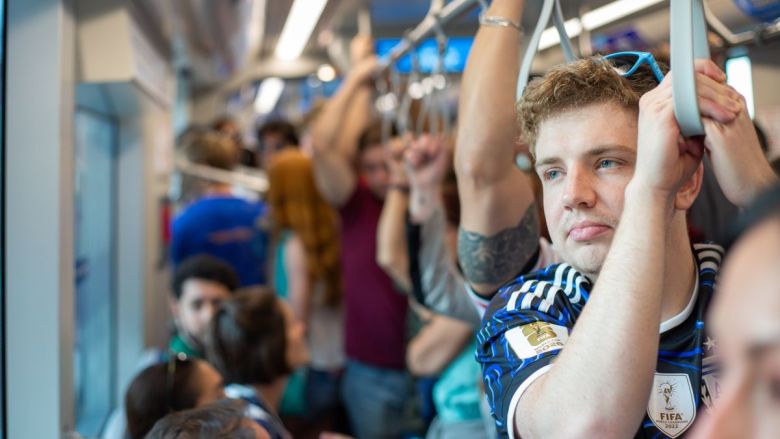
Kansas City isn’t used to the many thousands of extra car, bus and streetcar riders it will see during the World Cup.
Takeaways
- As Kansas City welcomes an influx of visitors during the World Cup, local leaders are eager to use the opportunity to learn more about how residents and tourists move around the city.
- A study will use traffic data, bus ridership numbers and survey responses to see where traffic backs up, which buses get the most use and what KC residents think about transit.
- At the same time, Kansas City’s transit agency is struggling with a “death spiral” of funding losses and route cuts. Transit leaders hope the World Cup data will make the case for getting more dollars to the bus system.
But where tourists and residents might see backed-up traffic and delayed buses during the World Cup, transportation planners see a once-in-a-lifetime research opportunity.
Over the next few weeks, the region’s transportation system will face a stress test of thousands of extra cars on the highway, passengers on buses and streetcars, bikes on trails and pedestrians wandering the streets downtown.
In some ways, that’s a sneak preview of a future where Kansas City continues to grow — and maybe outgrow — its transportation networks.
The Mid-America Regional Council, the nonprofit agency that convenes elected leaders across the region, is not missing out on the opportunity to study how people are getting around and to build a dataset.
“This is the kind of thing that a transportation professional dreams of,” said Bobby Evans, a transportation planner at MARC. “The potential for hundreds of thousands of visitors … over like a month and a half being in town. We were like, we have to do it. We have to study this. There’s no chance of us not learning something important.”
Over the next month, MARC will be gathering survey responses and collecting data from cars, buses and even navigation apps to help guide major transportation decisions for years to come.
Transportation planners hope that the results will help local governments around the metro build out a more reliable road, bike and transit network for the next chapter of Kansas City’s growth.
To take the Mid-America Regional Council’s transportation survey, click here. The survey will be open until at least July 31.
Data galore
Researchers will pull data from several sources to get a picture of how residents and tourists are moving over the next month.
For one, KC 2026 is already tracking the number of passengers on its fleet of temporary buses that the organization commissioned for the duration of the World Cup. That means that by the end of the World Cup, MARC will know which routes were the most popular.
If the Lenexa City Center line, for example, sees more riders than the Oak Park Mall line, or vice versa, that information would be valuable for transit planners deciding where to put a bus stop in the future.
Similarly, bus routes operated by the Kansas City Area Transportation Authority, as well as the KC Streetcar, count passengers automatically when they board using devices in the doors.
Tyler Means, the chief strategy officer of the KCATA, said he’s eager to see if the bus agency’s decision to run more buses during the World Cup results in more ridership.
That tends to be a rule of thumb for transportation planners, he said. If you know the bus is coming every five minutes, you’re more likely to ride it than if you think you’ll be waiting for 30 minutes.
“If we’re putting more frequency out there, I would love to see if the ridership does go up,” he said. “I think it will, and if it does, that is really good information and really good collateral for us when we go to talk to communities, when we think of putting ballot initiatives together, saying, ‘Look, the more money you put in, the more you get out.’”
Means will also be watching the temporary KC 2026 lines to see if certain routes like the airport shuttle are popular enough to justify a permanent express route.
(The KCATA already operates a bus route to the airport, but it takes close to an hour because there are several stops along the way. A direct route, like the KC 2026 shuttle, takes about half an hour on a weekday afternoon.)
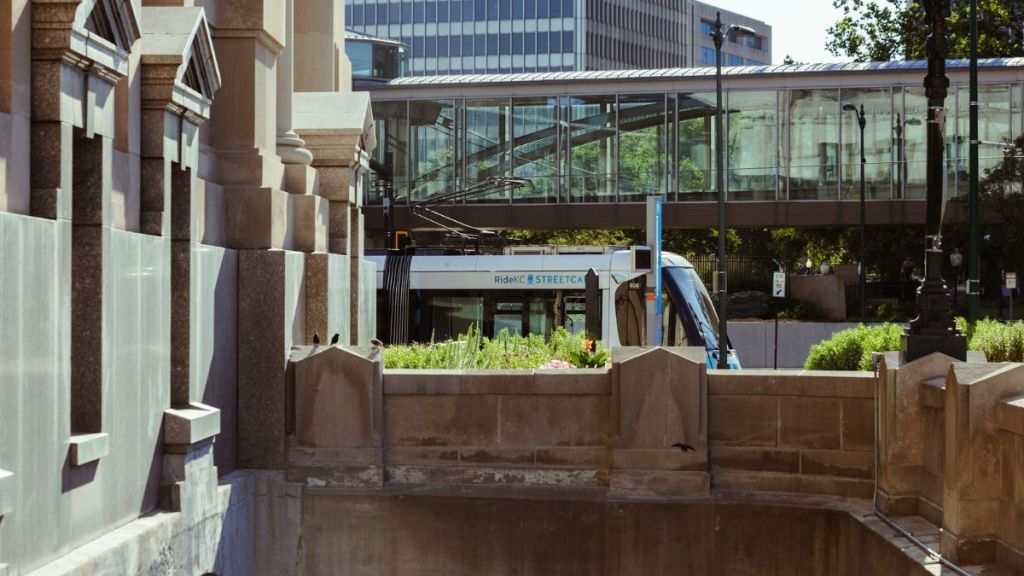
And if the study finds that traffic congestion was slowing down buses, Means said, that could be an argument in the future for bus-only lanes similar to the streetcar lane on Main Street.
When it comes to cars and drivers, as opposed to transit users, MARC will study car movements using what’s called “telematics.”
That’s information that’s already being collected by your car anytime you’re driving, and it’s used by governments to track how many cars are driving on a stretch of road at any given time, or it measures whether cars are braking hard at certain traffic lights or speeding. It also might support your car’s navigation system or notify emergency services in case of a crash.
Almost any car sold within the past couple decades has one of these devices built in.
Evans said that MARC uses a computer algorithm to predict how road work or large events affect traffic patterns, but that’s never going to be completely accurate.
“What if we put another 1,000 cars on Westport Road, what’s gonna happen?” he said. “We don’t really know, until there’s an extra 1,000 cars on Westport Road.”
Residents versus tourists
The sheer volume of people on the road during the World Cup can help MARC and the KCATA better understand how traffic flows and how people move around.
But transportation planners like Evans and Means also understand that World Cup tourists are eventually going to leave Kansas City, unlike the people who live and work here.
(And even Kansas City residents will stop traveling to Truman Sports Complex once the Chiefs and Royals get their new stadiums.)
They’re also interested in understanding how events like the World Cup affect the needs of Kansas Citians.
Essentially: If there are many thousands of tourists in town, can people still get to work on time? Can they still go out on the weekends?

Evans gave the example of a concert he’s going to over the weekend. It’s the same night as the Ecuador versus Curacao game, and the concert starts at 8 p.m., about an hour after the game starts.
An Uber will be expensive because a surge of people will be heading to the stadium at the same time. And Fan Fest will still be happening, which rules out the streetcar.
“I’m going to ride my personal bicycle to go to this concert,” he said. “But someone who doesn’t feel comfortable biking, how are they going to get there? They would want to go to this concert, whether the World Cup’s happening or not. How are they going to get there?”
And the study, he believes, will help cities, counties and the transit agency figure out where the bottlenecks are so that, even after the World Cup, the city can be better prepared for large-scale events like the Chappell Roan concerts or the NFL Draft, or even downtown baseball games at the proposed Royals stadium at Crown Center.
A roadmap amid funding challenges
The World Cup arrived in Kansas City at a challenging moment for the area’s transportation agency.
Shortly after the games are over and the teams fly home, the KCATA is preparing for massive cuts to buses, including a quarter of its daily routes.
Many suburbs have stopped funding bus service altogether, including Gladstone, Independence and Liberty. Experts warn that Kansas City’s bus system is in a “death spiral,” where cuts to bus service lead to worsening service, in turn leading to more cuts.
Earlier this year, the KCATA repurposed a grant originally intended to buy green buses to be used instead to pay for extra bus operations during the World Cup, like the ones you might see supporting the streetcar during Fan Fest.
But leaders in Jackson County are considering putting a half-cent sales tax on the November ballot to fund public transportation, which could provide a stable funding source and slow that spiral.
A poll conducted by the Kansas City Regional Transit Alliance found that a majority of voters in Jackson, Wyandotte, Clay and Johnson counties would support bus sales taxes. Support was highest in Jackson County, with 57% of respondents saying they would vote “yes.”
And if the Jackson County question is put on the ballot and approved by voters, information gleaned from the MARC study could help the KCATA decide what bus routes would be the most valuable to Kansas City residents.
Evans said he has a theory that if the next month goes well for KC 2026 and the KCATA, it could be a real turning point for transit in Kansas City.
“The World Cup is going to be a lot of people’s first time riding the bus,” he said. “One of (my) hypotheses is, there will be people out there who will ride transit for the first time, and they will actually think that it’s way more useful than they imagined it to be. And if the bus came more often, they would take it more often.”

