
After years of economic strain, central Missouri’s Fitzgibbon Hospital filed for Chapter 11 bankruptcy protection and plans to sell to a private buyer.
Takeaways
- Fitzgibbon Memorial Hospital in Marshall, Missouri, filed for Chapter 11 bankruptcy protection and plans to sell its operations, but will remain open for patient care during the process.
- Years of losses, rising operating costs and workforce shortages forced the hospital to cut services, reflecting the broader financial strain on Missouri’s rural hospitals.
- While a sale may keep the hospital open, research shows that bankruptcy protection is less successful for smaller hospitals and mergers can bring cuts to services.
The nonprofit’s board of trustees announced the proposed sale of the 60-bed hospital and its affiliated 99-bed nursing and memory care facility in Marshall in late April. Leaders say the move will allow patients to continue their care while the hospital leaders restructure its finances.
The filing comes as rural hospitals across the region face mounting financial pressure. Federal policy changes, including Medicaid cuts in the Trump administration’s budget bill, are expected to further strain hospitals as more Americans become uninsured.
Fitzgibbon officials say financial challenges have compounded for years and worsened after the COVID-19 pandemic. Rising costs, workforce shortages and changing payment models from government and private health insurance programs have left the hospital operating at a loss despite service cuts and leadership reductions.
“Our priority is, and always will be, the health and well-being of the communities we serve,” said Angy Littrell, the hospital’s president and CEO, in a press release in late April. “Filing for Chapter 11 gives us the time and structure needed to address financial challenges while continuing to provide the critical services our patients and residents depend on every day.”
Fitzgibbon officials could not be reached for additional comment before the publication of this story.
Financial records show the hospital brought in $63 million in revenue in 2025, but had nearly $68 million in expenses. Executive salaries were approximately $1.2 million and made up 1.8% of the hospital’s spending.
Bankruptcy filings in the U.S. Bankruptcy Court for the Western District of Missouri list roughly $22 million in total debt, including $125,000 owed to patients for overpayments.
As part of the restructuring, the hospital plans to sell its operations to an undisclosed buyer for approximately $8.6 million after more than a year of discussions with national and regional hospitals.
“I want to assure the community that our doors remain open, and we will continue to focus on offering quality healthcare while we work through this period,” Littrell said in a statement. “Our hope is to continue to provide healthcare for the next 100 years, and we appreciate the continued support of our employees, medical staff, patients, volunteers and the broader community who know how vital Fitzgibbon is to the economy and health of our area.”
Fitzgibbon is just one example
The headwinds are being felt far beyond Fitzgibbon. Several Missouri hospitals across the state have been driven to restructure or close.
Since 2015, nine of Missouri’s 67 rural hospitals have closed. The state is among the worst when it comes to rural hospital closings nationwide.
As a result of COVID-19, the hospital had to stop or significantly cut back on lucrative elective surgeries that help to subsidize other care, filings say. At the same time, labor costs rose due to demand and costs related to personal protective equipment and COVID-19 protocols.
“Unlike some larger health systems, rural providers like the Debtors have not experienced a meaningful post-pandemic recovery,” a Fitzgibbon lawyer wrote to the court.
Over the years, Fitzgibbon cut its intensive care and behavioral health units, alongside other cuts to home health and hospice services. It also closed two primary care clinics in the Marshall area at the end of 2025.
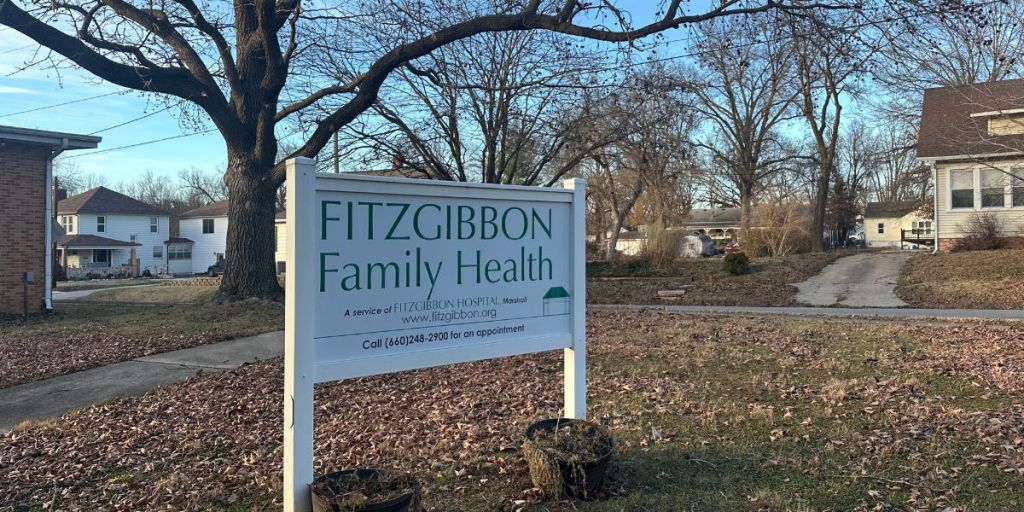
Notably, the hospital has continued to operate its labor and delivery unit, which is usually a financial burden for hospitals due to 24/7 staffing requirements.
A January 2024 report found that 2023 saw the highest level of healthcare bankruptcy filings in the five years prior, with case volumes 1.5 times greater than 2019, the second highest year.
In the filings, lawyers pointed to the Medicaid cuts in the Trump administration’s budget plan, dubbed the One Big Beautiful Bill Act, as a massive setback to the hospital’s success.
“This has two immediate and compounding effects: reduced reimbursement and increased uncompensated care,” lawyers wrote. “Because rural providers lack the commercial patient base necessary to offset these losses, even modest reductions in Medicaid funding can have an outsized impact.”
Amy Landry, a professor in the Department of Health Services Administration at the University of Alabama at Birmingham, has studied hospital bankruptcies for years. The size of the hospital and number of patients it serves are major factors in its ability to turn a profit, she said.
Landry and her colleagues evaluated hospital bankruptcy filings from 2013 to 2023 and found that small systems were more likely than larger organizations to struggle after bankruptcy.
“Size absolutely matters. Being associated with a system absolutely matters,” Landry said. “However you want to frame it, it is absolutely something that can drive an organization into financial distress, bankruptcy and eventually closure.”
Nearly 24% of residents in Saline County, where Fitzgibbon Hospital is based, are enrolled in Medicaid as of February, data shows.
A recent report took the upcoming Medicaid cuts into account, and found that 12 of Missouri’s hospitals are in immediate jeopardy of closing, while another 17 are at risk. Since the state expanded Medicaid, rural hospital closures have slowed significantly.
Can selling a hospital prevent it from closing?
In many cases, declaring bankruptcy and selling the hospital can help the doors stay open. But it often comes with tradeoffs.
Hospitals that go through the bankruptcy process and find a buyer usually continue operating in the years ahead, Landry said.
“Hospitals that are bigger are more likely to remain solvent and have better luck at reorganizing,” Landry said. “Under a Chapter 11 scenario, the hospitals that are smaller and the hospitals that are independent are less likely to be able to be successful and more likely to close.”
One study examined 62 different types of service offerings from 2008 to 2020 and found that affiliating with a hospital system led to more offerings, not fewer.
But the majority of service losses were in hospitals that joined systems, the study found.
Service cuts were most likely to occur in hospitals that provided obstetrics services, a different report found. The percentage of hospitals offering maternal and neonatal services dropped over 13% after mergers, while surgical services decreased 5%.
The report found that there was no significant decline in inpatient care for hospitals that merged.
Still, for struggling smaller hospitals, a larger hospital system can be the lifeline needed to help balance the budget. Those extra resources can be the difference between closure and recovery.
This year MU Health Care asked the Missouri General Assembly to consider a bill that would give the system the power to purchase healthcare systems across central Missouri, regardless of the impact it may have on competition.
Supporters of the legislation argue that because of their academic model and some of the financial benefits associated with it, MU Health Care can provide a lifeline for struggling rural hospitals.
“A lot of times, for-profit companies will come in and purchase rural hospitals,” Landry said. “Hospital operators in private equity, or something like an academic system that is kind of a state entity, will try to get involved to salvage some of those hospitals because they don’t want them to close.”