In a world where the gaps between neighbors and communities grow larger, few issues illustrate these rifts more than homelessness. That’s why Kansas City is working to open its first low-barrier shelter — one that provides immediate access with minimal or no requirements.
Kansas City officials approved the conversion of Hope Faith Ministries into a low-barrier shelter. But pushback from Northeast residents stalled the decision earlier this year. The Northeast already hosts a large number of the city’s homeless services.
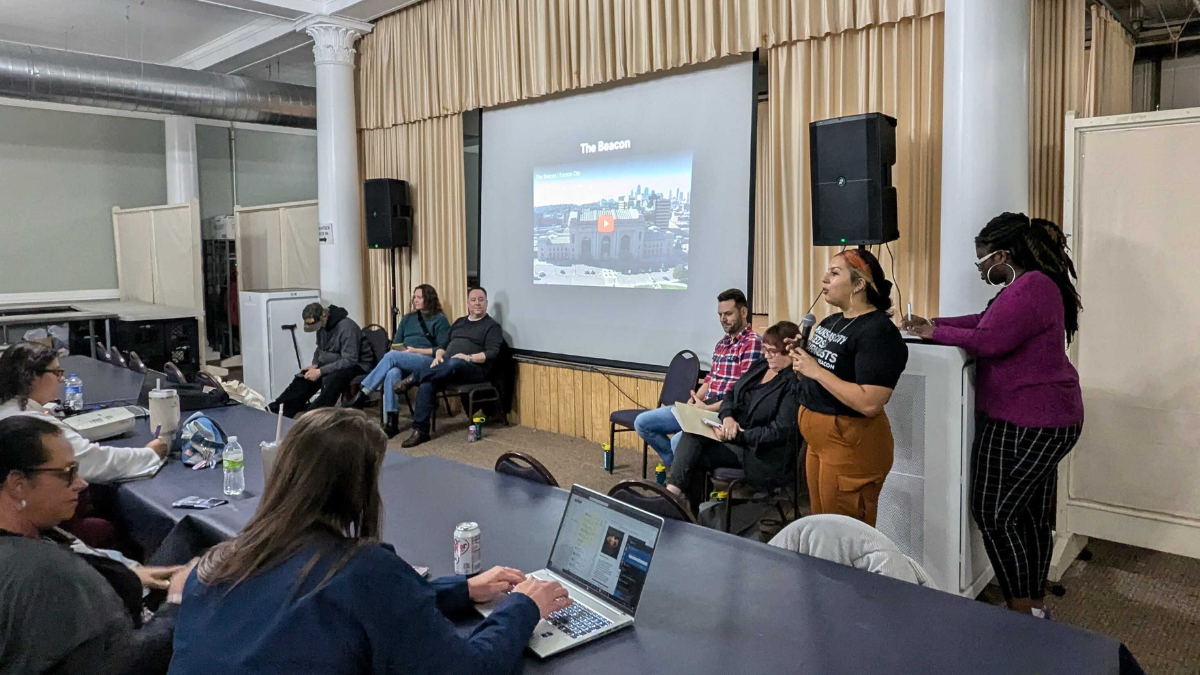
That’s why The Beacon hosted a listening session at the Independence Boulevard Christian Church on Nov 20, 2024. We brought together a panel drawing from city experts, homeless advocates and neighborhood representatives. Our panel included:
- Evie Craig, President of Paseo West Neighborhood Association
- Doug Langner, Executive Director at Hope Faith
- Ken Simard, Advocate for the Kansas City Homeless Union
- Josh Henges, Kansas City’s homeless prevention coordinator at The Office of Unhoused Solutions
- Megan Morgan, Historic Northeast Resident
Of the chronically homeless people in the Kansas City area, 96% live on the streets — the highest rate in the country. The panel’s discussion on homelessness in Kansas City highlighted the growing urgency of the issue as temperatures dip, emphasizing the need for collaborative, people-centered solutions.
Panelists pointed to the lingering effects of the COVID-19 pandemic, a lack of political prioritization and insufficient affordable housing as key things that contribute to rising homelessness. While the city has drafted plans and secured federal funding to build a low-barrier shelter, attendees spoke of persistent challenges in areas like transparency and neighborhood engagement.
We heard from multiple speakers that addressing homelessness goes beyond any individual organization and requires a collective effort from policymakers, service providers and the community. Some attendees expressed a yearning for a centralized “one-stop shop” that would combat confusion homeless people face when seeking services, only to be redirected across town.
Several Northeast residents, however, expressed concerns that a nearby concentration of services for homeless people or people in psychiatric crisis places an undue burden on their neighborhood.
Potential solutions raised during the two-hour session focused around sustainable housing, accessible services and stronger communication. Despite differing opinions, the takeaway was clear: homelessness is a solvable problem if tackled with thoughtful coordination, adequate investment and compassion.