


A small camera along the side of the road led to some big questions from a Kansas City, Kansas, resident.
What information do automated license plate readers collect? Who can search or share that information? How long is it stored? And what oversight exists when local police officers use these cameras?
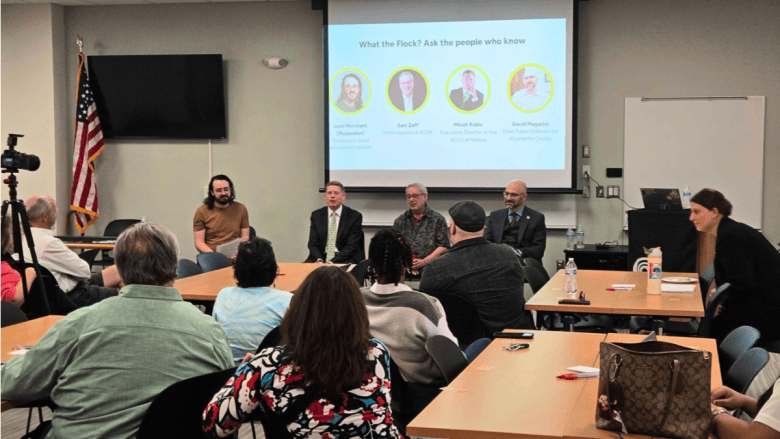
Those questions led a reader to submit a tip to The Beacon, which became the starting point for our What the Flock? event on Sept. 23 at the Kansas City, Kansas, Public Library’s South Branch. Residents gathered for a conversation about Flock cameras and other automated license plate readers appearing across the Kansas City metro.
The goal wasn’t to tell attendees what to think about the technology but to create a space for people to better understand how they work, hear different perspectives and ask their own questions about privacy, public safety, due process and accountability.
The Beacon’s local government reporter Josh Merchant moderated the discussion. They were joined by Micah Kubic of the ACLU of Kansas, Wyandotte County Chief Public Defender David Magariel and KCUR metro reporter Sam Zeff. Each participant brought a different expertise to the conversation from privacy and civil liberties to how license plate reader information may enter criminal cases and how the technology is being used across state lines.
Attendees were highly engaged and asked thoughtful questions about who has access to the data these devices collect, how false matches could affect residents, what rules govern information sharing and how community members can learn whether these cameras are operating in their neighborhoods.
The conversation did not provide a simple answer to every question. It did, however, give residents more context about the technology and a clearer picture of the questions that still need public attention.
This event began with a question from a local resident. The attendance reminded us why these conversations matter: When community members speak up, share what they’re noticing and stay curious about local decisions, it can lead to deeper reporting and better public information.
That process is central to The Beacon’s approach to civic engagement. We want residents to see themselves as part of the reporting process and not just as readers after a story is published.
Community events also give our journalists an opportunity to listen. The questions raised during the Flock event will help us understand where information is still missing, what residents are most concerned about and what follow-up reporting could be useful.
We are grateful to everyone who attended, asked a question or shared an experience. We also appreciate our panelists and the Kansas City, Kansas, Public Library for helping make the conversation possible. If you missed the event you can watch here:
(Courtesty of the ACLU of Kansas)
The event may be over but the conversation isn’t. If you notice something happening in your neighborhood, have a question about a local decision or want The Beacon to examine an issue in your community, we want to hear from you.

