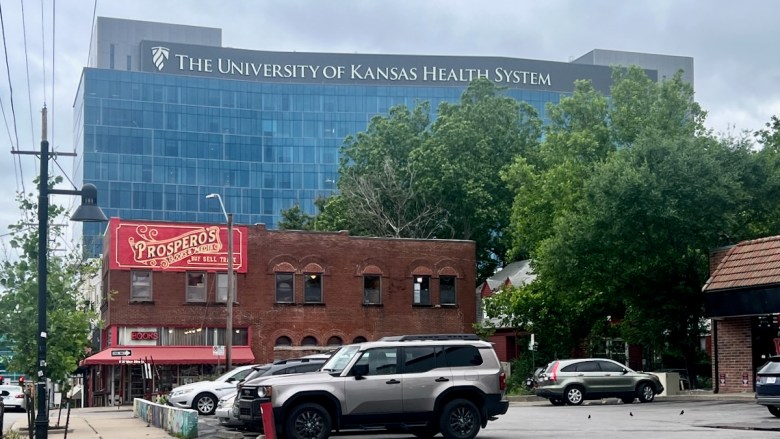
Colette Lasack, who oversees billing for the $5.4 billion University of Kansas Health System, worries about every patient who walks through the door without insurance.
Recently, those worries have been multiplying.
As federal policy changes begin to put health insurance out of reach for more people, a growing number of patients are returning to the ranks of the uninsured. That makes it harder — if not impossible — for them to afford routine healthcare and increases the likelihood that they will need free care, a troubling prospect for hospitals like KU.
“Unless we come up with different affordable options for patients for coverage,” said Lasack, KU Health System’s vice president of revenue cycle, “that’s exactly where we’re going to be. And that’s what keeps me up at night.”
While the cost of health insurance was already soaring along with the price of healthcare itself, two big changes are driving the current decline in insurance coverage, a trend that could end with 14 million Americans becoming uninsured by 2034:
- Enhanced premium tax credits, which subsidized the cost of insurance plans purchased through the Affordable Care Act marketplace, healthcare.gov, expired at the end of last year, leading to a spike in the price of the plans and a rash of people dropping coverage. By February, ACA enrollment in Missouri was down 25% from the previous year to 260,999 people and Kansas enrollment fell 20% to 143,880.
- In January, new requirements included in President Donald Trump’s One Big Beautiful Bill Act are expected to make the uninsured ranks swell even more. The new law mandates that adults getting coverage through Medicaid expansion document work, attend school or volunteer and recertify their eligibility every six months rather than annually.
“The reality of those changes is that, by design, there will be less people with coverage,” Lasack said.
The KU Health System did not release specific data about the number of patients who may have dropped ACA coverage so far. But anecdotally, Lasack said, she has noticed the trend.
University Health, Kansas City’s safety-net hospital, has documented a clear slide already. More than one third of patients covered by an ACA plan who averaged two hospital visits in fiscal year 2025 did not return in fiscal year 2026. And, so far, they haven’t shown up this fiscal year, which began July 1.
While 64% of those ACA patients did return, 8% of them are now uninsured, the hospital said. Combined, the two groups – those who haven’t come back for care and those who came back as uninsured – represented $37.5 million in lost revenue to the hospital, which reported net patient revenue in 2024 of $612.9 million.
But that’s not all the bad news.
“It’s important to note that if and when these patients return, we anticipate they will come back to us with more serious illnesses since they have been skipping all of their appointments,” Keith King, a hospital spokesman, said in an email.
Of course, more serious illnesses are also more expensive to treat, which is another reason hospitals and other health providers are concerned about any drop in health insurance coverage.
“The more hospitals have to take care of uninsured patients, the higher their bad debt is going to be, the higher their charity is going to be, and that starts to skew their payer mix,” Lasack said. “You’ve got to have money to provide the mission. Whether you’re a safety net hospital, a Catholic system, an academic medical center or a community hospital, it’s still a business model. … The more patients that you have to give free care to, the less money there is to pay for everything that needs to be done.”
In exchange for their tax-free status, nonprofit hospitals are required to provide charity care to qualifying patients. In fiscal year 2025, the KU Health System wrote off $150.5 million in patient charges as charity care, down from $155.3 million in 2024, according to a bond statement issued in April.
The Lown Institute, a nonpartisan think tank that studies and rates U.S. hospitals on social responsibility measures, including health equity and cost, gave the health system’s main hospital in Kansas City, Kansas, a B for its community benefit rating, which measures investments in free care and community health. University Health Truman Medical Center, however, received an A for the same measure.
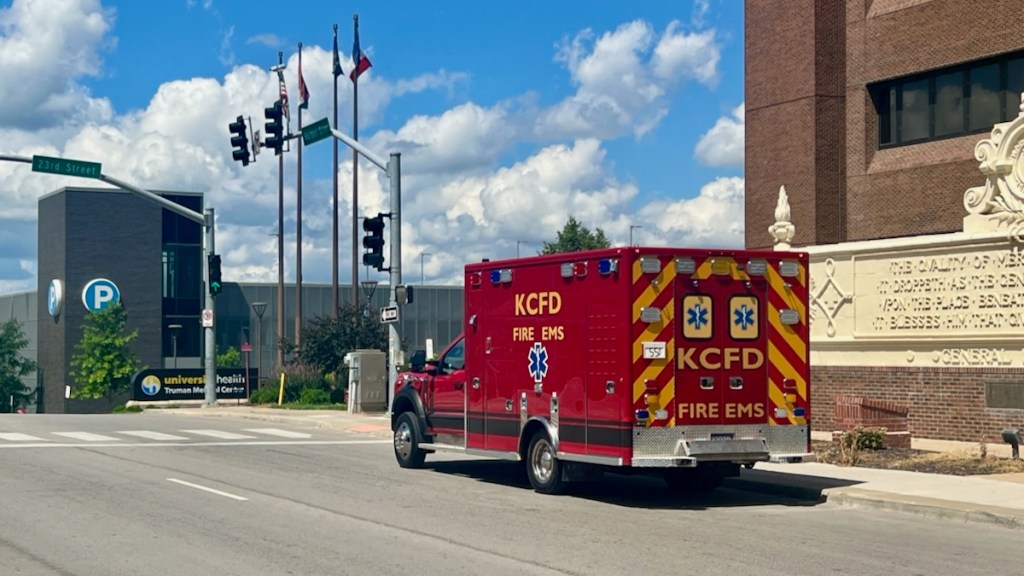
University Health, safety-net hospital of Kansas City, Missouri, spent $41 million on charity care in fiscal year 2025, compared to $38.8 million in 2024.
Most hospitals contend they have little profit margin to absorb additional uncompensated care, let alone expensive uncompensated care.
Even the for-profit hospital chain HCA, which reported net income of $1.7 billion in the second quarter with a profit margin of 8.4%, is bracing for the impact of patients losing health insurance. The publicly traded company, which owns seven area hospitals including Research and Menorah medical centers, told shareholders during a July earnings call that it anticipates annual operating profits to decline more than $1 billion as a result of ACA coverage losses leading to more uninsured patients.
But for hospitals and providers, such as community health clinics, that rely heavily on revenue from patients covered by Medicaid, the financial hit may be even greater next year when the Medicaid requirements kick in.
KC Care, a federally qualified health clinic in Kansas CIty, is bracing to lose between $2 million and $5 million due to the changes, said CEO Wil Franklin. That would be about 4% to 10% of its 2025 revenue.
“We’re preparing for that, and we’ve been running as an organization about as lean as we can possibly run, understanding we’re going to have significant Medicaid revenue drops,” Franklin said.
Clinics like KC Care, which have also lost other federal support under the Trump administration, and hospitals with a significant Medicaid patient population hope to stem the loss by proactively reaching out to patients to make them aware of the new requirements and help them avoid a lapse in coverage.
KU Health System has 55 financial counselors on staff and is considering adding more, Lasack said. They are available to help any patients who are uninsured. The goal, she said, is to get them covered, whether it’s Medicaid, through the ACA or with an employer plan.
“We want to make sure that patients are informed,” she said. “We can help educate them. We can get them to the resources that they need to help secure the coverage that they need.”
Education is the goal across Kansas City’s social service and healthcare infrastructure. Organized campaigns like the ad hoc Jackson County Benefits Information Network, a group of religious, nonprofit and government leaders, are launching grassroots efforts to spread the word about upcoming Medicaid changes.
Their big fear is that people will lose coverage, not because they don’t meet new requirements, but because they just don’t know about the new documentation rules.
In June, the Missouri Foundation for Health released a report with findings of six focus groups conducted with healthcare service providers and people enrolled in MO HealthNet, Missouri’s version of Medicaid, likely to be affected by the new requirements.
The responses detailed in the report, which came from people who live throughout Missouri, revealed lack of awareness about the imminent changes.
“The conversations had an emotional edge,” the report said. “As participants processed the new rules in real time, they moved through stress, uncertainty, overwhelm, fear, sadness and frustration.”
In the end, it’s not just patients and hospitals who will suffer if there is a wave of new uninsured patients, said Dan Cranshaw, executive director of the KC Health Collaborative, a coalition of business and health leaders working to improve health inequities. It’s in the interest of the entire community to help people maintain coverage, he said. When people fall off insurance, healthcare expenses eventually go up for everyone else, too.
“We know that it’s going to put pressure on the system,” Cranshaw said.