


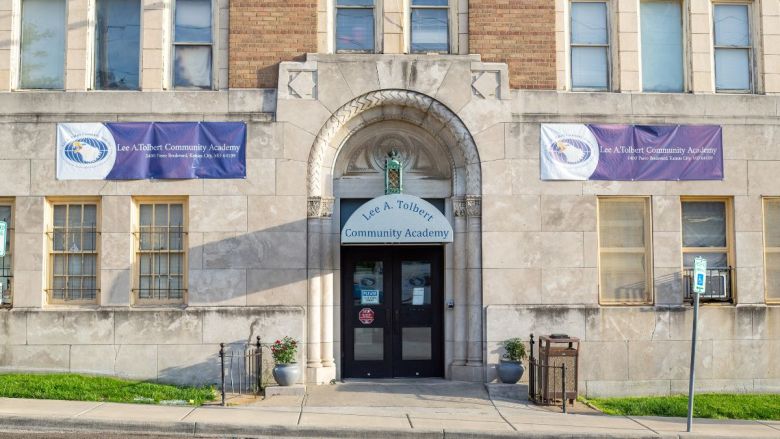
In January 2025, Lee A. Tolbert Community Academy got bad news from its charter school sponsor, the Missouri Charter Public School Commission.
The Kansas City school, founded in 1999, named after a local minister and focused on “entrepreneurial leadership,” wasn’t being invited to renew the charter that allows it to operate.
After this school year, Lee A. Tolbert Academy will close as a distinct school with its own separate board and charter school contract.
But that’s not the end of the story.
Nearby DeLaSalle Education Center will expand into the lower grades next year, adding an elementary and middle school in the current Tolbert Academy building and an elementary school called Breakthrough Academy, connected to Operation Breakthrough.
“The name Lee A. Tolbert is a significant name in Kansas City,” DeLaSalle Executive Director Sean Stalling said. “I don’t think we should change the name. … It’s Tolbert Academy at DeLaSalle. So it still honors the past and it sets direction for the future.”
As the school year draws to a close, Tolbert and DeLaSalle are among several Kansas CIty charter schools preparing for change.
Hogan Preparatory Academy received permission to keep grades 5-12 open, but not to continue its elementary school. Hope Leadership Academy, a pre-K-to-5 school, plans to take over Hogan’s elementary building and use the larger space to nearly triple in size.
The growth at Hope and DeLaSalle comes as Blaque Kansas City — a nonprofit promoting quality education in urban schools — announced it was granting hundreds of thousands of dollars to both schools.
Blaque KC also announced large grants to the Legacy of Julia Lee Performing Arts school, a charter elementary school approved to open in fall 2027, and nonprofits Show Me KC Schools and Teachers Like Me.
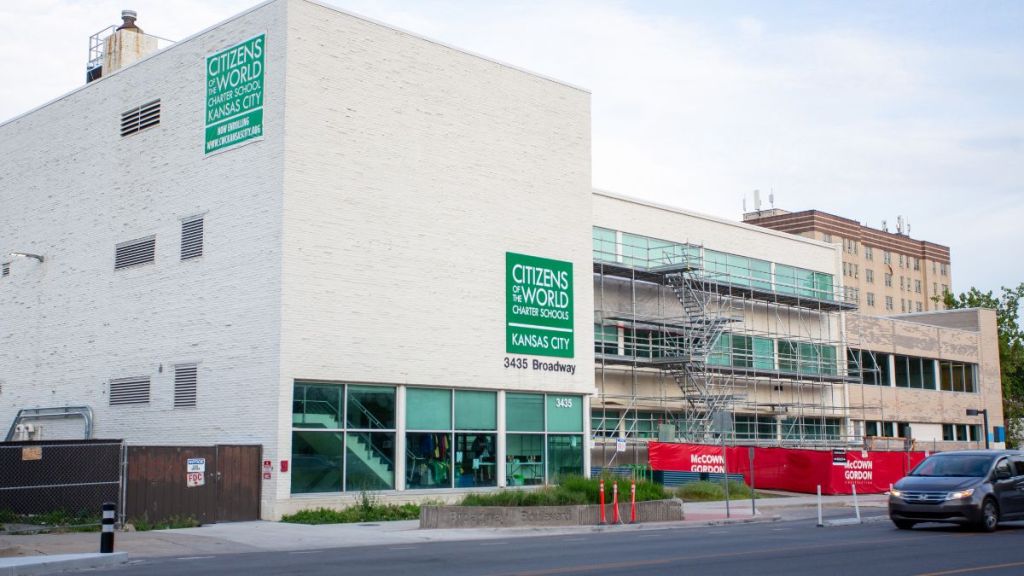
Meanwhile, Citizens of the World charter school announced a new name, Midtown Community School, as it separates from its national partner.
Charter schools are publicly funded and free to attend. But they’re run by nonprofit boards outside of the direct control of the local school district and its publicly elected board.
There are 20 distinct charter schools in Kansas City — 19 after Tolbert closes — and some have multiple buildings. They range in size from about 100 students to about 1,600. The latest state data shows that together, they enroll more than 13,000 pre-K-to-12 students, compared to about 15,000 enrolled in Kansas City Public Schools.
Charter school proponents say the capacity for change — such as closing a school that isn’t doing well or expanding one that is — is a benefit of the model.
“It feels foreign for anyone that is used to traditional public education,” said Martha McGeehon, deputy director of the Missouri Charter Public School Commission. But she said the system is working as intended. “If a school is not performing, they should no longer exist.”
Tolbert Academy and DeLaSalle
Tolbert Academy was an example of a school that was underperforming without a convincing plan to improve, McGeehon said.
“They did not have a strong leadership and school management at that school,” she said. “And the plans that we had seen from them as part of their intervention were not strong and were not being implemented.”
The commission had a higher opinion of DeLaSalle.
DeLaSalle is known as an alternative school for students who struggled in other high schools and need to catch up. But it’s also promoting itself as a solid option for any rising ninth grader.
“We’ve seen really strong outcomes from them in the last few years,” McGeehon said, and DeLaSalle presented a strong expansion plan.
Charles Stanley Jr., vice president of school quality and growth at Blaque KC, said DeLaSalle has been particularly strong in student growth — which measures how much progress students make in a year no matter where they start — and getting students to graduation with post-secondary plans and skills.
“But if they don’t have more ninth graders to get that experience, then the city loses out,” Stanley said.
Making Tolbert a part of DeLaSalle helps provide a feeder system for the high school, Stanley said, and gives younger students access to the strategies that are working at DeLaSalle.
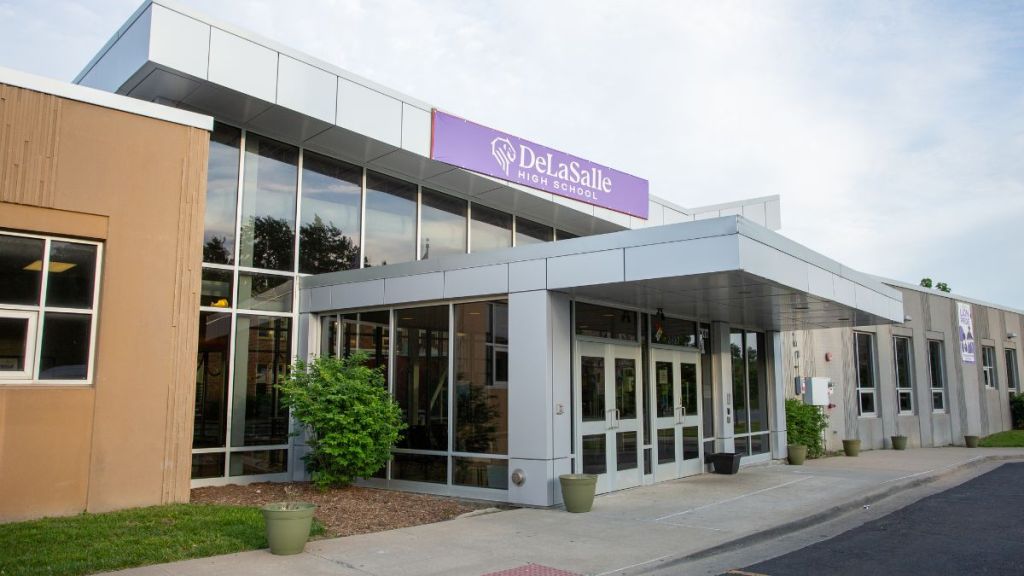
Stalling, DeLaSalle executive director, said the school’s expansion is an opportunity to bring people together to serve a region of the city “from college to career,” though he emphasized that students from throughout KCPS boundaries are welcome to apply.
Stalling said he wants to create a sense of calm and stability at Tolbert and doesn’t want to make sweeping changes to staff.
“If you’ve ever spent one minute in Tolbert, it is a community,” he said. “Those adults over there love those children.”
But not everything will stay the same. School leaders are being asked to reapply for their jobs, he said, and staff could end up being moved to different roles.
“You want continuity, but you do not want continuity at the expense of performance,” he said. “Sometimes it’s not a matter of getting people off the bus, it’s about getting people in the right seats. So if you have somebody that is a staple in that community, is the right person for those kids, but maybe is not the right teacher, maybe they can move into a different role.”
Stalling said in the long term he envisions the expanded DeLaSalle K-12 system serving perhaps 750 to 800 students.
The Beacon attempted to contact Tolbert Academy but had not received a response by the time of publication.
During a Tolbert Academy school board meeting April 20, board Chair Mark Tolbert described the changes as letting each school retain its identity. He envisioned a future where local students can walk to school from pre-K through high school.
“When you have a good school in a neighborhood, people start to migrate (in) instead of continue to move (out),” he said. “We think with the three schools that we’re even going to be able to stabilize the community that much more. … It was a great opportunity for collaboration and to make sure that kids are getting a solid education in a safe community.”
Hogan Preparatory Academy and Hope Leadership Academy
Hogan Preparatory Academy, which also became a charter school in 1999, had been put on probation and warned that its charter was at risk in recent years. Like Tolbert and DeLaSalle, it’s also sponsored by the Missouri Public Charter School Commission.
When it came time to renew or decline to renew its charter, the commission determined that the younger grades should close.
“The middle school and high school had made pretty significant and drastic changes in leadership (and) instructional quality,” McGeehon said. “It was a stark difference between the elementary school” and the middle and high schools.
She said the commission also considered the availability of other quality options in the area.
“We felt like there were higher quality elementary school seats in Kansas City that were consistently providing a higher quality education to students than the Hogan Elementary School was doing and had been doing for a long time,” she said.
Hogan Interim Superintendent Tamara Burns said that once the decision about the elementary school was final, the school has focused on regrouping to serve grades 5-12. She said Hogan has seen an increase in state performance scores, fueled by improved student growth and graduation rates.
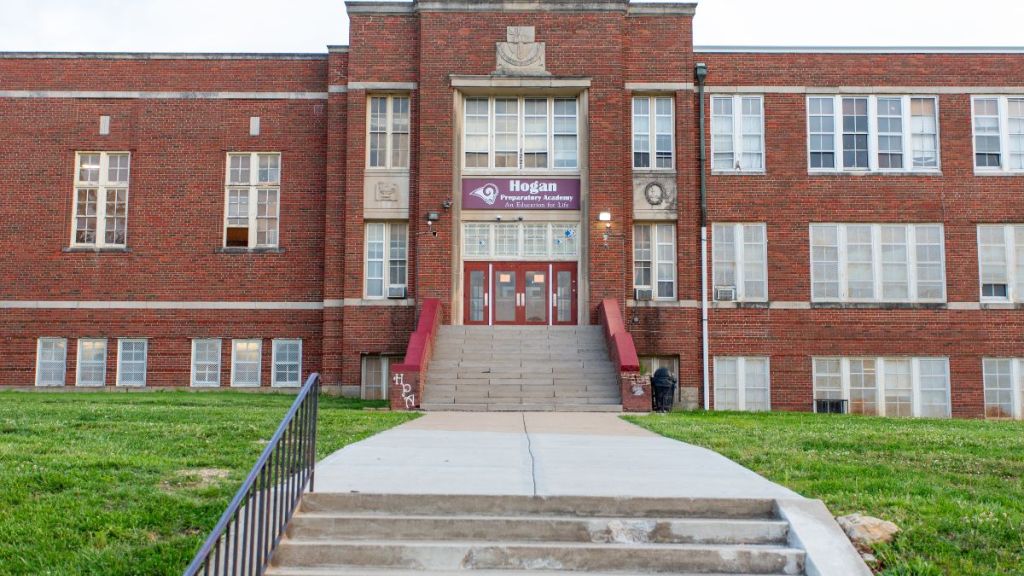
Burns said Hogan has worked to inform parents about their options, such as other charter schools and KCPS neighborhood schools.
She said a significant number of families are considering Hope Leadership Academy while others have been excited to hear about improvements to their KCPS neighborhood schools from the district’s voter-approved bond.
As Hogan closes, Hope Leadership Academy plans to move into its building.
Hope Leadership Academy Executive Director Tiffaney Whitt said the move will allow Hope to add students — while still serving grades pre-K-to-5 — and to have better facilities such as a gym and a library.
Whitt said Hope has a bit more than 100 students but she anticipates that enrollment could nearly triple as early as next year with the addition of some current Hogan students and others brought in by additional advertising.
“We’ve done a lot of things to make sure that our presence is known and that families are aware that we do exist and that our school is expanding,” she said. “And not only do we exist but we’re doing great things academically for our students.”
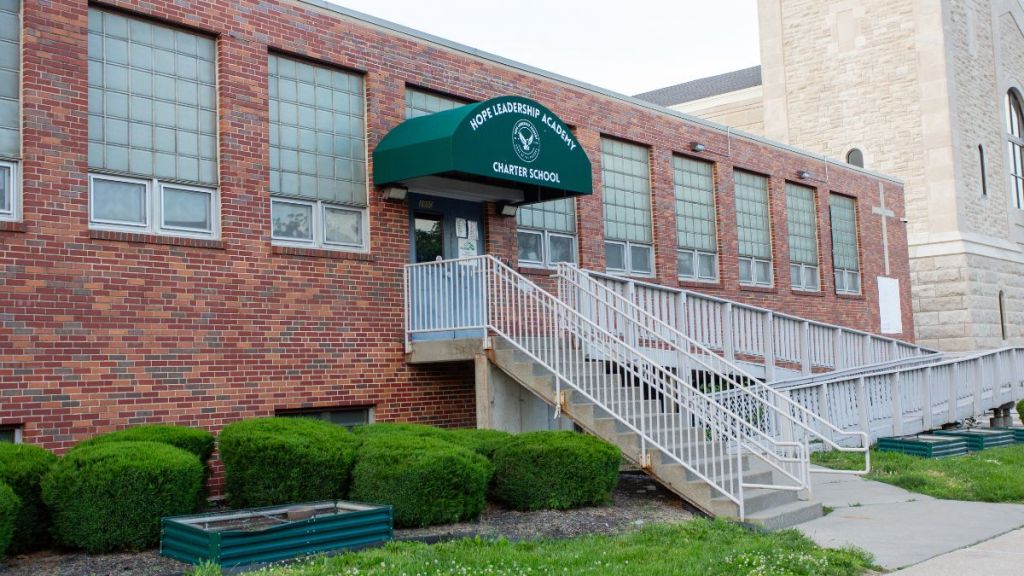
Whitt particularly highlighted the school’s rising growth scores.
Blaque KC founder and CEO Cokethea Hill-Woodard said the nonprofit helped facilitate conversations about Hope moving into Hogan’s closing building.
“Closure is felt extremely deeply,” she said. “And while we understand that it is a lever you can pull, that chronically underperforming schools should not exist, it also can have a ripple effect.”
An empty school building can cause neighborhood blight and reduce property values — which in turn affects school funding, Hill-Woodard said.
Blaque KC’s grant to Hope is also part of a strategy to support schools that don’t have the absolute highest performance but appear to be on the cusp of success, with strong leadership and indicators such as growth scores that show they’re helping students.
“If we’re going to move our ecosystem from a majority of chronically low performing schools to a system that is high quality, we have to also think about those who are right there on the fringe and saying, ‘If I just had more support, I just had a little bit more capacity, if someone believed in me enough to support this bold idea, I think we can do better for kids,’” Hill-Woodard said.
Citizens of the World gets a new name
Citizens of the World Charter School will now be known as Midtown Community School. The new name was announced May 14.
The name change is inspired by the school’s decision to separate from its national partner organization.
Executive Director Danielle Miles said the school had been paying 5% of its state revenue to the national Citizens of the World Charter Schools organization. In return, it received some services such as data analysis, help with surveys and leadership training.
Miles said the school can take over or pay for those services while still saving money overall.
“We felt like it was a better use of money to reinvest it back into our community, as opposed to sending it to a national partner,” she said. “It just felt like a natural transition after 10 years to be on our own and independent.”
To choose the new name, Miles said the school surveyed staff, students and families and held listening sessions. Many wanted a name that reflected its physical location within Kansas City.
Along with its name change, the school will switch sponsors. Kansas City Public Schools will oversee it rather than the Missouri Charter Public Schools Commission.
Miles said the school sought that change because it wants to collaborate more closely with KCPS and with other charter schools that KCPS sponsors.
KCPS Director of Education Collaboration Allyson Hile said that while the commission’s only role is to sponsor charter schools, KCPS is doing the same kind of work as the schools themselves.
“We have resources that we can use to support them,” Hile said. “We can partner with them in different ways.”
KCPS also sponsors Crossroads Charter Schools and Gordon Parks Elementary School. Allen Village Charter School will move from KCPS sponsorship to the state commission this year.
The Beacon attempted to reach Allen Village Charter School beginning in April but did not receive a response.
A letter from Allen Village to KCPS available on the commission’s website says the school is “mindful that the past couple of years have not reflected the same smoothness as our initial transition, collaboration and oversight activities we experienced at the outset of our relationship. Even so, we remain grateful for KCPS’s partnership.”
McGeehon, the commission deputy director, said sometimes schools seek out the commission because they want strong and clear accountability measures.
“They know that it makes their organization and their outcomes better,” she said.
Looking further ahead and farther afield
The next year will likely bring more changes as new charter schools receive permission to open and another batch of schools attempts to renew contracts.
During the May 12 Missouri State Board of Education meeting, The Legacy of Julia Lee Performing Arts Academy was approved to open in Kansas City in fall 2027.
The school will focus on arts education for elementary students. Its name honors a Kansas City musician, and it is linked to a similar school in California.
Also in fall 2027, a charter school with Kansas City ties is approved to open in Columbia. Frontier STEM Academy will be run by the same nonprofit as the Frontier schools in Kansas City.
Another batch of Kansas City charter schools will also see contracts expire in mid-2027. They include KIPP Kansas City, Guadalupe Centers Charter Schools and Academy for Integrated Arts.
All three have been invited to apply for renewal, though McGeehon told The Beacon that there’s no guarantee they’ll be approved.
The Beacon reported earlier this year that KIPP Kansas City has faced challenges with enrollment, turnover and leadership and did not meet the commission’s expectations this year.
Changes to charter schools, especially closures, not only send families searching for backup plans but affect the rest of the educational system and the organizations that support them.
Hile said Kansas City Public Schools has been trying to prepare for potential new students, but isn’t sure what to expect. When she spoke to The Beacon in late April, it wasn’t clear how many families might transfer to KCPS or what neighborhood school zones current Hogan and Tolbert students live in.
Hile said many schools are already “pretty full” so it would be helpful to have more information for planning purposes. KCPS is anticipating another increase in enrollment next year.
Leslie Kohlmeyer, executive director of Show Me KC Schools, said her organization has been working with Hogan and Tolbert to share information with families.
Show Me KC Schools helps families navigate their educational options and coordinates a common application for many local charter schools. Kohlmeyer said that based on the applications coming through so far, Hogan and Tolbert families aren’t overwhelmingly choosing a single option.
“I do think about a half of the Hogan folks …. and maybe a fourth of the Tolbert folks are staying at their school building under the new management,” she said.
Kohlmeyer said charter school closures are expected as birth rates shrink, just as traditional school districts around the metro area have had to talk about consolidating into fewer buildings. But they can be more confusing since students from a closed charter school aren’t automatically assigned to a new school.
“I can say that there is not a school, including the district, that does not want these kids,” Kohlmeyer added. “Everybody wants them. Everybody needs them to help make their ends meet,” and everyone wants to make the experience for families “as seamless as possible.”
Noah Devine, executive director of the Missouri Charter Public School Association, said he’s encouraging schools to be prepared for even more change.
“I suspect over the next five to 10 years in the state of Missouri, we are going to see a lot of educational changes,” he said.

