
Editor’s note: This story has been updated with additional information from Children’s Mercy’s announcement.
A new hospital tower, expected to cost more than $1 billion, will help Children’s Mercy Hospital meet growing demand for increasingly complex pediatric care.
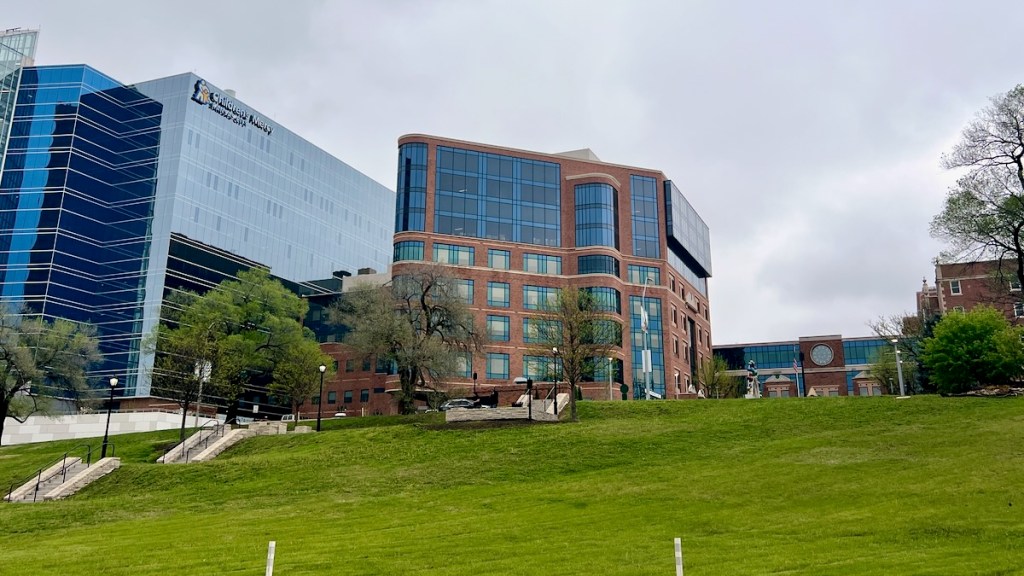
Without it, officials said, the 128-year-old pediatric hospital will soon run out of room on its main campus on Hospital Hill. At its present rate of growth, within five years the hospital would have capacity for only 67% of patients in need of beds and for only 40% of newborns needing a spot in the neonatal intensive care unit.
“We know that we’re constantly at capacity,” President and Chief Executive Officer Dr. Alejandro Quiroga said in an interview with The Beacon. “You don’t want to be at capacity. You want to have beds ready all the time.”
The new acute care tower, which will be built on the Gillham Road side of the hospital’s Adele Hall campus, will expand overall hospital capacity by 25% to 30%. On May 6, the Kansas City Plan Commission is expected to consider the hospital’s master plan, which includes a broader development.
Hospital officials have not said how many patient beds will be added through the proposed hospital tower or how many stories it will be.
The investment comes as Children’s Mercy’s revenue climbs and as the hospital extends its geographic reach.
In 2025, the nonprofit reported more than $2 billion in revenue and $418.5 million in excess revenue, four times more than a decade earlier. And the Kansas City campus expansion follows the hospital’s recent expansions in Overland Park, Wichita and Springfield.
The growth, which comes despite steadily declining birthrates in Missouri and Kansas and across the country, reflects a larger shift in healthcare. Hospitals like Children’s Mercy, one of only 28 stand-alone children’s hospitals in the country, are increasingly rolling up pediatric care over wider geographic regions.
Pediatric beds in general acute hospitals are becoming less common, causing more patients to find their way to children’s hospitals. In rural communities, hospitals are at risk of closing altogether.
At the same time, there have been tremendous advancements in the types of pediatric care available. Children with illnesses that would have been untreatable only years ago, are now surviving. That care costs more, requiring highly specialized doctors and technologies. And supporting it requires casting a wider net for patients in communities farther away.
It also adds demand for Children’s Mercy’s beds.
In the past, the hospital might have been at capacity a few weeks at a time, perhaps because of a surge in flu or RSV cases. Now, the hospital is at capacity taking care of kids with serious and chronic conditions. When they get a respiratory virus they may need intensive care.
“There are fewer and fewer enterprises like ours that will cover larger footprints,” Quiroga said. “The way I like to think about it is, we are in the business of ultra rare conditions.”
Right now, he said, the hospital is providing a genetic treatment to a child with sickle cell disease, an illness that in the past would have been untreatable. Doctors believe the new treatment could cure the child, but there’s nothing simple about it, Quiroga said.
“You don’t come to the clinic and they give you a shot in the arm and you walk out,” he said. “You have to harvest cells. You have multiple admissions with prolonged stays. And like any treatment, there are foreseeable complications that you have to manage through.”
Similarly, babies born at only 21 weeks can be kept alive, while only a generation ago, a baby born at 35 weeks might have died. But that baby born at 21 weeks is likely to be living with chronic illnesses that will require ongoing care.
That’s why looking at birthrates alone to predict the capacity needs of pediatric hospitals isn’t enough, Quiroga said.
“You need to see all the advancements of medicine and the care for kids that would not survive and now they survive,” he said. “When we talk about our capacity, it is a very dynamic issue.”
In March, the hospital filed a master plan with the city that lays out a seven-phase project for its Hospital Hill campus that would take years to complete. It is unclear whether every part of the plan will be constructed. But the hospital will start with the new patient tower.
Children’s Mercy has given few specifics about its new tower, including how much more than $1 billion its cost could be. And it has provided few specifics about how it will fund the project. A press release said it would be “supported by private-public investments built on community philanthropy and long-standing collaboration.”
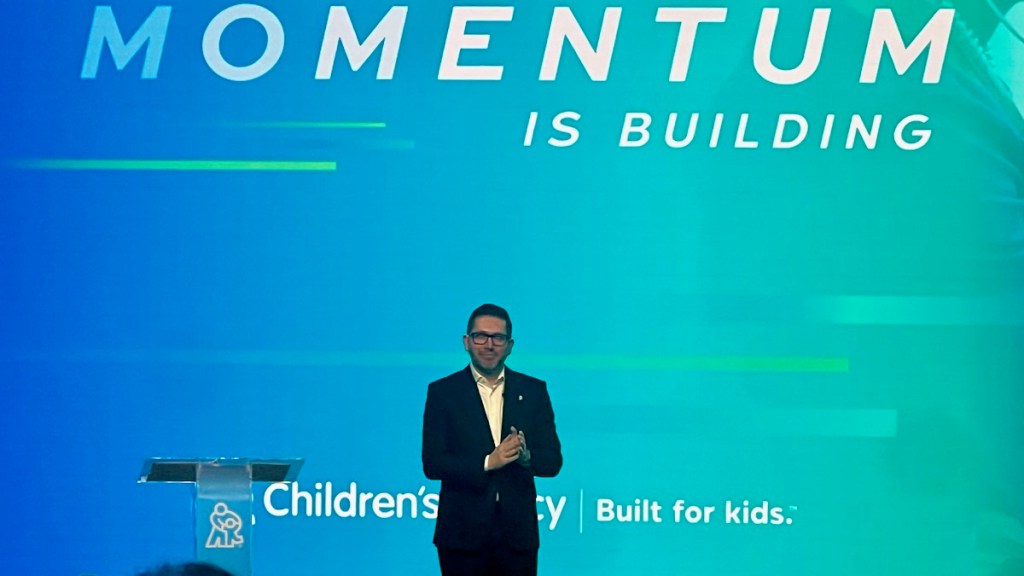
An April 29 event at the hospital to unveil the project included remarks from Missouri Gov. Mike Kehoe, but he said nothing about what role — if any — the state will play in helping finance the project.
“Healthcare is one of the cornerstones of what we do in government,” Kehoe said, “and it is also one of the cornerstones of what families need all across this country.”
Recent changes to federal law, however, promise to stress governments’ ability to support that cornerstone and will put added pressure on hospitals. Federal legislation passed last year, which will add administrative challenges for getting and keeping Medicaid, is expected to lead thousands of Missourians to lose coverage in coming years.
Hallmark Chairman Don Hall Jr., whose family has long been one of the Children’s Mercy’s largest benefactors, also spoke at the announcement to a room filled with families and donors. But Hall made no mention of a gift to the project, which will be constructed within eyesight of the Royals’ proposed $1.9 billion stadium, planned on the site of Hallmark’s executive offices.
“Hallmark and the Royals made some announcements about this neighborhood just across the street,” Hall said. “Ale (Quiroga) attended our announcement, and I was very flattered when he asked me if I would be willing to join him today as a neighbor and as a very enthusiastic member of the civic community.”
Children’s Mercy will face some competition for financial support for its expansion. BJC Health, which owns St. Luke’s Hospital, has said it is embarking on a master planning process for its Country Club Plaza-area campus. A spokesman said the process would take about 18 months.
Quiroga said the new tower’s price tag reflects the cost of building a modern hospital. Regulations require certain size hallways, for example, and heavy robotic equipment may need extra floor support and special elevators. And then there’s the pricey technology that has become essential in healthcare.
“I wish it would cost less,” he said. “I wish it would be cheaper. But unfortunately, there are regulatory things that we have to meet, and building an acute care facility is extremely expensive.”

Among other features, Children’s Mercy said the new tower will include:
- New space for the pediatric intensive care unit and the neonatal intensive care unit, and an expansion of the emergency department.
- A surgical center with “future-ready technology,” including robotics.
- “Improved clinical flow and adjacency,” which the hospital said would help care teams collaborate more easily.
- More natural light and green spaces, as well as a new lobby.
- And spaces to “translate bold science and research into real-world treatments and cures.”
The new tower is expected to be completed in 2031. In a press release, the hospital said work will begin this fall.