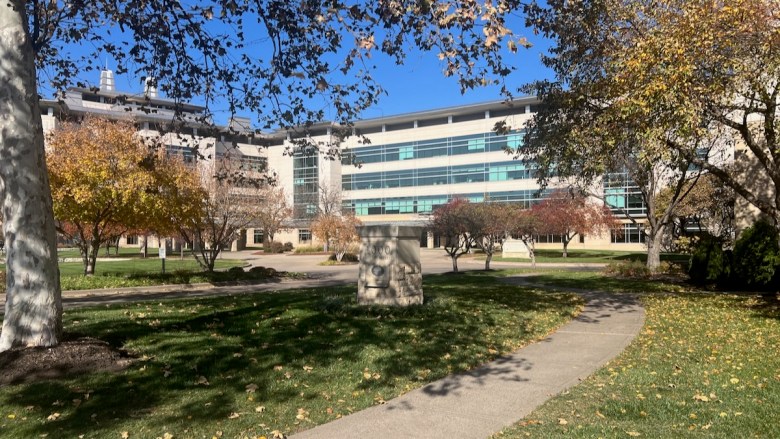
Inside the sunlit corridors of Kansas City’s Stowers Institute for Medical Research, scientists are studying apple snails, silkworms, fruit flies and zebra fish.
Almost any organism that could shed light on how life works is a possible research subject for one of the 20 labs and more than 300 scientists housed at the institute. Likewise, almost any research question is up for grabs, whether or not it has a clear chance of curing a disease or leading to a new medication.
That’s because Jim and Virginia Stowers had something grander in mind when they gave their fortune to open the institute 25 years ago.
Takeaways
- In 2000, the Stowers Institute for Medical Research opened its doors in Kansas City. Naysayers doubted it would be able to succeed in the Midwest.
- Its founders and benefactors, Jim and Virginia Stowers, wanted to create a top research institution that could shed light on the mysteries of life. After 25 years, the institute has 500 employees, 20 research labs and its scientists have published 2,000 research articles.
- Since the time plans for the institute were announced, Kansas City’s civic leaders have made expanding the area’s biotech sector a goal. That effort continues today.
They hoped the biomedical research they funded would contribute to treatments and cures. But they believed an even more valuable contribution could be made if their scientists revealed the secrets of life itself.
“The more we understand about life,” the late Jim Stowers once said, “the more we can hope for life.”
This month, as the Stowers Institute celebrates its first 25 years, Alejandro Sánchez Alvarado, Stowers’ president and chief scientific officer, said he’s certain Jim and Virginia Stowers would be proud of what the institute has become since its unlikely beginnings as an unknown startup.
But would the Stowerses be satisfied?
“Probably not,” Sánchez Alvarado said. “We have yet to accomplish our mission. … We have been tasked to reveal the secrets of life. If such secrets have been revealed, I think they would be satisfied. But we are just beginning to scratch the surface.”
Cancer survivors
When the Stowers Institute opened its doors in 2000, Jim and Virginia Stowers, both survivors of cancer, already had proved they were serious about bringing biomedical research to Kansas City.
They had renovated the old Menorah Medical Center on Rockhill Road into a lavish new headquarters, complete with a cascading waterfall on the north side of the building. They had recruited Bill Neaves from a top research institute to serve as CEO and hired Robb Krumlauf, a top scientist, as scientific director. And they had seeded an endowment for the institute with proceeds from Jim Stowers’ mutual fund business, American Century Investments.
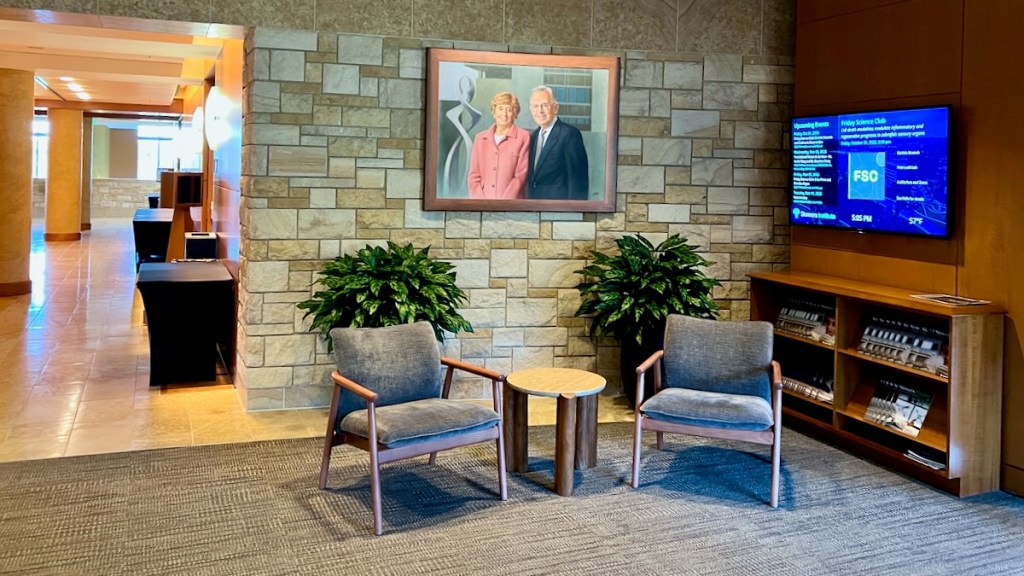
Although naysayers doubted that the Stowerses’ vision could be realized in Kansas City, an unknown in the biotech world, they forged ahead. They doubled down in 2001, when they added more than $1 billion to the institute’s endowment, bringing their total gift at that time to about $1.6 billion. The Stowerses later added to their initial investment, eventually donating more shares in American Century to the institute.
“Everything we are doing,” Jim Stowers said in a 2001 press release, “is focused on the goal of making this institute the best of its kind within 25 years.”
The Stowerses hoped the additional gift would help the institute attract the talent it needed to succeed. Competing against elite coastal institutions for top scientists was an uphill battle.
The talent search became more difficult as a group of anti-abortion state lawmakers continued to push legislation to outlaw embryonic stem cell research in Missouri. Many scientists wouldn’t consider moving to a state that wanted to muzzle scientific research.
Even after Missouri voters narrowly adopted a constitutional amendment legalizing stem cell research in 2006, the Stowers Institute worked under a political shadow. In 2007, its leaders scrapped plans to expand the institution in Kansas City.
More than 15 years later, Stowers opened a satellite laboratory at the Marine Biological Laboratory at Woods Hole, Massachusetts.
Scientific freedom
By 2011, when Sánchez Alvarado was being recruited to Stowers, he remembers questioning whether the Kansas City institute could actually provide what it was selling — a chance for scientists to explore big questions unfettered by financial constraints.
As it turns out, because of the way Jim and Virginia Stowers set up their gift to the institute, it could.
The institute, which since 2011 has owned a controlling stake in American Century, gets 40% of the mutual fund company’s profits each year. That funding, almost $2 billion since 2000, makes the institute’s research almost entirely self-sustaining.
Stowers Institute spent $90.5 million on medical research in the year that ended June 30, 2024, but brought in just over $8 million in federal and other grants. The institute listed total revenue of $390 million and net assets of $1.9 billion at the end of the year.
Stowers’ solid financial footing puts it in the unique position of being able to tell top scientists that if they come to Kansas City, they won’t have to worry about chasing grants or adjusting their research to conform with grant requirements.
The distinction is enviable in the world of grant-reliant academic research, especially as the Trump administration cancels or delays thousands of federal grants and threatens future budgets for the National Institutes of Health and the National Science Foundation, which fund much of the country’s scientific research.
Now, as Sánchez Alvarado competes against Harvard, Stanford and other big-name institutions to recruit investigators, he still faces some skepticism. But he finds the financial model he’s offering is often extremely attractive.
“When they come here and they realize that most of their time is going to be dedicated to their craft,” he said in a 2024 podcast, “and they’re going to be supported, and when they actually advance the needle, there’s support for another seven years and another seven years. You’re looking at potentially a runway of uninterrupted work for 21 years.”
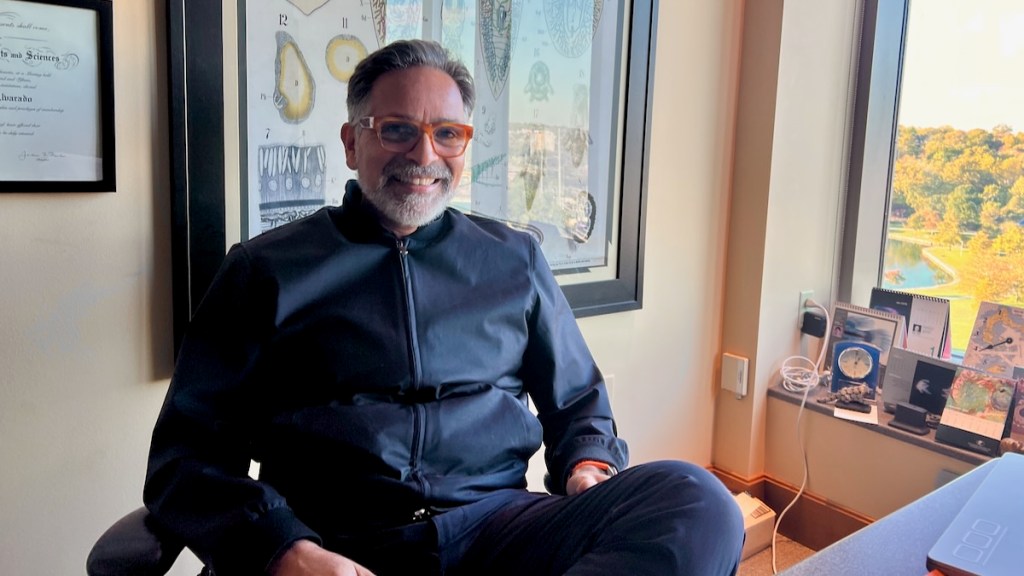
That means scientists can have time to answer foundational scientific questions, what Sánchez Alvarado refers to as the “big questions.”
“If you were to write a grant saying, ‘I’m going to find out the molecular and cellular basis of regeneration,’” he said, “what they’ll say is, ‘Well, are you going to be able to do that in four years?’”
If you can’t, that grant funding will go to someone who says they can do something in the time allotted. And most scientists have no choice but to scale back the questions they’re asking so they can get the funding they need.
“The big questions begin to fall by the wayside,” Sánchez Alvarado said. “And I will tell you that, historically, every big forward leap that has taken place in any scientific endeavor has been not by addressing small questions. It has been by addressing big questions.”
The list of organisms scientists study at Stowers also reflects the institution’s unusual financial model. Often labs relying on grant funding have no choice to use known research organisms — mice or rats, for example. That’s because they are established, easy to come by and inexpensive.
But those small mammals aren’t relevant to every research question. At Stowers, researchers study organisms that better relate to their research because they have the financial latitude to do that.
Sánchez Alvarado’s lab, which studies regeneration, uses planarians, a type of flatworm, and apple snails, a freshwater mollusk, to help inform their work. Both regenerate, and apple snails have an eye that closely resembles a human eye, meaning it could help researchers understand how to treat blindness in humans.
The lab led by Matt Gibson is looking at sea anemones to study toxin delivery, regeneration and aging. And the lab led by Tatjana Piotrowski is studying hearing loss using zebra fish, which have sensory hair cells that closely resemble hair cells in the human inner ear.
Growth potential
Sánchez Alvarado, who grew up in Venezuela, said science would see more progress if more scientists were given the freedom to explore foundational questions like the ones Jim and Virginia Stowers set out for their institute. And if they didn’t have to spend so much of their time applying for grants.
“That would actually change the way science is done in this country,” he said, “because you would have a lot of really bold scientists going after very complicated questions. In all likelihood, they’d find something. It might not be what they were looking for, but they’d find something that would illuminate (our understanding).”
Today, Stowers has 500 employees across the organization, which includes 19 labs led by named investigators and teams of scientists. A 20th investigator will join Stowers early next year. The organization also has four fellows and a cadre of technology experts, scientists who bring cutting edge technology to the organization’s work.
Last month, Stowers named its first fellow in artificial intelligence. In an announcement of the appointment, Julia Zeitlinger, who leads the institute’s AI initiative, said that AI has potential that could go well beyond efficiency. Using AI in data analysis, she said, could lead to entirely new discoveries.
In all, Stowers’ scientists are working on 150 different research projects, all focused on expanding understanding of how living cells work. Stowers’ scientists have been elected to the American Academy of Arts and Sciences and the National Academy of Sciences. And their research has been published in more than 2,000 scientific journals.
The institute added a graduate school, which gained accreditation in 2022. It also has spun off a for-profit biotech company, Biomed Valley Discoveries, which works to develop medications that can treat patients. Romosozumab, a drug to treat osteoporosis, is one example of a drug the company developed. It was discovered in the institute’s Krumlauf lab and gained regulatory approval in 2019.
Reasons for hope
When the Stowers Institute was announced in the late 1990s, Kansas City was full of hope that it could help make the Kansas City area a biotech mecca.
The Kansas City Area Development Council and the Civic Council partnered to form the Kansas City Area Life Sciences Institute, now known as BioNexusKC, a nonprofit established to help promote the city to the industry.
Although Kansas City still doesn’t make the list of the country’s top biotech markets, which are still largely located on the East and West Coasts, BioNexusKC counted 297 biotech companies in the region in 2024, 16 more than in 2021.
The city’s years of focusing on increasing research in the area have slowly added up.
Since Stowers was founded, the University of Kansas Cancer Center gained a comprehensive designation from the National Cancer Institute, a recognition of its research and treatment programs. Stowers is a consortium partner of the cancer center.
And the institute’s neighbor, the University of Missouri-Kansas City, earlier this year was named a Carnegie R1 institution, in recognition of its growing research investments, expected to increase more than 35% in fiscal year 2025.
Meanwhile, expanding the city’s life sciences footprint is still on the civic agenda. Last year, through an effort led by BioNexus KC and its spinoff KC BioHub, the area gained federal designation as a Tech Hub, but ultimately failed to win a grant from the U.S. Department of Commerce’s Economic Development Agency.
KC BioHub is trying for a grant again. But Melissa Roberts Chapman, who leads the KC BioHub, said she is optimistic that, with or without a grant, Kansas City has a good shot at winning more businesses in the biotech sector. The sweet spot, she said, may be in the area of contract research and contract development and manufacturing. That work, often done in China, would be welcome in Kansas City, she said.
“Kansas City today is one of the top U.S. markets for bioservices activity,” she said.
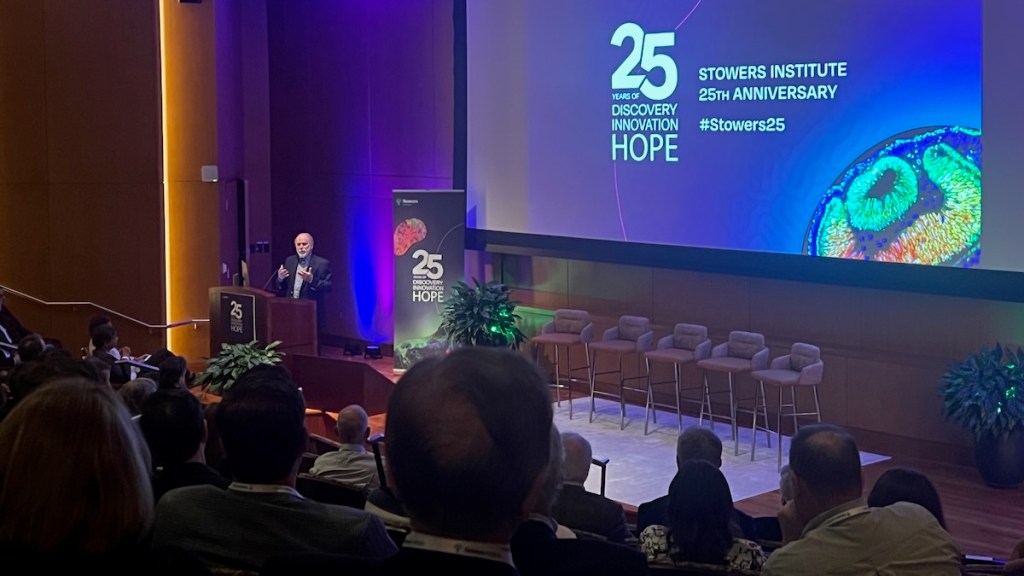
And the foundational research at the Stowers Institute will continue.
As several hundred people gathered on Nov. 14 to celebrate the institute’s anniversary, highlighting the ongoing research was on the agenda. So was stopping to remember just how unlikely it once was that a biomedical research institution in Kansas City could reach this milestone.
In 1999, Krumlauf, the institute’s first scientific director, was told that if he accepted an offer to go to Kansas City, it would be the end of his career.
“I was told,” Krumlauf told the audience gathered in Stowers’ stately auditorium, “I would never do good science again.”
They said it would be impossible to get good scientists to follow him to the Midwest. But Krumlauf decided that, while it might be a risk to take the post at Stowers, not taking it could mean missing the opportunity of a lifetime.
“Next to marrying my wife,” he said, “it was the best decision I ever made.”