
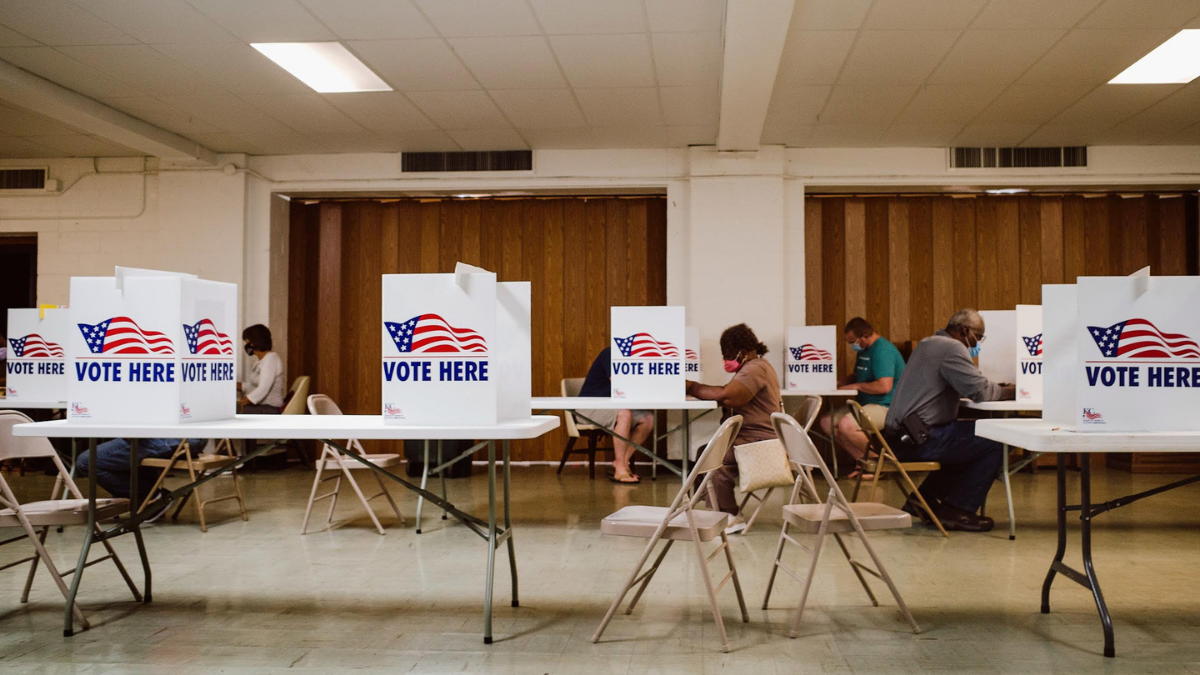


Kansas City, Missouri, resident Christine McDonald didn’t know she could vote after completing her prison sentence in 2007. As someone who was formerly incarcerated, McDonald thought she lost that right.
“Nobody told me that I could vote,” she said.
But the same year McDonald left prison, she attended a bill signing for the federal Second Chance Act, which provided funding for re-entry programs. It was then that she learned about her right to vote.
In November 2008, McDonald cast her vote for the first time in her life. She remembers crying when she told her boss.
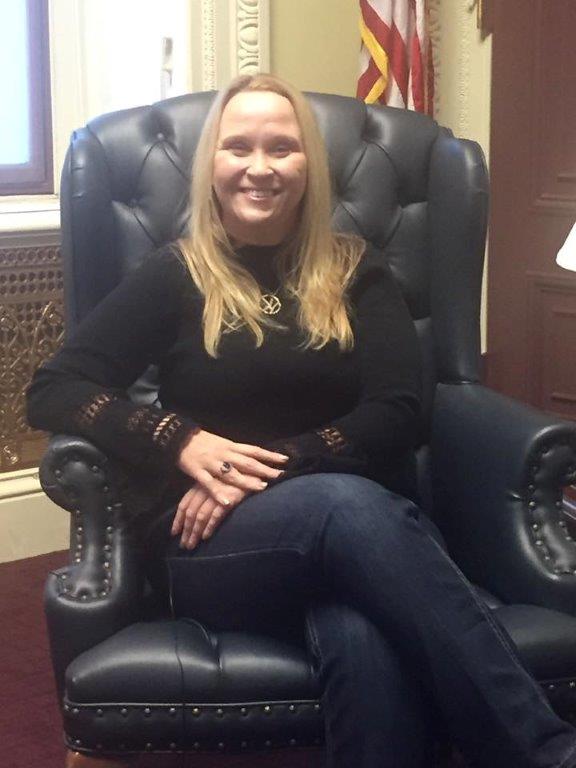
“I felt it was almost like trying to show the world around me that I deserve to be here, in spite of my mistakes,” she said. “Because my mistakes still made it so hard to get jobs and to find fair housing, this was one way I thought I could prove to everyone around me, ‘Hey, I care.’”
Now, McDonald is working to ensure that other formerly incarcerated people in Kansas City and across Missouri are aware of their voting rights.
She’s an organizer with the Our Voices team at the Metro Organization for Racial and Economic Equity, a social justice advocacy group in Kansas City. The team recently launched an initiative called Our Voices-Our Votes. Its purpose: to increase awareness around the voting rights of people who were formerly incarcerated and get them registered to vote.
Calvin Williford, an organizer with MORE2, said the team’s goal is to register 20,000 new voters by November 2022, when states hold midterm elections. He said the team is collaborating with the League of Women Voters in Kansas City, a nonprofit focused on voting rights.
McDonald knows there are many people like herself who may not know they can vote again after completing their sentence in Missouri.
“In so many areas we’re excluded, like seeking employment opportunities, seeking housing opportunities,” she said. “However, this is one way we are included.”
Recently, the Kansas City Council passed a resolution recognizing the work of MORE2 to engage and register people in Kansas City with misdemeanor or felony convictions. Kansas City is the first municipality in Missouri to pass such a resolution.
Williford said the group will continue working with other municipalities across the state to pass similar resolutions that increase awareness of the issue and combat misinformation.
“The greatest barrier, we believe, is the disinformation, misinformation, about the right to vote,” Williford said. “And that belief that because you have a felony, you can never vote again. It’s simply not true in the state of Missouri.”
Combating misinformation on voting rights of formerly incarcerated people
In Missouri and Kansas, people who are incarcerated or are on parole or probation cannot vote until their full sentence is completed.
For people who have completed their full sentence in Missouri, the voter registration process is the same as anyone else’s.
Lauri Ealom, Democratic director at the Kansas City Board of Elections, said the board works with Missouri’s Department of Corrections to get a list from the secretary of state’s office of individuals who have been sentenced.
When someone who was formerly incarcerated re-registers to vote, the election board can check if they are off supervised release. During voter registration drives, Ealom said people who are formerly incarcerated will typically assume they can’t vote.
“There’s mixed messages that are sent throughout the media with regards to their rights,” she said. “They’re definitely surprised. And we go ahead and register them and we do all the checking in the back end, and then they’re registered to vote.”
Upcoming voter registration drives from the Kansas City Board of Elections
- 9 a.m. to 1 p.m., Sept. 28
- Truman Medical Center Hospital Hill, 2301 Holmes St.
- Blue Parkway Sunfresh, 4209 E. 50th Terrace
- 9 a.m. to 1 p.m., Oct. 4 and Oct. 5
- Truman Medical Center Hospital Hill, 2301 Holmes St.
McDonald agreed that overcoming this misconception is one of the biggest challenges of her advocacy.
Williford said Our Voices-Our Votes is also working to connect with people who completed their probation or parole supervision.
“It’s easy to identify a person who’s walking out the door of prison and give them information on voting rights,” he said. “It is much more of a challenge when someone’s been back out in the community for two or three or four years on probation or parole, and then, once again, has eligibility to vote.”
Even if formerly incarcerated people know they can vote again, McDonald said they may feel discouraged, like their vote doesn’t matter.
“They don’t understand their vote matters because nothing else seems to matter when they get out,” she said. “Nobody cares that they have a job, nobody cares that they live in a decent neighborhood.”
What felon disenfranchisement look like in Kansas, Missouri
The voting rights of people who are either currently or formerly incarcerated vary by state.
Only Maine; Vermont; Washington, D.C.; and Puerto Rico allow people who are currently incarcerated to vote. They do not restrict the right to vote from anyone who has a criminal conviction.
The majority of states have some restrictions on voting rights that disenfranchise those who are currently or formerly incarcerated.
The Sentencing Project, a national research and advocacy organization focusing on criminal justice and ending mass incarceration, estimates that 5.2 million people in the U.S. were prohibited from voting in 2020 because of disenfranchisement laws. But only a quarter of those who could not vote were currently in jail or prison.
The Sentencing Project found that a majority of these disenfranchised voters — 75% — were either under probation or parole or had fully completed their sentence. Though they lived in their communities, they could not vote because of laws prohibiting voting post incarceration.
“That’s very clear at sentencing that you’ve lost your right to vote,” Williford said. “What is not very clear is when you regain your right to vote.”
And in some states, regaining the right to vote post sentence is conditional.
In Kansas, for example, formerly incarcerated persons who have completed probation or parole may be barred from voting if they have not paid the fines associated with their sentences. Missouri does not have such a policy.
The Sentencing Project also collects data estimating the number of people with a felony conviction who are disenfranchised.
In Missouri, the 2020 study found that 95,485 people statewide were barred from voting because of felon disenfranchisement laws — 2% of the state’s voting-age population. Of that number, nearly 68,000 were serving probation or parole.
In Kansas, 21,256 people with a felony conviction were barred from voting. Close to 10,000 of those people were on probation or parole.
Voting as a sense of empowerment for formerly incarcerated people
McDonald is intimately familiar with the barriers facing people when they leave prison. Even now, with a conviction on her record and as someone who is blind, McDonald is having a hard time finding a job.
“It seems like everywhere I turn, I’m facing those same barriers,” McDonald said. “The only way we can debunk this is to bring down the walls and let people know that we aren’t so different from the unincarcerated.”
We want our voices to be heard, nationally, because we want to be a part of the voting process.
Christine MCDonald, organizer, MORE2
McDonald said voting is one area where formerly incarcerated people can exercise their power and show they’re invested in their communities.
“This is how I think formerly incarcerated people can find hope, that hope to hang on just a little bit longer,” she said.
McDonald said it’s important for formerly incarcerated people to be part of the community. Exercising their right to vote can also dispel some of the stereotypes and misconceptions people may have about formerly incarcerated people.
“It also shows … that we are a part of the democracy, we are part of your community, we are a part of your city, your state,” McDonald said. “We want our voices to be heard, nationally, because we want to be a part of the voting process, because who’s in office matters to us, too.”
Since regaining the right to vote, she’s voted in every local, state and federal election. She researches candidates to learn who best reflects her values.
It’s McDonald’s hope that getting more people to vote can lead to more change.
“If we understand our right to vote, and we understand (how) to research candidates and the value that our votes have in numbers when we actually exercise it, then we can get people in office that we can connect with and help advocate to help remove some of the societal barriers that exist,” she said.
