
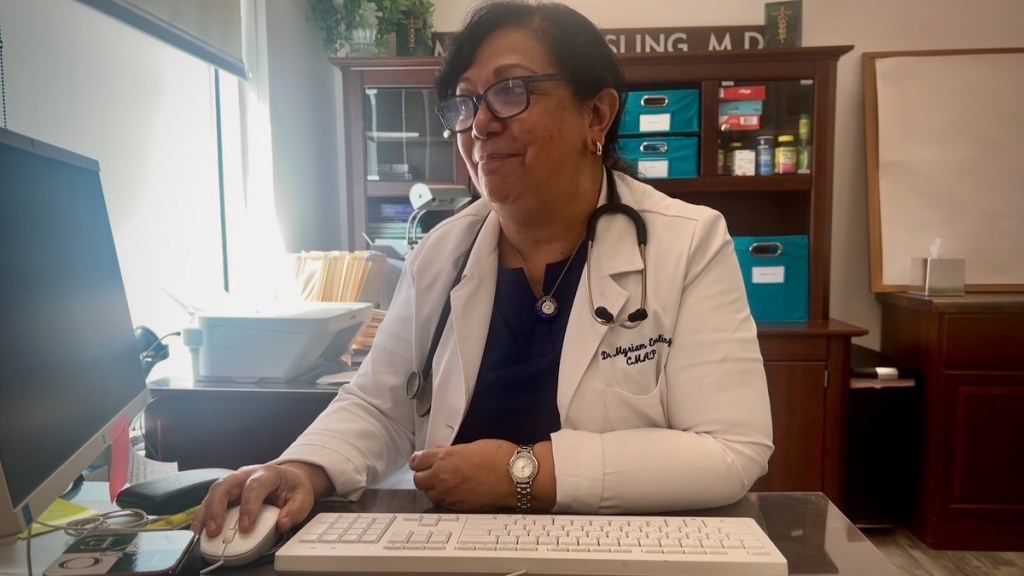
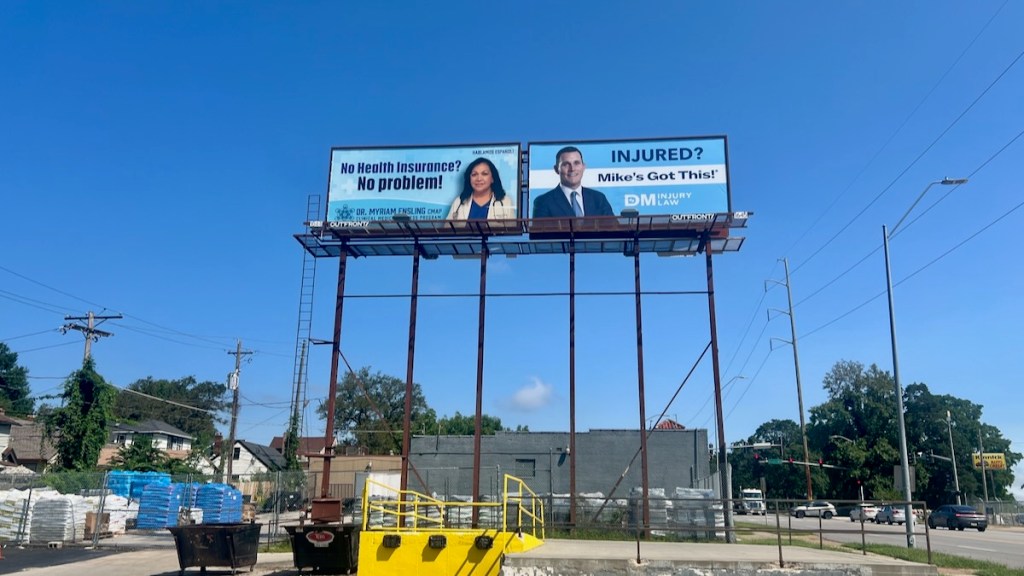
Near the intersection of Gregory Boulevard and Troost Avenue, Dr. Myriam Ensling’s picture smiles from a towering billboard.
“No insurance?” read the words above her image. “No problem!”
The internal medicine doctor is one of a growing number of physicians abandoning the healthcare-industrial complex and selling care directly to patients. No labyrinthine health system. And no insurance.
The model, known as direct primary care, is becoming a de facto safety net for some people who are uninsured or simply can’t afford soaring premiums or out-of-pocket costs like copays and deductibles that come with traditional health insurance. Rather, they pay a flat fee for a doctor who is only a phone call or text away.
Dr. Chelsea Johnson, who launched her direct pediatric practice, KidzMD, in Liberty five months ago, describes direct primary care as a step back to the days before insurance sat at the center of healthcare.
“The doctor and the patient were in the room without the insurance company — because insurance was never involved with all of this,” Johnson said. “You just saw your doctor, and you had a great relationship with your doctor.”
Critics warn that the model is not a replacement for insurance — it only covers basic care, not hospitalizations, lab work or specialists. And they point out that it’s only available to those who can afford a monthly subscription of roughly $80 to $100.
They also worry about the model that pulls primary care providers — already in short supply — away from traditional practices and makes it even harder for people to find a doctor or get in for an appointment.
But doctors, patients and a growing number of business owners who are adding direct primary care memberships to employee benefit packages see it as a rare win that reduces costs and improves healthcare.
Ensling considers it the only hope left for a system that is failing many patients who can’t access the care they need through traditional channels.
“The system has already collapsed for many people,” she said. “They keep propping it up, but I believe it collapsed a long time ago.”
What is direct primary care?
While every direct primary care practice is slightly different, many offer unlimited visits for a flat monthly fee that averages about $80 in the Midwest, according to the Direct Primary Care Alliance, a professional association.
In exchange, patients get an annual physical, quick access to appointments and, often, the provider’s phone number, which they can use day or night to ask advice or request care.
Lilli Juarez, a barista at Oddly Correct, a coffee shop on Troost Avenue, said her direct primary care doctor is a regular customer, often in line for morning coffee. She and her co-workers, all of whom get a direct primary care subscription through the coffee shop, sometimes ask him health questions as they hand over his order.
“I’m like, ‘Does this look concerning to you?’” Juarez said. “It’s genuinely such a nice resource to have, especially as someone who has really never had a job that has had healthcare ever before. It’s really nice to have.”
Almost without exception, direct primary care practices work outside the insurance system.
Many patients who enroll are covered by health insurance, but that coverage won’t apply to costs involving their direct primary care doctor. For many proponents of the model, that disconnection from insurance is a feature, not a bug.
If people can get primary care — the large majority of most people’s healthcare needs — for a predictable, flat fee, they will likely stay in closer contact with their doctor, remain healthier and more likely avoid expensive, long-term health problems.
People often conflate insurance with healthcare, said Dr. Damon Heybrock, who owns Health Studio KC in Westwood, the practice that takes care of employees at Oddly Correct. But they’re not the same thing.
“Your car insurance doesn’t pay for your oil change or any of your maintenance or upkeep,” Heybrock said. “We should be treating health insurance the same way. If you get hit by a bus, I’m not terribly helpful. But that’s what (health insurance) should be there for. Most people are using it thinking it should do everything.”
The new windshield wipers or the oil change, he said, should happen with the primary care doctor.
Reasons for growth
Federal law only recently changed to expand the use of pretax dollars from healthcare savings accounts for direct primary care fees, a shift that some believe will cause more people to consider the arrangement.
But another driver of growth in direct primary care is the rising cost of health insurance. Plans sold through the Affordable Care Act marketplace are spiking, thanks in large part to changes in federal subsidies. And employer-sponsored health plans have trended up for years, a response to rising healthcare costs overall that often results in employees facing higher out-of-pocket costs like copays and deductibles.
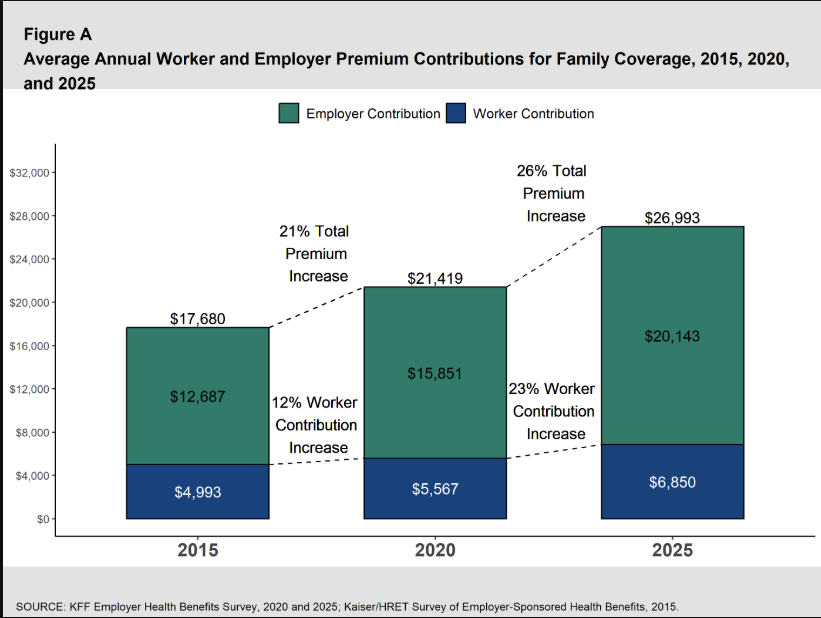
Dr. Kelsey J. Smith, an Oklahoma doctor who serves as president of the Direct Primary Care Alliance, said high-deductible plans, which patients increasingly turn to out of financial necessity, can force patients to ration healthcare in order to avoid incurring more charges.
“Those high-deductible plans are a little more affordable,” Smith said, “but then that means maybe $5,000 or $6,000 is on the back of the person with the coverage before presenting that card is worth anything.”
For people on those plans, direct primary care subscription fees can look relatively affordable and provide regular access to a doctor, Smith said. In other cases, patients may have dropped health insurance coverage altogether due to rising premium costs, but see direct primary care as an affordable alternative.
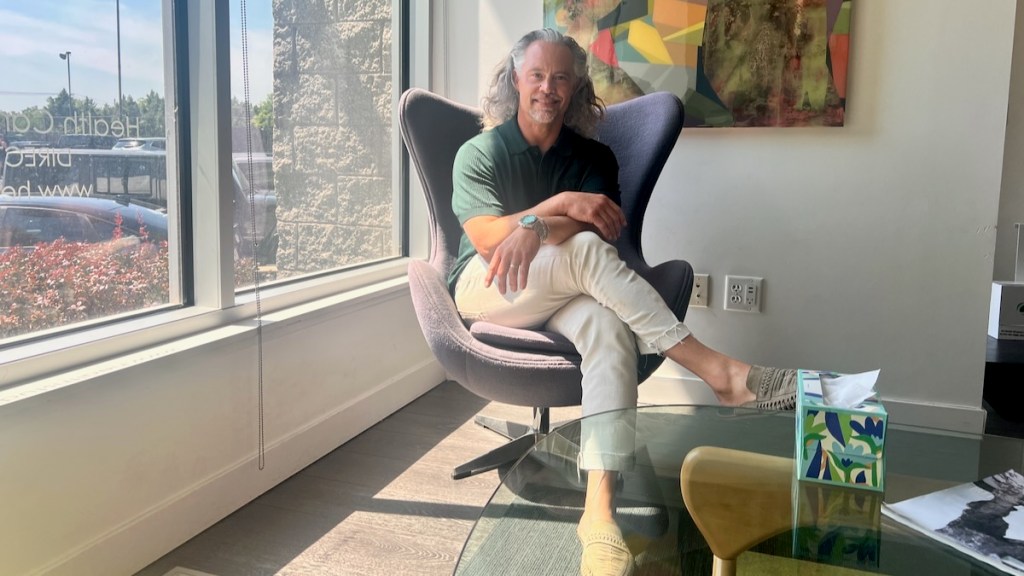
“I’m seeing a ton of people who would not have any access to anybody ever,” Heybrock said.
Ensling, who is actively marketing her clinic to people who lack insurance, sees the same thing. And interest is growing. Just last month, she said, she enrolled 28 new patients.
The growth trend goes well beyond Kansas City. While exact data about patients using direct primary care are difficult to come by, the model has become considerably more common in recent years.
Hint Health, a San Francisco firm that sells technology systems to direct primary care practices, estimates there were more than 3,600 distinct practices at the start of 2025 — almost 20% more than three years earlier.
A study to track growth of direct primary care practices and concierge practices, another type of subscription-based model, charted a 78.4% jump between 2018 and 2023 in providers working in one of the two practice types. According to the study, the number of direct primary care or concierge practice sites grew 83.1% during the period.
Direct primary care providers are quick to point out that their model is markedly different from concierge medicine practices, which tend to cater to wealthier patients and often accept insurance, meaning patients still have insurance-related charges on top of the practice subscription fee. And they can exist within traditional medical practices, serving as a VIP option for those who want quicker access to care.
A ‘no-brainer’ to do something
To some extent, employers are also contributing to the influx of patients using direct primary care options.
Heybrock said he contracts with many area restaurants, bars and other small businesses that can’t swing the cost of providing employees with full-blown health insurance coverage, but they can cover the cost of a subscription to his practice.
Michael Schroeder, who owns Oddly Correct with his brother-in-law, said they began offering the benefit to employees after the start of the COVID pandemic. While the 22-employee business hopes to eventually offer more comprehensive health benefits, the direct primary care membership is helping fill the gap for now, he said.
“It seems like a no-brainer to just do something instead of just sitting on our hands and being like, ‘Insurance is just far too expensive. We can’t do it.’” Schroeder said. “We know they have a resource where, if something is going on, they have someone they can talk to.”

But even businesses that do provide full health benefits are starting to see the attraction of adding direct primary care to the benefit package.
Mary Kolpin, who co-owns the Sunflower Benefits Group in Overland Park, said more of her small-business clients are recognizing that giving employees easier access to a primary care doctor can ultimately bring down their overall benefit costs.
“If you can spend 45 minutes to an hour with a direct primary care doctor at your physical, or you know you have access to them on the weekends,” Kolpin said, “you’re going to stay out of ERs. You’re going to (detect) major diseases a lot faster and maybe avoid some major surgeries or diagnoses.”
Marathon Health, one of the largest companies in the space, describes its model as “advanced primary care” and sells directly to self-funded corporate clients, promising a 9% reduction in specialty claims, a 21% drop in outpatient claims and a 41% decline in inpatient visits.
“What that means is we are truly getting to addressing the care when it is needed,” said Krista Beckwith, the company’s vice president of population health and wellness. “That care doesn’t get delayed. That care doesn’t result in something getting escalated to a traumatic event or an event that does require something like an emergency visit or an inpatient stay.”
To date, the company has 3 million patients in 41 states using its plan, including 87,000 in Missouri and 51,000 in Kansas.
While patients and employers may find aspects of direct primary care attractive, Dr. Zirui Song of Harvard Medical School, an author of the Health Affairs study, said the main motivator causing patients to sign up is their desire to keep their doctor.
Direct primary care and concierge growth, he said, “is driven not by a patient’s decision to enroll, but by the physicians’ decision to exit.”
Of course, Song said, not every patient left behind will be able or willing to shift to the direct primary care practice — begging the question, what happens to the ones who stay behind in a system desperately short on providers?
“That is challenging for existing practices that generally lack the bandwidth and the room to absorb the patients,” Song said.
Insurance red tape
For providers who decide to make the leap to direct primary care, there are a few common reasons to step away from traditional practices, many of which are owned by large hospital systems and bound by requirements laid out by insurers.
Doctors said they choose direct primary care because they want to get back to having more time and freedom to practice medicine. Instead of a patient load that can top 2,000 at a traditional primary care practice, a direct primary care doctor typically serves between 500 and 700 patients. And instead of 10-15 minutes for an appointment, direct primary care allows for appointments that can stretch to an hour.
Perhaps most importantly, doctors can avoid insurance paperwork and red tape that can steal hours of their working time and, Smith argues, sometimes present a conflict of interest for physicians.
”We feel like we entered medicine to serve our patients, but you find — especially after a few years of playing that game — that you’re really working for insurance,” Smith said. “Every visit is an insurance transaction, so you have to be sure you’re coding it as complex as possible, and all this type of thing, which is not always in the best interest of the patient.”
For many doctors, the direct primary care path has become a safety-release valve that may keep them from quitting medicine altogether, said Johnson, the pediatrician offering direct care in Liberty.
“If they’re able to transition into a direct primary care model where they’re in charge of their autonomy, their schedule, their freedom and how they take care of their patients,” Johnson said, “they’re going to stay in medicine. They’re not seeing 2,500 patients in their panel but they’ve got 600 patients in their panel.”
Still, the image of direct primary care doctors shunning big institutions and hanging out their own shingles already may be changing.
The biggest growth area in direct primary care and concierge medicine is among practices owned by corporations, including private equity. According to Song’s study, between 2018 and 2023 corporate-affiliated practices grew by 576% to 1,027. Meanwhile, the share of independently owned practices dropped to 59.7% from 84%.
Song said the fivefold growth of corporate owned practices seems to fly in the face of a primary motivator physicians list for leaving traditional practices in the first place — having autonomy. But he said it remains to be seen how the shift will affect the emerging direct primary care practices, or the ongoing shortage of primary care providers.