


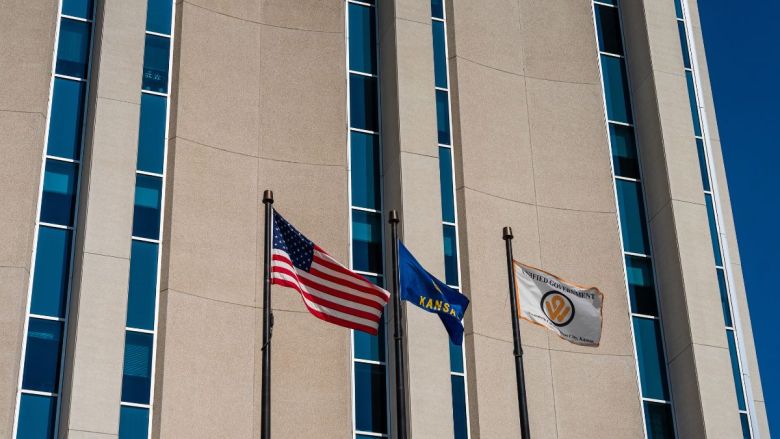
Wyandotte County is at a crossroads.
When Tyrone Garner, the mayor and CEO of the Unified Government of Wyandotte County and Kansas City, Kansas, announced in November that he would not run for reelection, six candidates emerged to replace him in a primary race.
Those six candidates reflect a variety of backgrounds and priorities — from former legislators to longtime city employees, pushing for public safety, property tax relief or affordable housing.
The candidates include Tom Burroughs, Mark Gilstrap, Rose Mulvany Henry, Gwendolyn S. Thomas, Christal Watson and Janice Witt.
Wyandotte County voters will decide on Aug. 5 which candidates are the most promising to succeed Garner. The two top vote-getting candidates will appear on the general election ballot in November, when the final decision will be made.
The Beacon reached out to each candidate in the mayoral race for an interview about their campaign. All except Gilstrap responded.
Here’s an overview of three key issues that emerged in those interviews.
Click on a link to jump to a section:
Tom Burroughs
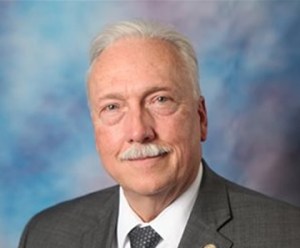
Tom Burroughs currently sits on the Unified Government’s Board of Commissioners representing At-Large District 2, a position he has held since 2017.
He has been active in Kansas politics for decades. Burroughs also served as a Democrat in the state House of Representatives representing the 33rd District from 1997 until 2023. That includes a six-year overlap when he held both his position on the Board of Commissioners and his position in the state legislature.
Burroughs briefly served as acting mayor when Garner took a medical leave in 2024.
Property tax relief
Burroughs told The Beacon that one of his top priorities has always been property tax relief.
“I was elected to lower property taxes,” he said. “I ran on lower property taxes when I first ran for the statehouse. I ran on lower property taxes here. I have a consistent voting record of addressing property tax.”
He said Wyandotte County is well positioned to make it happen.
Development projects in western areas of the county are generating revenue for the county. And for the first time in decades, he said, Wyandotte County is generating as much sales tax revenue as property tax revenue.
Now that more sales tax dollars are available, Burroughs wants to take the opportunity to cut taxes for homeowners.
“There’s so many things that we can do to streamline our process, streamline our services,” he said. “Look at complete consolidation of departments and agencies. There are so many other options besides just saying, ‘We’ve got to raise your taxes. We’re going to do it with property taxes.’”
Economic development
Burroughs believes that if property tax relief is the goal, economic development is the best way to get there.
For decades, he said, property taxes have been the primary revenue source for Wyandotte County.
“It was either fees and fines or property tax,” he said. “And that led to, I believe, a culture in our community that the only place we’re going to get money is through property tax.”
Enter the Kansas Speedway project in western Wyandotte County, which Burroughs sponsored in the Kansas House in 1999.
“We were successful in getting the STAR bonds project path for the Kansas motor speedway,” he said. “That, for the first time, showed that we could do economic development, we could build quality projects, that Wyandotte County was open for business.”
That project, he believes, helped launch a tourism industry generating sales tax revenue in the county.
Moving forward, he said, the Unified Government needs to bring development to all corners of the county.
In the older areas of the county, Burroughs suggested pooling the county’s many land bank properties to create large mixed-use developments, or creating new small houses to make homeownership more accessible.
Working with Topeka
Burroughs believes that real change in Wyandotte County will require a strong relationship with legislators at the Kansas Statehouse. And he said that’s where he has a leg up compared to the other candidates.
“There’s very little opportunity for us to make major changes without the support of the legislature to do so,” he said.
Many lawmakers in Topeka have known Burroughs for years, he said, and they’ve heard him give speeches on the House floor.
“I’m not naive when it comes to tax policy,” he said. “I’m bold when it comes to ensuring that the people that elected me are heard and in an effective and efficient manner.”
Mark Gilstrap
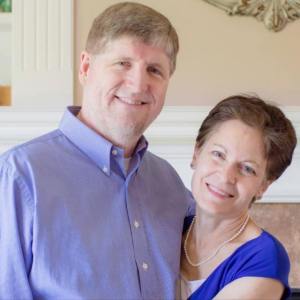
Mark Gilstrap did not respond to multiple phone calls or a text message requesting an interview.
He is also running for the USD 203 Piper Board of Education this year and will appear on the November ballot for that race.
He currently serves on the Kansas City, Kansas, Community College Board of Trustees, a position he was elected to in 2023.
Gilstrap is a former state senator who represented the 5th District in the Kansas Senate from 1997 until 2009. He was a Democrat at the time but has since become a Republican.
He ran for his old 5th District seat in 2012 as a Republican but ultimately lost in the primary.
He ran for election again in 2020, 2022 and 2024 to represent the 36th District in the Kansas House of Representatives and lost all three times. He lost an election to the Board of Public Utilities in 2021, the Piper Board of Education in 2023 and the Unified Government Board of Commissioners in 2019.
In all, this is the eighth time he has appeared on a ballot since 2019. This November’s USD 203 election will be the ninth time in seven years.
Rose Mulvany Henry

Rose Mulvany Henry spent 30 years as an attorney and executive in the telecommunications industry.
More recently, she has served on the Board of Public Utilities since 2019. During her time on the board, she said, she helped usher in a new leadership team that’s focusing on customer care and community engagement.
“I take great pride that we’ve been able to deliver some results at BPU that maybe we haven’t seen in a long time over there,” she said.
Cultural shift at the Unified Government
Now, Mulvany Henry wants to see similar changes at the Unified Government.
“We’re in a political environment where the rhetoric is strong, (almost always) unkind,” she said. “At the core of this community, we’re all Dottes. And I hope that at some point in time we can lower the temperature of some of this because folks are seeing results, and folks are seeing that better opportunities are being presented for them to succeed.”
She wants the Unified Government to adopt a customer service mindset when it comes to taxpayers and community members.
That means taking a closer look at cost effectiveness, speed and community engagement. Mulvany Henry wants to make sure that if taxpayers are paying for services, the services are fast and helpful, and she wants to make sure the Unified Government staff are open to feedback.
Another important piece of that puzzle is the culture among employees at the Unified Government. If employees are happy at their jobs and feel supported by a strong team, she believes they will be able to address problems more effectively and ultimately deliver better results for Wyandotte County residents.
“I’ve been in bad work environments before,” she said. “I know what it’s like. And telling someone that you actually appreciate what they do and you appreciate the difference they made in a day — that can go a long way in righting the ship, where the culture is concerned.”
Property tax relief
Property taxes continue to be an issue for many homeowners, and she’d like to diversify Wyandotte County’s revenue to make tax bills more affordable.
She brought up a recent proposal from Commissioner Andrew Davis that would collect taxes from tourists — possibly on hotels or rental cars.
That was in the context of the expected tourism for the upcoming World Cup, she said. But even in normal years, the Kansas Speedway is the largest tourist attraction in Kansas. And with the new Margaritaville Hotel and the planned Mattel Adventure Park, she believes tourism is something Wyandotte County can tap for the benefit of residents.
“I’m not trying to punish folks who want to come here to visit because we want folks to come visit here,” she said. “But if we can think of ways like that to diversify our revenue, not on the backs of our own residents, boy, wouldn’t that be something?”
Economic development
For Mulvany Henry, the best development projects don’t ask for tax breaks or incentives.
“I’d welcome all development,” she said. “But what I would prioritize is development that is asking us for very little or no incentives at all. … If we’re going to move this community forward for generations to come, to get us stabilized from a budgetary perspective, we’re going to have to be pretty intentional about this.”
She wants development in all corners of Wyandotte County, and she’s eager to look at any vacant corner as an opportunity to bring in something new. She’s also willing to consider ways to streamline the development process.
Gwendolyn S. Thomas
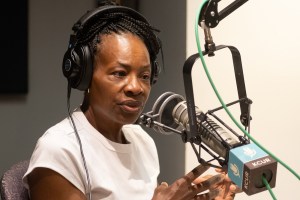
Gwendolyn Thomas worked for the Unified Government for nearly three decades — most recently as the ARPA program coordinator. (ARPA stands for the American Rescue Plan Act, a stimulus action passed during the COVID-19 pandemic.)
Prior to that, she worked in the mayor’s office during Joe Reardon’s term. She’s spent time working as an administrative assistant at the Board of Commissioners, in the 311 office, at the police department and in the buildings department.
She sued the Unified Government in 2022 for racial discrimination, alleging that once Reardon left office, the county shuffled her around in a series of temporary jobs with the goal of getting her to quit. The suit was on track for a jury trial until the two parties settled in 2024.
“The lawsuit did not define me,” she said. “But what I want people to know about me is that … if I wasn’t afraid to fight for myself, I’m not going to be afraid to fight for you.”
Affordable housing
Thomas is happy that development is coming to Wyandotte County. But she believes that the Unified Government should actively pursue what the community actually needs, rather than waiting for developers to make the first move.
It’s what she calls “becoming our own developer.”
“We, the Unified Government, over the last several years, have spent so much money bringing other individuals into our community to tell us what we want our community to look like,” she said. “Well, why can’t we as leaders have a vision for what we want our community to look like?”
Her vision includes mixed-use developments and housing built along transit lines for easy access to buses. She also wants more co-op space for small-business owners who are just starting out and working from their home or garage.
And a lot more affordable housing.
“Everyone cannot afford a $300,000 house, so we really need to get serious about what is affordable housing and have that conversation,” she said. That means targeting specific income levels to make sure housing is available at all price points.
Staff morale
Thomas is no stranger to the issue of workplace culture at the Unified Government. She said she was not at liberty to talk about her lawsuit, but she said the workplace culture may be hurting the Unified Government.
“Over the years, the culture of the environment has changed,” she said, “where people that have worked for the organization that have all of this historical knowledge have been dismissed and pushed to the side. … They become disenchanted with this organization, and they decide to leave for what they assume are greener pastures, or they decide to retire.”
That’s not something that can just be fixed with an employee appreciation day, she said.
Thomas believes staff members need transparency and the ability to openly talk about what’s working or not working in their departments. On top of that, employees need to be given more independence to make their own decisions.
If “you have put somebody in a position of power,” she said, “truly give them the power to operate in that position. Don’t just give them a position with a title, and they don’t have power, and they can’t do anything.”
Setting the tone at commission meetings
On the Board of Commissioners, the mayor doesn’t have a vote except in the case of a tie. The mayor’s main job is to set the agenda and run the meetings.
Thomas said she would take that role seriously.
“As mayor, it’s up to me to build the tone,” she said. “It could be a tone where you build consensus, or it could be a tone where you’re building all of this aggression and all of this anger and all of this battling back and forth.”
Christal Watson

Christal Watson is the executive director of the Kansas City, Kansas, School Foundation for Excellence.
She worked under former Mayor David Alvey as the deputy chief of staff for neighborhood and small-business development, and she also served on the Kansas City, Kansas, Board of Education from 2011 until 2015.
She’s been in the nonprofit world for more than two decades. Before that, she spent 17 years working for Sprint.
“Sprint taught me to be very results-driven,” she said. “Being in the nonprofit (sector) has taught me … to really be in tune with your community, to have some empathy for what people are struggling with that you may not be struggling with — and vice versa, for that matter — and just to really be able to help.”
The cycle of poverty
Having worked for some time at United Way, Watson said she learned a lot about the gaps in Wyandotte County’s safety net.
“One of the biggest gaps,” she said, “is the cycle of poverty that we live under in Wyandotte County. … I mean, 85% of our student population are on the free and reduced lunch program. … Yet we still have some of the highest taxes in the metropolitan area.”
That’s not sustainable, she said.
With all of the growth in western Wyandotte County, Watson believes that neighborhoods east of Interstate 635 have been left behind.
As mayor, Watson wants to bring some focus to what residents are lacking and how to fill those gaps.
One option is to find development deals that give back to the community.
“We really have so much potential when it comes to economic development,” she said. “But we’ve got to make sure that when we’re making these deals for development that there’s some type of giveback that benefits the people, that helps make life easier for them to afford.”
She’s eager for any development opportunities east of Interstate 635, but she especially wants to activate land bank properties and vacant land that is, at best, not generating any tax revenue and, at worst, blighting neighborhoods.
Public safety
To address safety issues, Watson would continue to work with the police and sheriff’s department, with expanded community policing initiatives.
Beyond that, Watson wants to expand youth violence prevention programs.
“We’ve got to start early,” she said, “teaching kids how to live in their own communities and how to respect their communities.”
For example, she pointed to Lowriding 2 Success, where at-risk teenagers are rewarded for good grades and behavior with bicycle parts. By the end of the program, the kids will have received the parts to build their own $2,000 bicycle.
“Prevention really is about awareness and getting information to someone in a manner that makes them think twice about the decisions that they make,” she said.
Welcoming immigrants
Another major component of public safety, Watson said, is making sure that immigrant communities feel safe amid deportations and raids.
The Unified Government passed an ordinance in 2022 declaring the county a sanctuary for immigrants, which was promptly undone by the Kansas Legislature later that year.
Expanded translation and interpretation services would help build trust with immigrant communities, she said.
Watson plans to host quarterly meetings with residents in a “study circle” format, to get to know their issues and figure out how to solve them. And she wants those meetings to be available for not only English and Spanish speakers, but also members of Wyandotte County’s growing Burmese and Hmong populations.
Janice Witt
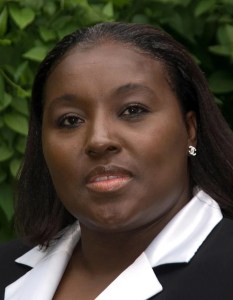
Janice Witt is the CEO of the Reola Grant Center for Family Life Development, which helps organize food and supply drives for neighbors in need.
Witt said she has run for mayor in every primary election for the past five cycles. She first started running for mayor when her mother told her, “No one is out there to fight for the old people.”
“She was correct,” Witt said. “And we just started doing it. And that was, and is still called, the Reola Grant Center for Family Life Development. And there’s no way to describe it, except a group of people who care about other people. They don’t have money. These are people who are just making it work.”
Meeting basic needs
Witt believes that poverty in Wyandotte County is reaching a crisis level.
“It is as unreal as it seems,” she said, “that they would ignore our community, their community, to the point that you literally have people dying by disease, lack of nutrition, high birthing rates that lead to baby deaths.”
She wants to see that change. And the first step, she said, is to put an end to what she sees as political games for money.
“The reality is, in Wyandotte County, they play a lot of political games,” she said. “They put us up on this pedestal in order to get grants, and they hide the real workings behind the back.”
A change to the system
Witt believes that the political system in Wyandotte County is long overdue for a change. And she promises to make that change.
“If (voters) are not looking to make an actual change, then don’t (vote for me),” Witt said. “Don’t. I would be the wrong person.”
She said she wants to see the community uplifted and children learning in school instead of getting involved in violence.
And to do that, she said she wants to close the book on outgoing Mayor Tyrone Garner. She believes that he was self-centered as mayor, and she’d like to be a mayor who focuses on the community.
More specifically, she believes that Garner, the former deputy chief of the Kansas City, Kansas, Police Department, didn’t do enough to prevent violence against women at the hands of other officers.
“No one will ever get to say that Janice and (husband) Ron Witt didn’t step up to the plate to help everyone, anyone that found their way to us, so that our community can move forward,” she said. “Instead, we have a police officer who sits back and watches 28-plus women die at the hands of the police department, and nobody really seems to be bothered by that. I can’t live with that.”
No more corruption
Witt didn’t say what kind of development she’d like to see in Wyandotte County, but she said she thought Wyandotte County was hung out to dry with the Cerner and Schlitterbahn projects near the Kansas Speedway.
She believes that many of the county’s big development deals are approved as favors to “friends and family and people who they owe things to.”
“That is hidden from us as a community,” she said. “You have to go in there, and you have to dig, and you have to know where to dig, and then you have to know how to get in the door. The whole thing is very sad and it is un-American.”
“I’m sitting here looking at this piece of paper that I’ve used so many times,” she told The Beacon at the end of the phone call.
“I’m going to read you this, and then I’m going to be done,” she said. “No more corruption. No more greed. No more favoritism. No more division. No more lies and broken promises. No more unfair tax and BPU practices, brutality to our local businesses, the same names, same games. Break these chains.”
Several of the candidates have also appeared on KCUR’s Up-to-Date. You can listen to those interviews here and here.

