


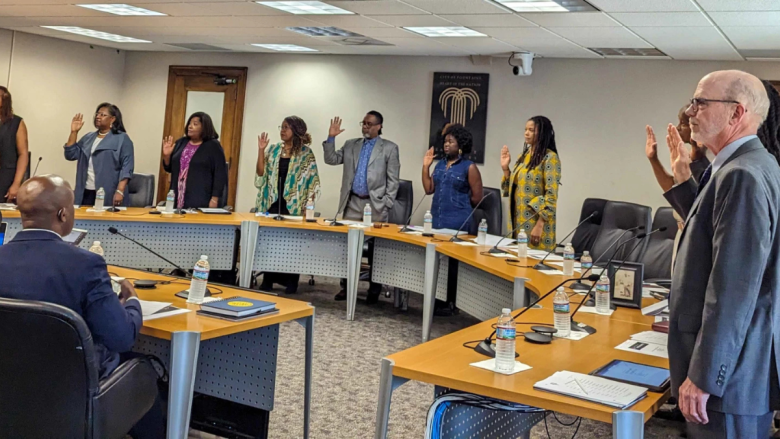
Kansas City Mayor’s Commission on Reparations (June 23, 2026)
By Masha Mackey, Kansas City Documenter
See more about this meeting at Documenters.org
Summary
- The commission received updates from its research team, which is examining the historical and ongoing effects of local policies on Black residents in Kansas City, Missouri, as part of the city’s reparations initiative. The commission’s charge is to study and develop reparations proposals for the city’s review. Proposals are to focus on five impact areas: housing (homeownership and affordable housing), economic development, health, education and criminal justice.
- The commission received updates on draft harm area reports, community engagement findings and the collection of residents’ stories documenting experiences with discrimination and systemic inequities.
- Commissioners discussed timelines for report completion, community outreach efforts and how research findings may inform future reparations recommendations.
Notes
Meeting Attendance:
Commissioners present were:
- Terri Barnes, chairperson
- Madison Lyman
- Danise Hartsfield
- Kelli Hearn
- Dr. Bridgette Jones
New Business
- Barnes reported that she has received several invitations to speak later this fall following the release of the draft report. She also mentioned that the U.S. Department of Justice has joined a lawsuit challenging the reparations program in Evanston, Illinois.
Research update:
Adrian N. Carter, senior principal consultant and managing partner of the Carter Development Group of Tamarac, Florida, reported that:
- Several draft harm area reports have been completed and distributed to commissioners for review. Harm areas refer back to the main topics, such as housing and criminal justice.
- The community engagement report has been completed.
- Nearly 30 community stories were collected through interviews and listening sessions between August 2025 and March 2026.
- Draft reports continue to be revised based on commissioners’ comments.
- The project remains on schedule despite adjustments to some review deadlines.
- Commissioners discussed opportunities to strengthen community participation and ensure that residents’ experiences are reflected throughout the final report.
- Related resources:
- Community Engagement and Story Collection
- Discussion focused on the process used to gather community input, including public listening sessions, interviews and story collection efforts.
- Participants discussed the importance of documenting residents’ lived experiences alongside historical research and other project findings.
- Discussion referenced stories shared by community members about housing discrimination, educational inequities, economic barriers and interactions with public institutions.
- Commission members discussed how community stories may be incorporated into future reports and recommendations.
- Project Timeline and Next Steps
- Commission members reviewed upcoming deadlines and milestones for the reparations project. Discussion focused on:
- Completion of remaining harm area reports.
- Incorporating commissioners’ comments into draft materials.
- Future public engagement opportunities.
- Preparation of recommendations for city leadership.
- Draft reports remain under review, with additional revisions anticipated before final recommendations are developed.
- Commission members reviewed upcoming deadlines and milestones for the reparations project. Discussion focused on:
- Some commissioners expressed the need to consult with the city’s legal department. One area is to determine compliance with state open records requirements.
- The initial draft report is expected to be out in August or September. Carter said the report would likely be between 300 and 500 pages. Barnes said Kansas City differs from reparations commissions in other communities in that it intends to issue a draft report instead of just releasing a final report.
- No formal votes or recommendations were considered during this portion of the meeting.
KC Reparations Coalition Report
Coalition Chair Janay Reliford reported that:
- The coalition’s Aug. 31 meeting looks as if it will feature Evanston, Illinois, Mayor Daniel Biss and Kansas City Mayor Quinton Lucas. It is possible that Kansas City Mayor Pro Tem Ryana Parks-Shaw will step in for Lucas.
- She recounted conversations about timing and said it would be best for the reparations commission to present its findings to the current council rather than wait until a new council and mayor are elected next year.
Observations
- Much of the meeting focused on research methodology, data collection and ensuring community voices are reflected in the commission’s work.
- Commissioners appeared particularly interested in balancing historical research with contemporary experiences shared by residents.
- The discussion highlighted the complexity of translating research findings into actionable reparations recommendations.
Follow-Up Questions
- How will the commission prioritize recommendations once all harm area reports are completed?
- What additional opportunities will residents have to give comments before final recommendations are released?
- How will the commission measure the potential effects of any future reparations recommendations?
If you believe anything in these notes is inaccurate, please email us at documenters@thebeacon.media with “Correction Request” in the subject line. Learn more about Documenters on our website.

