


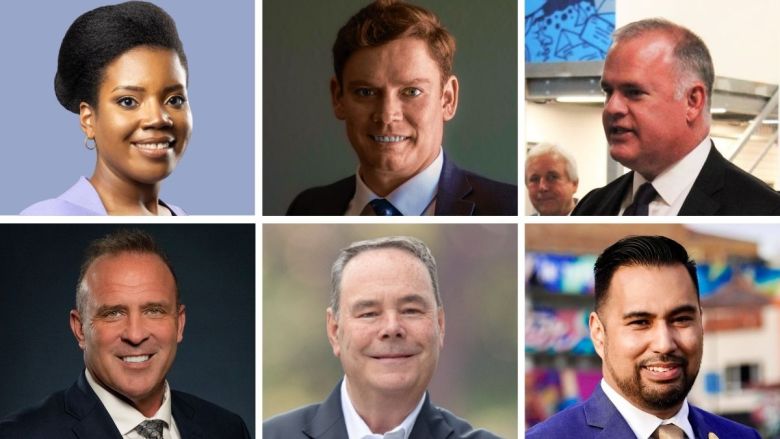
For the first time in two decades, Jackson County voters will cast ballots for county executive in an election with no incumbent candidate defending the seat.
Democratic political leaders have flocked to the race to present their case to voters in the Aug. 4 primary.
The six Democratic candidates include three current and former elected officials, an attorney, a chartered financial analyst and a consultant with a background in economics.
There is only one Republican candidate, Alan Rohlfing, in the race. Because the Republican primary for county executive will not be competitive, The Beacon will not cover Rohlfing’s candidacy in-depth until the general election campaign.
Candidates are presented in the order in which they will appear on the August ballot.
Click a link to jump to a candidate:
Stacy Lake

Stacy Lake is an attorney specializing in civil litigation who lives in midtown Kansas City. She previously ran for county executive in 2022, nearly defeating Frank White Jr. in the primary.
Lake said she wants to “reform and modernize the Jackson County government.”
“Our technological systems within the county government, they’re outdated,” she said, “They’ve been behind for decades.”
The acronym for her seven-point strategy is the JACKSON Plan:
- Justice system reform
- Audit Jackson County government
- Countywide infrastructure
- Keep taxes affordable
- Small-business support
- Ownership and affordable housing
- Neighbor-to-neighbor transportation plan
But above all, Lake listed her top three priorities as property taxes, auditing the county and improving infrastructure.
Fixing the property assessment process
Lake said one of the first steps to reform the assessment process is to sever the county’s relationship with Tyler Technologies and bring assessment back in-house.
That company was tasked with collecting the data for the 2023 property assessments. Tyler Technologies also helped with computer assisted mass appraisal, the process by which those property measurements are converted into market values.
Lake said that Tyler Technologies, 10% of which is owned by BlackRock Inc., is responsible for many of the unlawful increases in property assessments in 2023. She said the BlackRock relationship is a conflict of interest.
“BlackRock is basically a private equity firm that goes around the United States buying single-family homes,” Lake said.
In addition, Lake supports a 15% cap on assessment increases at the state level.
“For me it’s unethical to tell a person that their taxes are going to increase from one year to another by 500%,” she said, “and only give them six months’ notice of that increase.”
Auditing Jackson County government
Lake said Jackson County government has lost trust among its residents. She is calling for a “deep-scale audit” and reform to make sure tax dollars are spent efficiently and effectively.
“Over the years, Jackson County government has been mired in scandal,” she said, noting that auditors who belonged to both political parties rated the county “poor,” the lowest possible rating.
She wants to investigate the assessment department, but she also wants to hire an independent auditor to go department-by-department ensuring that money is accounted for and being spent as outlined in the budget.
“We owe it to the people of Jackson County,” she said, “to one, make sure that our books are correct, and (two), that we are passing balanced budgets each year, which we currently are not.”
Investing in county infrastructure improvements
Lake is interested in infrastructure on two fronts.
She wants to revamp public transportation in Jackson County, including in several suburbs that have divested from the Kansas City Area Transportation Authority in recent years.
Her dream vision of a rapid bus system would include four main lines — connecting Kansas City to Buckner, to Lone Jack and to Martin City, as well as one connecting Grandview to Independence.
“It’s actually just crazy,” she said, “to think that in the 1950s our tram system was more accessible than what our quasi-bus system is right now.”
Beyond public transportation, she said, Jackson County is in desperate need of updating county buildings — which she said are falling apart.
She said the county should have been investing a portion of its budget every year to maintenance, but instead, the issues have snowballed.
“We still have pipes in the courthouse that are over 150 years old,” she said. “The majority of our buildings in Jackson County are not ADA compliant, meaning that they’re not even accessible for every single Jackson County resident to go into, and that has to change.”
Ryan Meyer
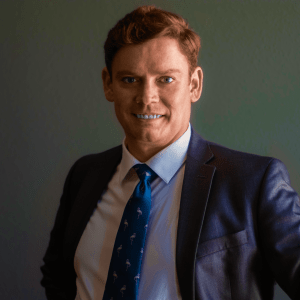
Ryan Meyer is a political and marketing consultant with a master’s degree in economics who has been involved in political campaigns around Kansas City for nearly two decades.
He previously ran for Jackson County’s 2nd At-Large District in 2022 and ultimately lost in the primary against Donna Peyton.
He launched his campaign for county executive because he felt there was not a real progressive voice in the race.
“I’m desperate for somebody to take a leadership role that is going to restore trust in local government,” he said, “and I personally believe that that starts with getting the trains running on time.”
Fixing the property tax debacle while protecting school funding
Like all of the candidates, Meyer said that property assessment needs to be reformed in Jackson County. But he urged caution when it comes to proposals to refund money to taxpayers.
Calls to send tax refunds to property taxpayers, he said, would either be paid for with higher taxes or by defunding public schools and libraries.
“People overwhelmingly, almost unilaterally vote to fund the public schools,” he said. “People are OK paying property taxes to get something. But they want to know where it’s going, and they want to know how much it’s going to be. Because if their mortgage is going to jump between December and January by $200 a month, that’s not going to fly.”
Much of the 2023 issues were economic, he said, because of a market that inflated property values much faster than the county could keep up.
If 230,000 properties increased in value more than 15%, that meant potentially hundreds of thousands of interior inspections.
“If you were to hire 100 assessors and they were each to do 10 a day… it would take every working day for an entire calendar year,” he said.
So a relatively simple reform would be to hire more assessors.
He also supports asking the state to cap property assessment increases of more than 15%.
Underlying causes of crime
Meyer would like to see the county take a leadership role in improving public safety, focusing on root causes of crime.
“We’re going to be spending $300 million over the next 30 years for a new detention center,” he said, “and that detention center is literally, as it opens, going to become the largest mental health facility in the county and the largest substance abuse health care facility in the county.”
He wants to collaborate with cities and the state government to coordinate resources, rather than operating in silos.
He also said he would like to see the county shift some duties away from the sheriff’s department, such as evictions.
Moving that responsibility onto crisis intervention specialists, he believes, would make those interactions safer and reduce law enforcement’s workload.
Economic development and public transportation
Meyer is a big believer in public transportation as an economic development tool.
If buses visited a street corner every 15 minutes, he said, that street corner would become a destination for housing, jobs and small businesses. As a result, increasing route frequency can help to generate economic activity and new housing — particularly in areas with empty lots and apartments.
He also thinks that Jackson County could “flip the script” on competition with Kansas by implementing a 1% earnings tax, similar to Kansas City’s.
Notably, cities in Missouri were prohibited from adopting a new earnings tax as a result of a 2010 ballot measure. But Meyer said that statute doesn’t target counties.
If the county started collecting an earnings tax, he said that could make it less reliant on sales taxes and property taxes.
“It increases your ability to pay for nice things,” he said. Meyer wants to “tax in a more progressive way, as opposed to a regressive way.”
Holmes Osborne
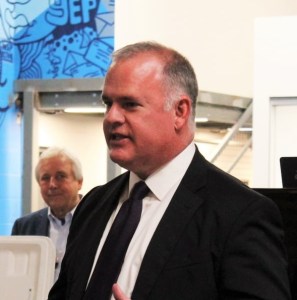
Holmes Osborne is a chartered financial analyst who lives in Independence. He currently serves on the Metropolitan Community College Board of Trustees.
He told The Beacon that he wants to bring his financial expertise to the county and that his certification sets him apart.
Osborne’s three main priorities are property tax reform, public safety and retaining both the Chiefs and Royals at their current stadiums at Truman Sports Complex.
Property taxes
To cope with Jackson County’s recent property tax struggles, Osborne said the county needs common sense.
That means communicating more effectively with property owners and working more collaboratively with colleagues in the county legislature to solve problems.
“This was a slow-moving train wreck,” he said. “Everyone could see that coming out of COVID, that property values skyrocketed in certain areas, and then the taxes with it. Common sense says that you can’t boost someone’s property taxes by 60%. You’re going to have to wait.”
Osborne believes that the county could have done more to solve the problem before it became a crisis for homeowners. That could mean easing assessment increases in over a few years, or it could mean asking school districts and other taxing jurisdictions to tighten their belts.
He’s calling for an independent audit of the assessment process and for a public methodology to be made available.
As far as current County Executive Phil LeVota’s proposal to refund certain property taxes to property owners whose assessments increased more than 15%, Osborne said he could “get on board with that.”
Osborne said there’s tension between the needs of taxpayers and school districts, some of which have sued the county.
“So which team are you on?” he asked. “I’m on team taxpayer.”
Save Kauffman and Arrowhead stadiums
Osborne wants the county to retain the Royals and the Chiefs at Truman Sports Complex, at Kauffman and Arrowhead stadiums. He said that sets him apart.
He opposed the 2024 sales tax measure that voters rejected. But he’s not convinced that either team’s plan — the Royals moving to Crown Center or the Chiefs moving to Wyandotte County — is set in stone.
“If they sign a long-term contract (at Truman Sports Complex), I would be willing to support that sales tax, assuming that they’re going to stay for many decades,” he said.
Osborne said Kansans and Kansas Citians don’t need to “waste all that money on a new stadium. The stadiums are fine where they are.”
And if the Chiefs indeed decide to leave for Wyandotte County, Osborne said the county should sue the team for the sales tax revenue that he believes should have been spent on stadium upkeep instead of frivolous expenses like team uniforms.
Public safety
To address public safety, Osborne said the county needs to increase the number of jail beds available to police and the county sheriff.
“There’s a lot of cases in Kansas City and Independence,” he said, “where they catch shoplifters and they catch people breaking the law, they just let them back off. And some of these folks need to be sitting in a jail cell, even for just a few days.”
He suggested renovating the former county jail to make use of beds that are otherwise sitting empty.
He also suggested hiring private security for the county courthouse so that the officers currently guarding the courthouse could be deployed into the community instead.
Bill Baird
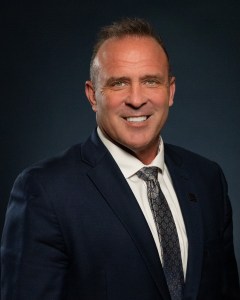
Bill Baird served two terms as mayor of Lee’s Summit. He was originally elected in 2018 and completed his second term earlier this year. He also formerly served on the Lee’s Summit R-7 School Board.
Before being elected to office, Baird was a teacher, then a real estate agent.
He said that as mayor of Lee’s Summit, he oversaw a transformation of the city by growing and diversifying the economy and housing stock and by prioritizing public safety as a unifying issue.
“I started working to bring a feuding — and I mean feuding — council together,” he said. “They were fighting. I got them to rally around public safety.”
Fixing the property taxes
Baird said over the past few years, Jackson County has not followed the law when it comes to the property assessment process and legal protections for property owners.
And amid the assessment debacle of the past few years, Baird said that the taxing jurisdictions have faced challenges when it comes to raising the money they need.
“With all the appeals, they did not know how far to roll back their levies, so they had to kind of guess,” he said. “And that’s not certainty for them or for taxpayers, and that’s why they’re having issues now.”
He assured voters that on day one, his administration will follow the law “precisely.”
“We’re not going to skip steps, we’re not going to bypass laws, we’re not going to pretend like we did inspections when we didn’t,” he said. “We’re not going to have 50,000 tax appeals. That won’t happen if you follow the laws.”
Strengthening emergency services
During his time as mayor, Baird said, emergency services were a unifying subject.
And he’s careful about that phrasing — “emergency services,” rather than “public safety.”
“I don’t want everyone to think that it’s just about the sheriff’s and prosecutor’s office,” he said. “It is, but it’s also about expanding mental health resources, and building a county where people want to be, where you feel safe wherever you are, where you know that you have access and you’re going to be attended to.”
He said collaborating and partnering with the cities and mayors of the county is an important part of that.
But he also supports having a different staff of responders for mental health checks, rather than sending in police cars and sirens that could escalate a sensitive situation.
Growing Jackson County
Baird said that economic development and growth was one of his greatest successes in Lee’s Summit.
One change he would like to make as county executive would be to get county leaders thinking more proactively about economic strategy and planning.
“Where do you want retail?” he said. “Where do you want, you know, a sports complex? Where do you want residential? They don’t have a plan. We’ve got to get strategic.”
And having been a mayor trying to work with Jackson County, Baird said that the county has plenty of room for improvement when it comes to partnering with other governments.
“They did not want to cooperate at all,” he said. “They just wanted to tell us what to do. And in doing so, we had state dollars coming directly to us that we could not move forward with.”
The county dragging its feet on issues like zoning and easements, he said, cost residents millions of dollars in grant opportunities.
Dan T. Tarwater III
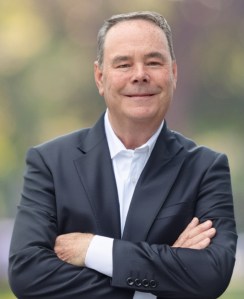
Dan Tarwater, a resident of south Kansas City, spent nearly three decades serving on the Jackson County Legislature before deciding not to seek reelection in 2022.
After that, he ran for Kansas City Council in 2023 to represent the 6th District, but lost to KC Tenants organizer Johnathan Duncan.
He told The Beacon that he never planned on running for office again. But he believes he’s the best candidate to remind the county what an executive is supposed to do and reestablish the proper governing structure of the county.
“I saw the people that were running,” he said. “Good people. Very good people. None of them understand what a county executive is. So I want to go in there in these four years and bring the county executive office back to that.”
Property taxes
Tarwater thinks that, under LeVota, the county is on the right track toward resolving the property assessment troubles from the past few years. But there are a few things that he would do differently, if elected.
LeVota’s plan to give tax credits to property owners whose property assessments increased more than 15%, Tarwater said, has significant financial consequences for taxing jurisdictions including school districts.
And beyond that, he said, the credits being applied over three years mean that anyone who moves in the next three years won’t be made whole.
Instead, his solution is for the county to issue bonds (government-speak for taking out a loan) that it can then use to literally write checks to taxpayers whose assessments were unlawfully increased in 2023.
“So I’ll get your money back, but all of it,” he said. “You don’t have to wait three years, and it’s not a credit.”
In addition, he believes the county should sue Tyler Technologies for damages.
Customer service
Tarwater also believes that the front-facing county departments are long overdue for an upgrade to improve customer service for taxpayers and county residents.
“As opposed to going to the courthouse and standing in a line that’s around the courthouse,” he said, “hire the people that are needed.”
He said he doesn’t want to be too hasty by implementing a new tool before the kinks are worked out. But at the same time, there are technological tools that he said can declutter county staff’s day and allow them to focus on their jobs.
“AI is a scary thing, but it’s also a good tool that can be used,” he said, “for phone systems and other things. And it’s not to replace anybody’s job, but it’ll free their time up to actually do the job that they’re hired to do.”
Close working relationship with every legislator
The county executive, Tarwater believes, is meant to oversee the day-to-day workings of the county so the legislature can pass laws. And a big part of that job is convening the legislators so they can work together and advocate for their constituents.
When he was a legislator under former county executives, he said, they would regularly take him out for a drink for one-on-one conversations.
“What are you looking to do? How can I help?” he said. “There is no ‘How can I help?’ anymore at the county. So you start there and you work with each one, and then you work with them as a group.”
During the most recent term of legislators, gridlock prevented the county legislature from doing things as simple as approving its yearly budget. Tarwater said that the executive should be helping the legislators build bridges to reach a common goal.
“I would love it if, you know, there were zero stories about the legislature,” he said, “because that means you’re doing your job and you’re getting things done.”
Manuel “Manny” Abarca IV
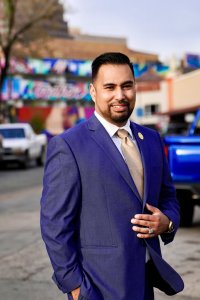
Manny Abarca, who lives in northeast Kansas City, has served as a county legislator representing downtown Kansas City since 2022. Earlier, he served on the Kansas City Public Schools board as the treasurer.
He said that he has the experience to immediately face the decisions that a county executive will need to make, including dealing with 2026 tax bills and the next assessment cycle in 2027.
“Day one, Jan. 1, you’re going to have to rectify that bottom line for taxpayers,” he said, “on whether or not the (property tax) credits worked, on whether or not the taxing jurisdictions survived, and somebody’s got to be there, experienced and ready to go.”
Abarca has faced misdemeanor charges, as has the mother of his son, during the course of their divorce.
He denies the accusations made against him and believes the court cases will bear that out.
Predictable and fair property taxes
One of his biggest strengths, Abarca said, is his experience working with property taxes for the past four years at the county level and for the previous four years at the school district level.
He wants to start with reforming the assessment appeals process.
“The burden of proof for taxpayers should not be on them to tell us how we assess them,” he said. In the likely event of an increase next year, he said, it’s important that “people understand why, and they understand and believe that that’s a value they can trust.”
And as the county navigates possibly issuing tax credits, Abarca said the county needs to have the school districts’ backs.
“What we’re needing in this next wave of legislators and an executive is political courage to stand up and say, ‘Look, this is hard, but we have to do this so we make sure that the library stays open.’”
Invest in infrastructure and parks
Abarca said many parts of county infrastructure desperately need updates.
The county courthouse, for example, has failing elevators and heating and cooling systems as a result of years of deferred maintenance.
He also said that many of the county’s roads need to be repaired. And in some cases that means a long-overdue rebuild of a road, rather than filling and sealing cracks.
To make those fixes happen, Abarca said the county should work collaboratively with all of the cities within the county to experiment with more cost-sharing between the city and the county.
“You have a city road leading to a dilapidated county road connecting back to a city road,” he said. “Why aren’t we having strategies of growth plans in collaboration with our cities? Well, because the previous administration refused to work with them. So we have to establish better relationships amongst our cities to more efficiently utilize tax dollars.”
Public transportation
Abarca, along with his colleague Jalen Anderson, has sponsored an ordinance that would ask voters to create a sales tax to fund public transportation.
And he believes that tax — or at the very least, some kind of county-level funding — is critical to having a stable bus system.
“For a county of our size,” he said, “it is incomprehensible to see that we are not contributing as a county” in either strategy or financing of a regional system.
To build a network of public buses, bike lanes and Amtrak, he said, the county needs to be a strategic leader.
“These are basic things,” he said, “that require effort and strategy and planning and cooperation that we have not done in this county for decades. And some of it is because we have not created a dedicated funding source, but it’s also because of political will. Like, we just haven’t done it.”

