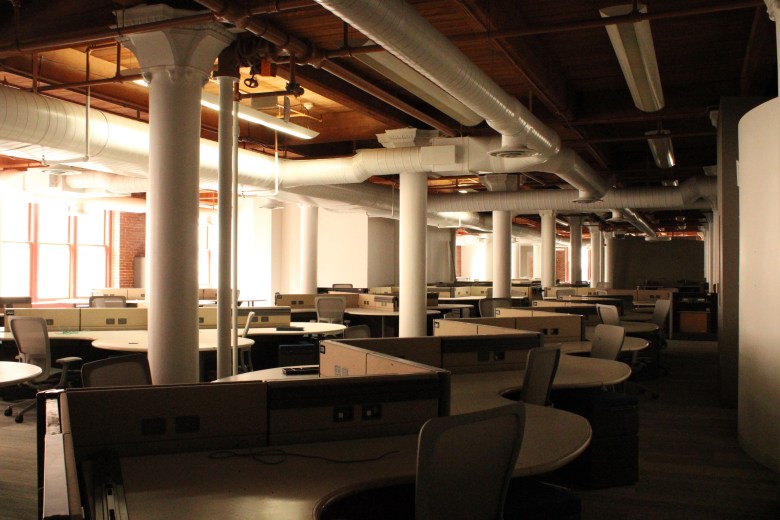
Across Kansas City, it’s easy to find vacant office buildings and empty cubicles collecting dust.
Takeaways
- The Missouri General Assembly passed an office-to-residential conversion tax credit as part of a larger economic development bill this session. Economic development experts say it could help finance those types of projects.
- Office conversions are challenging for a number of reasons. Deep floor plans that lead to unused space, layouts designed using outdated zoning and safety codes and financial viability keep the number of projects low across the nation.
- However, the ability to revitalize downtown economies, environmental benefits and sometimes cheaper building costs still make conversions part of the solution to address Kansas City’s housing shortage issues.
The companies once housed there saw employees switch to remote work during the COVID-19 pandemic and never come back in-person. Or the companies downsized, moved or closed completely. Whatever the case, those buildings present a challenge to city planners attempting to revitalize the city’s urban core.
They could also be a solution to address vexing housing shortages.
Kansas City, with about 521,000 residents, is short an estimated 64,000 units of affordable housing, according to its Housing and Community Development Department. That’s including people in homes in disrepair or those overly burdened by housing costs who would benefit from more affordable housing.
While the city needs more affordable housing overall, Hannah Mitchell, the Regional Housing Partnership manager at the Mid-America Regional Council, said the city is especially short on smaller, single-family housing.
Kansas City isn’t alone. Nationally, the U.S. is short 3.7 million units of housing, according to 2024 data from Freddie Mac, the federal mortgage market operator.
As housing costs have soared and construction of new buildings has slowed, federal, state and local governments are searching for solutions.
Missouri is joining the push. The General Assembly passed HB 3231 this session, an economic development bill that, among other things, revives the Missouri Downtown Economic Stimulus Act that financed the Power & Light District’s development and creates Missouri Innovation Zones.
The Missouri Innovation Zones are designated regions that encompass a city’s downtown or central business district and can receive or administer a number of tax credits. Those include credits for employer retention and reinvestment, employer relocation, angel investment and office-to-residential conversion incentives. Taxpayers in those areas can also defer their state income tax if they reinvest into businesses in the area.
That office conversion incentive has those in the housing world taking notice.
The conversion credit requires that the new residential areas must be at least 50% of the gross square footage of the building, the building has to be 25 years or older and the building must be located within a Missouri Innovation Zone.
The Missouri Department of Economic Development must rate each application based on a master scorecard it is directed to develop. Then, if accepted, developers can receive a tax credit for up to 25% of the conversion costs, which does not include acquisition costs or costs of enlarging the building.
The amount of tax credits for the entire state that can be issued from the fund is capped at $50 million per fiscal year. Half of that is reserved for projects converting more than 750,000 gross square feet, and another quarter is reserved for upper-floor housing projects along a city’s main street.
The incentive does not require that some of the units built be set aside for affordable housing, which is typically defined as units reserved for those making 30% to 60% of the average median income in an area.
Dan Moye, the vice president of land development for the Economic Development Corp. of Kansas City, described the office-to-residential conversion incentive as the missing piece for some projects.
“We’ll see it hopefully fill some of the gaps that the (Historic Preservation Tax Credit Program) just couldn’t fix itself, so having some additional capital that could potentially flow in those projects,” Moye said.
While the tax incentive could be a boost to conversion projects, converting an office building isn’t an easy process, and housing experts say other considerations still need to be made before pursuing a project.
What it takes to convert an office
A typical office layout has open floor plans, bathrooms meant for multiple people and a conference room or two. That’s fine for companies trying to promote productivity and collaboration, but not so much for the architects trying to convert them to housing.
Solving those design problems is often the biggest challenge for office conversion projects, even more so than dealing with financing or zoning requirements. Deep floor plans mean the center of the building, where little or no natural light reaches, can go underutilized.
“When you take a building that has large floor plates and you convert it from commercial to residential, you have a lot of relatively unusable space in the inside of the building,” said George McCarthy, the president of the Lincoln Institute of Land Policy. “What that means is that you don’t get a one-to-one conversion per square foot.”
That can make the financial viability of a project more difficult. Commercial real estate in Kansas City rents for an average of $23.51 per square foot a year, while residential rents average about $17.88 per square foot a year.
For older structures, it can also mean extra attention is needed to bring the building into compliance with newer codes and safety standards.
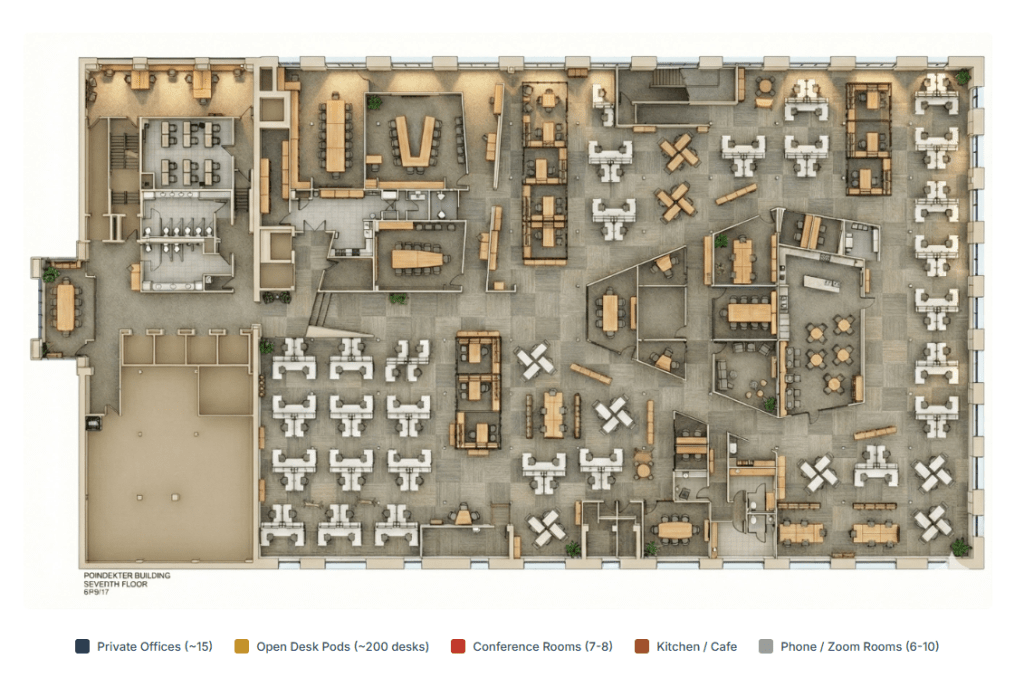
Jonathan Arnold is the principal for the Arnold Development Group and is about to begin conversion renovations on the Poindexter and Centennial buildings at the corner of Ninth Street and Broadway Boulevard to add 208 units between the two.
He said the stairwells in the Poindexter building were perfect examples of something conflicting with modern building codes. One set of stairs is about 65% of the way on the northern end of the building instead of in the middle.
“Oftentimes these buildings are not built to the current code, and so you have to go through and make sure that your revised plans do match up with the current code, and there can be inefficiencies that get introduced into the final design,” Arnold said. “It worked great for when it was an open plan, but when you actually divide up all the units, you’re now limited in what you can do.”
That meant creating three-bedroom units at the corners instead of two bedrooms to ensure there were two equal means of escape in case of an emergency, which wasn’t necessarily a bad thing, Arnold said, because there is market interest in those types of units.
Retooling utilities meant for a communal layout is another design issue.
“In a big commercial space, they might have one bathroom per floor,” McCarthy said. “The bathroom might accommodate a lot of people, but the plumbing is just for that bathroom. So if you want plumbing for kitchens, you want plumbing for bathrooms and stuff and you want multiple apartments per floor, you’re gonna have to replumb the place.”
Those plumbing lines often run through elevator shafts in the building and need to be redesigned to support the plumbing for kitchens and bathrooms in each unit. Heating and air conditioning fall in that category as well, with office buildings having central plants meant to regulate the entire building at a certain temperature instead of individual units.
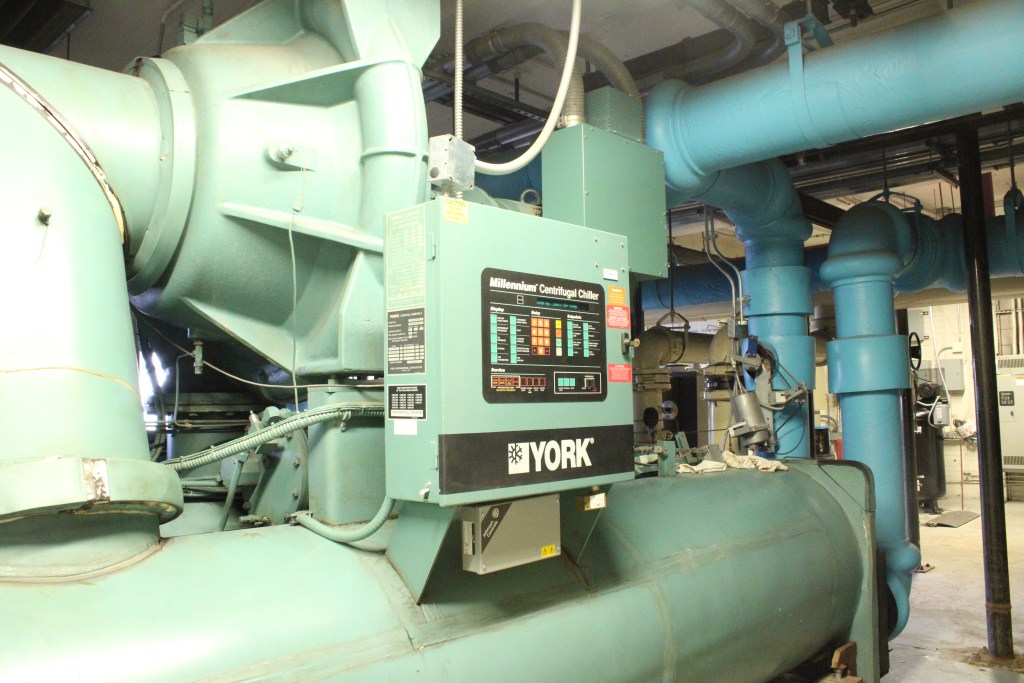
There are ways to make the utility costs less prohibitive, Arnold said. State and federal tax credits exist to help people with the cost of replacing antiquated systems, installing geothermal pumps for heating or solar panels to lower electricity bills.
Sometimes, being creative with what the building already has is another solution, Arnold said. In the case of the Poindexter building, a data center facility is located in the basement. He said he intends to keep it and pursue a new tenant to use the heat it produces to help keep the building warm in the winter.
With those challenges in mind, not every building will be a fit for a conversion project. It’s why the rate of projects across the country remains relatively low, with only 2% of all office space being converted, according to CBRE. In Kansas City, which currently has a downtown office vacancy rate of 17.4%, Moye estimated about a dozen buildings would be prime candidates.
Even if the overall number of units added is not enough to make a big dent in housing shortages and conversions present unique challenges, McCarthy said they have the potential to contribute to the solution.
“Everything contributes,” McCarthy said. “You don’t want to thumb your nose at something that’s helpful” when adding 50 or 150 housing units to a market with short supply is “not a bad thing,” he said.
Why convert instead of build new?
With the costs associated with converting office spaces, it might seem to make more sense to demolish a building than to refurbish it. But for older buildings, it can actually be cheaper for a developer to convert it.
In some markets, conversions cost roughly 20% less than new construction, according to the Commercial Real Estate Development Association. Many of these buildings come with more than enough parking already attached as well, meaning developers don’t have to acquire additional land and build parking like in a traditional multifamily construction project.
For mixed-use projects like Arnold is pursuing, where some of the former office space can be preserved and be turned into co-working spaces, developers can also lease out the office space and receive revenue while residential construction is ongoing.
That’s where the multitude of tax credits also comes into play. Federal and state tax incentives like the historic preservation tax credit, low-income housing tax credit, property tax abatements and grants are primarily used in many of these projects.
Another benefit is that conversion projects can have an easier path to getting zoning and building permits approved. Many of the buildings are already approved for mixed use or urban redevelopment, shaving time off the approval process.
Housing experts say the benefits extend beyond just creating housing as well by addressing economic development and environmental goals.
Conversions can kill two birds with one stone by utilizing vacant, underperforming commercial real estate that has otherwise been a drag on the balance sheets of banks and investors and turning it into more profitable housing.
“Commercial real estate markets are in tough shape,” McCarthy said. “Unlike the housing crisis that we saw in 2008, 2009, it’s been a slow-moving train wreck, where the nonperforming debt in the commercial real estate market has been accumulating. … Being able to have a solution in place before it actually becomes critical and starts to put banks on the brink of insolvency, it’s probably a good thing.”
In ailing urban areas, introducing more residential housing also can support or reintroduce ground-floor retail spaces that contribute to a downtown’s economy and vibrancy.
“It’s what’s called critical mass in the industry to keep the ground floor services that people are wanting to walk to in business,” Arnold said. “So these seven- to 12-story office buildings that are throughout downtown are wonderful opportunities to get enough density, so that ground floor retail can be supported.”
Converting an office building also often creates less environmental pollution. The Environmental Protection Agency found that 600 million tons of construction and demolition materials were generated in 2018, with 90% coming from demolition projects. That was more than twice the amount of municipal solid waste generated that year.
There’s something to be said about keeping the fabric of a downtown intact, too. Moye said demolition can leave gaping holes in the community where the buildings once stood if nothing new ends up being built there.
“I think anytime you demolish something, you lose some of the fabric of the community,” Moye said. “Kansas City doesn’t have a ton of long-term downtown residents, but it affects the feel of a neighborhood, it affects the vibe. … I don’t think anybody would argue that we would have been better off by demolishing the Kansas City Power & Light building, or some of those iconic structures that are still standing.”
A coordinated approach
With the financial hurdles involved in converting an office building and land use issues that are primarily under local jurisdiction, the success of these types of projects often relies on coordination between developers, municipalities and the state.
Kansas City can be considered an old pro when it comes to that, Moye said, as other cities like Boston have followed its approach. Part of that, Arnold said, is that the city has streamlined the zoning process in recent years and understands the need for building reuse.
“That’s why we’ve seen development happen in Kansas City, is that (the city) understands that it’s important to have that public-private partnership,” Arnold said. “I would say that’s not always found in places that we look to develop in, is that you don’t always have the public side of the partnership that understands, ‘Oh, we need to be at the table and part of this.’”
That comes after years of working with developers, nonprofits and other economic development groups to understand regional needs, create shared resources and align priorities, Mitchell said.
“We’re just trying to connect organizations, individuals, companies across the region that are doing this work to try to strengthen a housing ecosystem that largely has been left up to the market to kind of just work itself out,” Mitchell said. “We want to have intentional coordination, so that 30 years from now we aren’t asking these questions again.”
Part of that work has been setting standards around affordable and accessible housing in the region.
While the new state tax incentive does not include requirements for affordable housing, Mitchell said many other tax credits that developers often utilize, like the low-income housing tax credit and Kansas City’s own housing grant programs, do require units be designated for affordable housing.
Moye said he hopes the state and city will be selective in approving projects that will result in the best overall housing results instead of the most profitable.
“I think that’s where the city will lean in, and the EDC will lean in and encourage developers to pursue these for those tougher projects, and encourage the state to really hone in on not first come, first serve, but a more strategic approach,” Moye said.
In addition to explicitly designating some units as affordable, it means looking at the area’s utility and transportation costs. Utility costs range from 12% to 21% of a household’s yearly income and transportation costs average 26% of median household income.
“Where you choose to live directly impacts how much you’re going to spend on transportation,” Mitchell said. “It’s a symbiotic kind of relationship there. Also, your mode of transportation that you have, your access to transportation impacts where you can live and work. So, if you don’t have transportation, and you live in Independence and work in Olathe, you’re in trouble.”
Office-to-residential conversions might not be the end-all solution, but they certainly are part of the overall strategy Kansas City needs to have to address its housing shortages, Mitchell said.
“There’s not one problem and not one solution — it’s going to take that integrated, coordinated approach,” Mitchell said. “I think we have the resources in Kansas City to do that, and it’s really exciting to see the innovation that is happening across the region. For better or worse, we’re in this situation, and people are coming up with creative ways to address the challenges.”