Labor and human rights concerns have long been entwined with FIFA and the World Cup. The 2026 games, which are drawing unprecedented international attention to Kansas City, are no different.
Activists in Kansas City are using the world’s focus on soccer to highlight workers’ rights, social inequities and safety concerns for immigrants in the cities where the games are being played.
“Migrants are in our community,” said activist Tay Castillo. “They are our friends. They are our neighbors, and we are going to support them however we can.”
Takeaways
- The Monarch Pledge asks Kansas City area businesses to support immigrant rights.
- Kansas City human rights advocates are linked to global organizing networks concerned with labor and immigrant rights during FIFA World Cup 2026.
- A scorecard based at Georgetown Law will monitor worker and immigrant rights in the 16 host cities of the FIFA World Cup 2026.
- Soccer’s working-class origins internationally are underscored by the efforts.
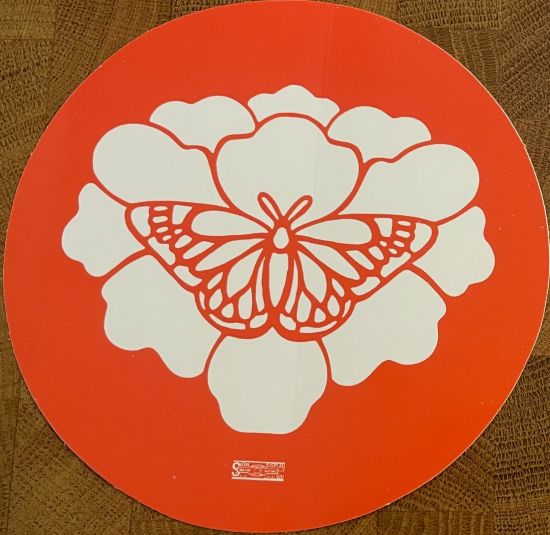
Castillo has been canvassing local businesses to enlist their support of the Monarch Pledge, a public declaration in support of immigrant rights. More than two dozen Kansas City-area businesses have already signed and are displaying the distinctive logo, with monarch butterflies symbolizing migration.
Castillo is a member of the Kansas City chapter of the Democratic Socialists of America.
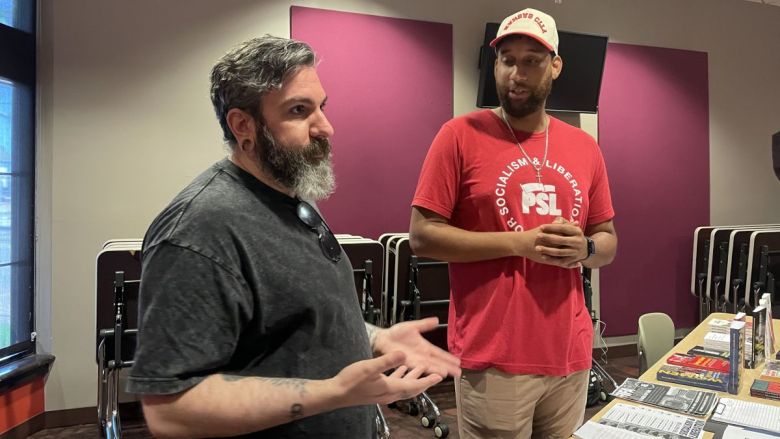
Other local groups involved with organizing to protect the rights of immigrants and others during the World Cup include Decarcerate KC, Boots on the Ground Midwest, Advocates for Immigrant Rights and Reconciliation and the Party for Socialism & Liberation, or PSL.
The Monarch Pledge is just one example of how Kansas City is tied to a global network organizing around the rights of low-wage and unionized workers, immigrants and residents in the 16 host cities of the 2026 FIFA World Cup.
The metropolitan area plus Lawrence, Kansas, stands out with four base camps for World Cup teams from Algeria, Argentina, England and Netherlands, in addition to hosting six matches at Arrowhead Stadium, renamed Kansas City Stadium for the tournament.
Kansas City advocates participated in a June virtual press conference connecting organizers from host cities, including several in Mexico.
From Los Angeles, advocates explained their focus on SoFi Stadium, where matches are being played. A strike was threatened amid contract negotiations between unionized workers and management of the stadium.
Union organizers passed out buttons to the SoFi workforce that said, Kick ICE Out. A tentative agreement includes allowing workers to walk off their jobs if immigration agents threaten worker safety.
Homeland Security officials have said that its agents will be involved with investigations and security during the World Cup games.
In Kansas City, the union that represents public employees took the city to court to mediate the mandatory overtime and other strains on workers because of the World Cup. Representatives with AFSCME Local 500 allege that the city didn’t go through the process to negotiate the changes with the union.
In Texas, immigrant rights advocates are monitoring a law that makes entering the U.S. without authorization a state crime. Concerns include the fear that law enforcement will be incentivized to racially and ethnically profile people and that the law interferes with the federal role of immigration enforcement.
The 2023 law, SB4, had been held up in court challenges, but became enforceable May 29.
And in Mexico City, grieving mothers began gathering weeks ahead of the tournament kickoff, pressing the government to investigate the more than 133,000 Mexicans who are considered disappeared.
Jennifer Li is director of the Center for Community Health Innovation at the O’Neill Institute of Georgetown Law. She hosted the virtual press conference that linked advocates in host cities.
“We wanted to hear directly from the people who we feel are impacted the most by the events of the World Cup, mainly the workers and the residents who actually live in those cities in the U.S., Mexico and Canada,” Li said.
The host cities, including Kansas City, will also be part of a scorecard monitoring conditions for workers and immigrants, called Dignity 2026. It will be maintained at the O’Neill Institute. The effort asks community members to judge conditions using a scorecard.

Categories include workers’ rights, public safety, migrant and LGBTQ+ protections and how the city keeps from displacing houseless populations.
The scorecard is modeled after the FWC2026 Human Rights Framework.
A related project is dubbed No ICE in the Cup, a reference to U.S. Immigration and Customs Enforcement and demands to keep enforcement actions out of World Cup-related events.
Two Kansas City area artists, Ikemba Sahih El Shabazz and Chico Sierra, designed one of the 10 commissioned No ICE in the Cup images available for downloads.
Li works on social determinants of health, focusing on “community economic development, environment, worker rights, and other systemic factors that cause disproportionate health outcomes for long-underserved racial and socioeconomic groups in the United States.”
Li emphasizes that the efforts predate the World Cup and will continue long after it concludes in mid-July.
Monarch butterflies symbolize migration
The Monarch Pledge supports the rights and dignity of immigrant communities living in the region, as well as those who will arrive as visitors to the World Cup.
The pledge is part of the KC ICE Free campaign of the Kansas City chapter of Democratic Socialists of America.
The Trump administration’s goal of mass deportation has long been a target of activists, with many local efforts focused on spreading Know Your Rights information among immigrant communities.
Canvassers met with vendors June 13 at the City of Entrepreneurs Marketplace at Union Station, explaining the Monarch Pledge.
Business owners were receptive, Castillo said.
Earlier signers to the Monarch Pledge include Blip Coffee Roasters, PH Coffee, Cru Bistro & Bottles and The Ship.
Individuals can also sign the pledge.
Part of the messaging: “We are committing to a community free from the influence of ICE. We will not provide business, professional support, or services to an agency that threatens our neighbors. We stand together for a future where every person can live with dignity and peace.”
The stand aligns with the work of grassroots organizers in the region.
Amaia Cook, a founding member of Decarcerate KC, was part of the recent international press conference. She spoke about Kansas City’s temporary jail, which is under construction. Decarcerate KC believes the jail is unnecessary.
The temporary jail, costing more than $25 million, isn’t expected to open until after the World Cup due to construction delays, despite early city pronouncements that it would be important for safety plans during the tournament.
The modular jail, at 7740 E. Front St., has also drawn criticism for its similarity to the warehouse detention centers being used to hold immigrants prior to deportation.
Decarcerate KC also opposed the end of free fares for city buses, a decision that impacts workers and families who depend on the buses for transportation.
“The city is rolling out the red carpet for visiting teams and tourists, while rolling out fares, permits and jail cells for the people who live here,” Cook said.
Many of the community group’s concerns center around wealth distribution and inequities that have contributed to the growing gap between those at the top of the economic scale and the working class.
The top 1% of Americans held 31.9% of the nation’s wealth at the end of 2025, according to data from the Federal Reserve Board, up from 22.5% in 1990.
“The city is rolling out the red carpet for visiting teams and tourists, while rolling out fares, permits and jail cells for the people who live here.”
Amaia Cook, a founding member of Decarcerate KC
Nate Davis, with the Party for Socialism & Liberation, said that the World Cup could be used as an opportunity to fix civic and social problems that drive crime and poverty.
Instead, grassroots organizers are often exasperated by what they see as city leaders curating a special experience for visitors to the World Cup, without similar regard to conditions area residents and immigrant communities face each day.
Organizers are mindful of being misunderstood, especially by soccer fans who wish to celebrate the athleticism and comradery of the World Cup.
A PSL meeting on June 13 included a conversation about how members could best reach people who might not initially question who is benefiting financially from the World Cup being in Kansas City.
“We very much try to keep things focused on the working class, on labor movements, to make sure we are backing workers,” Davis said.
The efforts are not anti-soccer. In fact, many organizers are fans of various teams.
Soccer, after all, has deep roots in immigrant and working-class communities, Davis said.
“We need to be good stewards in these conversations,” he said. “This tournament has far-reaching and deep-seated impact.”