Author Mark Twain, a proud son of Missouri, once reportedly mused that “whiskey is for drinking; water is for fighting over.”
Natural resources officials in Missouri and North Dakota would seem to agree.
Takeaways
- Missouri River basin states have disagreed for decades over management of the river.
- The latest conflict is over a pipeline project that will divert water out of the Missouri River basin into eastern North Dakota, where the rivers flow north into Canada.
- North Dakota officials say this project is needed to fulfill broken federal promises and protect communities in central and eastern parts of the state.
- But Missouri officials say it sets a dangerous precedent for future out-of-basin diversions, particularly as western states look for ways to solve their own water shortages.
In a February opinion piece, Kurt Schaefer, director of the Missouri Department of Natural Resources, wrote that, “for more than three decades, the state of Missouri has engaged in a water war with North Dakota.”
The latest battle in that war, he said, is a series of projects in North Dakota that, once completed, will divert water out of the Missouri River to the Sheyenne River and Red River of the North, which run into Canada.
In an opinion piece responding to Schaefer, Reice Haase, director of the North Dakota Department of Water Resources, said that “North Dakota has never viewed Missouri River water as something to be won, but as a resource to be responsibly used.”
“Putting our water to beneficial use is not an act of hostility toward downstream states,” he added. “Rather, it is a responsibility to the people we serve.”
But Schaefer and others in the lower basin say this could set a precedent for future out-of-basin diversions and put the river — and those who rely on it — at risk.
Why is North Dakota diverting water?
The pipeline is meant to support municipal drinking water systems in central and eastern North Dakota, Haase told The Beacon.
When the U.S. dammed the northern Missouri River in the 1940s, the government promised North Dakota irrigation and municipal water supply projects in the Red River basin — home to the state’s largest and third-largest cities, Fargo and Grand Forks, which experienced an “extreme shortage of water” in the 1930s, Haase said.
Those projects never materialized, in part because of opposition from lower-basin states, he said. While the Red River Valley has grown, he said that without the pipeline, another 1930s-like drought could put communities at risk.
Unable to secure federal funding, the state took on the project itself and has spent $400 million so far, Haase said, adding that it will probably spend another $400 million to $500 million.
While state funding will cover most of the project, U.S. Sens. John Hoeven and Kevin Cramer of North Dakota secured $158 million in federal funding for a portion of the pipeline.
Schaefer said Hoeven is also seeking $120 million to prevent invasive species from crossing into Canada via the pipeline, as well as $400 million to expand the project.
“This is part of a bigger picture, an upper-basin state really trying to lay the groundwork for a massive expansion of diversion of water out of the Missouri (River),” Schaefer said.
‘Robbing Peter to pay Paul’
In his opinion piece, Schaefer wrote that “reductions in the amount of water available downstream will harm Missouri agriculture, utilities, public water supplies, power plants (and) navigation.”
Shane Kinne, executive director of the Coalition to Protect the Missouri River, a group of lower-basin stakeholders, said that “when you start the process of moving water out of one basin into another, it comes back to robbing Peter to pay Paul.”
“You may be solving one issue, but you’re exacerbating another issue in another basin that will have to be resolved,” he said.
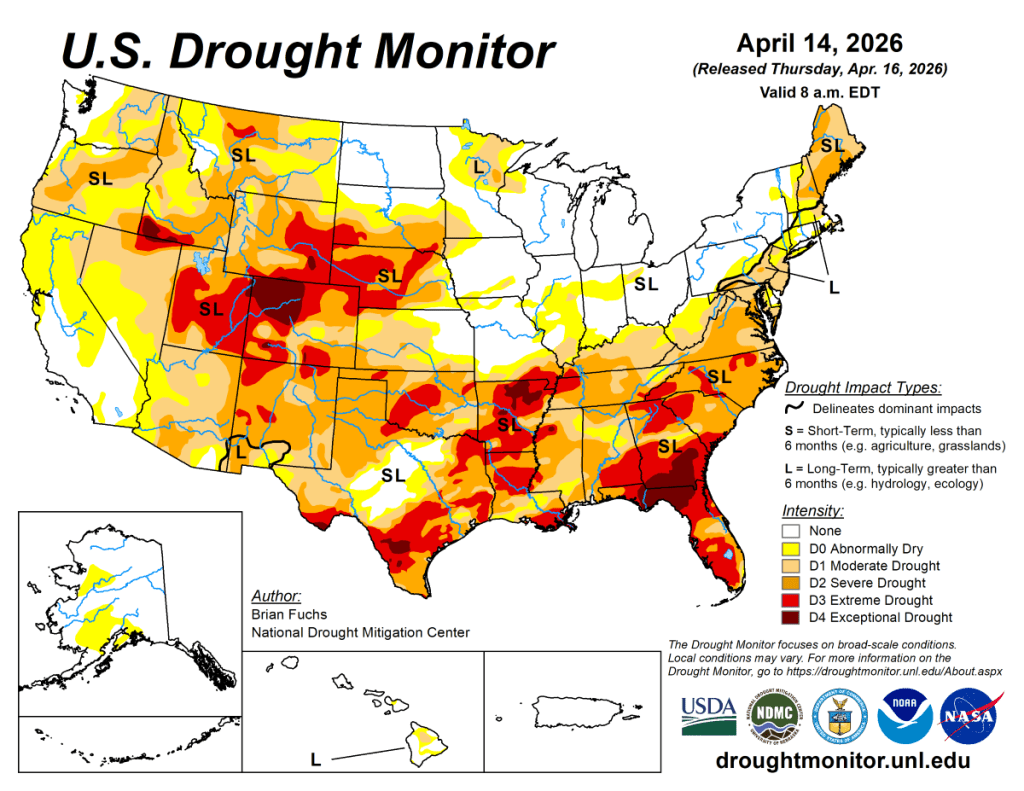
The U.S. Army Corps of Engineers has already limited releases from upriver dams in recent several years due to drought. Kinne said that hurts Missouri power plants, many of which rely on the river for cooling water and would shut down without it.
“Often, those plants are measuring their access to water in inches,” he said. “That just highlights that even the tiniest amounts of flow are really critical.”
Low river levels also have implications for the state’s businesses, Schaefer said.
“A million tons of sand and gravel are shipped by barge in and out of the Kansas City region on the Missouri River every year, and up to 300,000 tons of soybeans make their way to the world on the river, as do nearly 270,000 tons of asphalt, cement (and) concrete,” he said.
Lower water levels limit how much barges can carry, raising costs, Kinne said.
There are also implications for municipal water systems, including Kansas City and St. Louis, which draw most of their drinking water from the Missouri River.
Dru Buntin, chief of water resources for Missouri DNR, said the current drought raises questions about sending water out of the basin.
“We have concerns about the precedent of sending water outside of the basin under what the Corps is saying is their ‘surplus water authority,’” he said. “How is there surplus water to send out of the basin when we’re already reducing releases downstream … because of a lack of water in the reservoir?”
Setting a precedent
The North Dakota pipeline will be able to transport 165 cubic feet of water — around 1,230 gallons — per second. Haase said it would run at or near full capacity during times of drought.
Kinne said the concern isn’t so much the impact of this project as what it might enable in the future.
“If you look at the North Dakota projects by themselves, you can argue they don’t have enough impact for us to be concerned,” he said. “The concern is the precedent that it sets, and these projects writing the playbook for other states and western states to access this water.”
As states in the western and southwestern U.S. struggle to reach an agreement on how to allocate water from the dwindling Colorado River, officials are increasingly concerned they may begin looking to the Missouri River to meet their needs.
Even states within the basin have eyed Missouri River water as a potential solution to water shortages in other areas of their state, with Kansas and Army Corps officials studying the possibility of diverting the river to replenish the Ogallala aquifer.
“If you look at the North Dakota projects by themselves, you can argue they don’t have enough impact for us to be concerned. The concern is the precedent that it sets, and these projects writing the playbook for other states and western states to access this water.”
Shane Kinne, executive director of the Coalition to Protect the Missouri River
If western states do divert water from the Missouri River, “it could be devastating,” said Garrett Hawkins, president of the Missouri Farm Bureau.
“We understand that out west, the water situation is dramatically different, but we shouldn’t be looked at as the solution,” Hawkins said.
In 2025, Missouri lawmakers passed a law requiring a permit to export water and prohibiting the export of water via pipeline more than 30 miles beyond state borders.
Western “states are turning a thirsty eye to Missouri and other Midwestern states that are water-rich in order to get some of that water,” Rep. Colin Wellenkamp, a St. Charles Republican, said during floor debate on the bill.
Ken Royse, project manager for the Missouri River Joint Water Board, agreed. He told a North Dakota state legislative committee that out-of-basin transfers to western states are the biggest threat to the Missouri River system.
Missouri is “worried about the precedent being set, and we are too. I think North Dakota has the same concern,” Royse told The Beacon. “But our theory is, we’re a basin state. We contribute water, we contribute land. We should be able to take water out to the extent that we don’t damage our downstream neighbors.”
Schaefer said he remains concerned about both precedent and the impact of the current project, which is “using federal dollars to help one state really to the detriment of other states.”
“With North Dakota seeking over $400 million to expand this project, we really don’t know … how much is going to be diverted,” he said.
Bringing the states together
Both sides say more discussion and coordination is needed.
A number of organizations have formed over the years to bring basin states together to discuss river management, “but opportunities for meaningful, basin-wide dialogue have gone unrealized,” Haase wrote in his opinion piece.
“On several occasions, we convened meetings of Missouri River basin states to pursue collaborative river management, invitations that Missouri declined,” he wrote.
Schaefer denied those claims, telling The Beacon that “Missouri does attend those meetings,” as do Missouri agriculture and transportation groups.
In his piece, Haase also wrote that “Missouri later withdrew from the Missouri River Association of States and Tribes, narrowing avenues for coordination.”
Asked whether that was true, Schaefer didn’t appear to know what MoRAST was.
“I know that the state of Missouri participates in multiple groups … If there’s some group that at some point Missouri was no longer a part of, I don’t know that,” he said.
But Missouri was never a part of the association to begin with, said Buntin, who was head of DNR before Schaefer.
“Missouri didn’t pull out — Missouri never joined MoRAST,” Buntin said.
“The upper-basin states formed MoRAST, and originally, Iowa and Nebraska joined, but then the 2011 floods happened, and Iowa and Nebraska dropped out of MoRAST because their governors felt like the organization wasn’t representing the interests of their states,” he added.
Missouri didn’t join the association because “we wanted it to be a consensus-based organization, (but) North Dakota and other upper-basin states disagreed with that approach,” Buntin said.
MoRAST is no longer active, and there aren’t any other active basinwide organizations aside from Missouri River Recovery Implementation Committee, which is focused on ecosystem restoration, Buntin said.
But the back-and-forth opinion pieces written by Schaefer, Haase, Kinne, Royse and others have started a new conversation.
Stakeholder groups from North Dakota, Missouri and other lower-basin states, as well as DNR officials, met in Kansas City in March to “sit down and talk about this instead of just arguing in the newspapers,” Royse said.
Buntin, who attended the meeting, said “it was a good first discussion,” adding that he’s since reached out to his “counterparts in North Dakota, who were not in attendance.”
He said he’d like to see states agree to not transfer water outside of a basin state, but also develop a process for reviewing transfers — and their impact to downstream states — before they’re greenlit.
“On the issue at hand here, of out-of-basin diversions, we’re just concerned about the precedent and where that ends and having some long-term protection in place,” he said.
To reach an agreement, the states will also have to reckon with their fundamentally different water laws.
Missouri follows eastern riparian water law, which allows landowners to use any water touching their property as long as it doesn’t harm downstream users.
North Dakota, meanwhile, operates under western prior appropriation doctrine, where the “first in time” is the “first in right,” even during shortages.
“Water within the borders of North Dakota belongs to the state of North Dakota,” Haase wrote in his opinion piece. “To suggest otherwise defies both common sense and the foundational principles of state sovereignty.”
But Buntin said the river’s interconnected nature complicates that view.
“We’re an eastern water law state, but we’re reliant upon rainfall that doesn’t fall in our state and is stored in lakes that aren’t in our state, (but) in western water law states,” he said.