


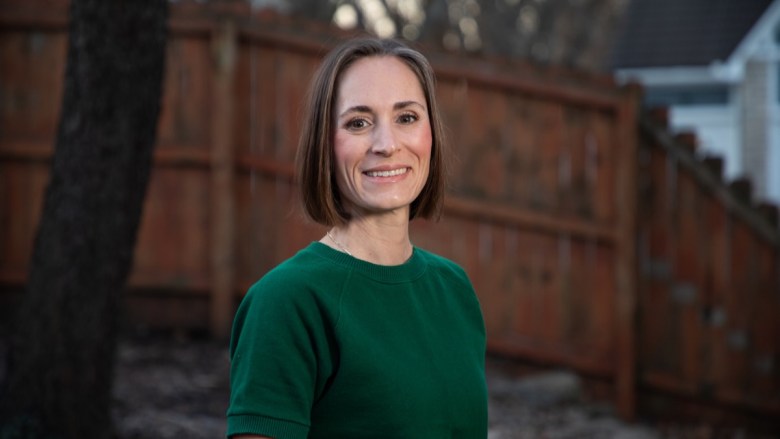
During the depths of the COVID pandemic, Audrey Canaday’s health spiraled.
Takeaways
- Proposed legislation in Missouri to license naturopathic doctors hasn’t yet been scheduled for a hearing. A bill in Kansas, which would have expanded the scope of practice of that state’s naturopathic doctors, failed to pass the House.
- Traditional medical associations oppose giving naturopathic providers the authority to serve as primary care providers, although they already do in several states.
- Some tenets of naturopathic medicine have similarities with the pro-Trump Make America Healthy Again movement. But naturopathic medicine does not similarly shun the use of vaccines.
The Lenexa mom started having gastrointestinal issues almost overnight in May 2020. Her body stopped tolerating many foods and in less than two months her weight dropped to 77 pounds. Canaday’s 5-foot-6-inch frame could barely function.
Two stints in the hospital didn’t help and Canaday was left waiting weeks for an appointment with a gastroenterologist. Things got so bad, she had to move in with her parents, leaving her husband and three children — then 7 years, 4 years and 18 months old — behind.
“I was in a severe state,” said Canaday, now 42.
That’s when she decided to see a naturopathic doctor. Her insurance wouldn’t cover the cost, but Canaday believed in the alternative approach to health care, which promotes helping the body heal itself through diet, lifestyle and natural treatments.
“I was willing to try anything that my husband and I felt like we could afford,” she said.
Canaday’s story is not unusual. Increasingly, naturopathic doctors are seen as a legitimate alternative to traditional or osteopathic physicians and, for some, a welcome change from the long waits, short appointments and complicated financial side of traditional health care.
Naturopathic doctors, who are already licensed as primary care providers in some states, argue that doctors trained in accredited, four-year naturopathic colleges are more than capable of taking on patients as fully licensed providers. And some policy makers are on board, too.
Legislation introduced this year in Missouri and Kansas would effectively put naturopathic providers on par with primary care doctors, allowing them to perform exams, order screening tests and write certain prescriptions.
But the medical establishment has pushed back. Naturopathic doctors, they warn, don’t have the same training as medical doctors and rely on methods that sometimes veer outside the lines of evidence-based science. They contend naturopathic providers shouldn’t be treated as if they are traditional doctors.
“Patients deserve care led by physicians — the most highly educated, trained and skilled health care professionals,” the American Medical Association writes in a statement on its website. “Through research, advocacy and education, the AMA vigorously defends the practice of medicine against scope of practice expansions that threaten patient safety.”
Meanwhile, patients like Canaday are caught in the middle.
Back in 2020 when she was fighting for her health, Canaday eventually saw a gastroenterologist who diagnosed her with ulcerative colitis, an inflammatory bowel disease. She followed that doctor’s treatment plan, including certain medications. But Canaday believes it was her naturopathic doctor’s alternative approach, overhauling her diet and recommending supplements to help her body heal, that made her better.
“That is what turned my situation around,” she said.
Missouri and Kansas legislation
Naturopathic medicine is not opposed to traditional medicine or treatment. Naturopathic doctors who attend accredited schools are trained to prescribe pharmaceutical drugs. But the practice places a higher priority on less invasive natural treatments, some of which have been criticized as pseudoscience.
While pharmaceutical drugs may be prescribed “to halt progressive pathology,” whenever possible naturopathic care turns to “safe, effective, natural substances that do not add toxicity or additionally burden the already distressed body,” according to the American Association of Naturopathic Physicians.
But the meaning of naturopathic medicine varies depending on where you live. In states like Missouri where naturopathic doctors aren’t licensed, anyone with an internet certificate could claim the title. But no one in the state, not even those with four-year degrees, has a legal right to call themselves doctors.
In states like Kansas, where they have been licensed since 2003, naturopathic doctors can see patients, but they aren’t allowed to prescribe most prescription medications and face other limitations, which providers argue shackle their ability to provide care. According to the state, only 51 naturopathic providers are currently licensed in Kansas, including 28 who practice there.
But in states like Oregon, where naturopathic doctors have been licensed since 1919, they are recognized as primary care providers, they accept Medicaid and some private insurance and can prescribe medications, order labs and other diagnostic testing.
Currently 23 states and three territories license naturopathic doctors at varying levels. And the profession is actively working to expand its reach.
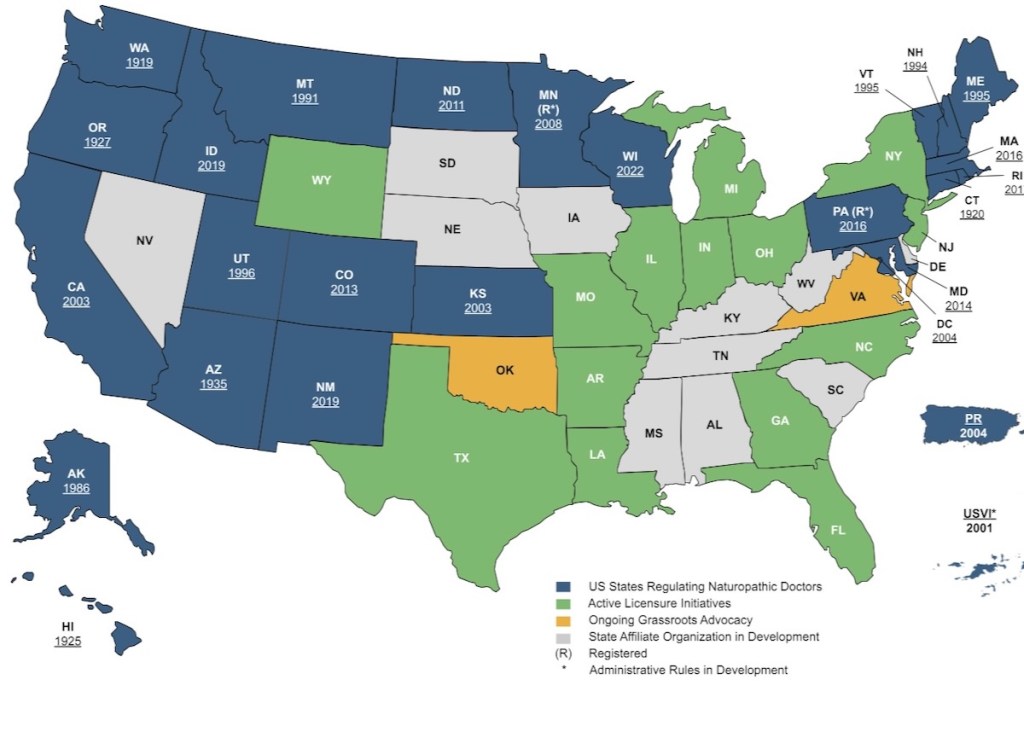
This year legislation was filed in six states, including Missouri, to begin licensing naturopathic doctors. And another six states, including Kansas, have seen legislation that would expand their scope of practice.
The Kansas bill, which would have given naturopathic doctors in the state expanded professional capabilities, like prescribing many medications, passed out of a state House committee, but failed in a 58-58 floor vote last month.
The Missouri bill would license naturopathic doctors in the state for the first time and allow them to perform many duties similar to a primary care doctor, including prescribing basic medications. To date, that bill hasn’t been scheduled for a hearing and it is unclear if it will be heard this session.
Rep. Mark Meirath, an Excelsior Springs Republican who cosponsored the bill, said he sees the legislation as a way to help expand the pool of available providers in the state, which is facing doctor shortages across rural communities.
“It just makes sense that we should give the people another safe option for their health care needs,” Meirath said.
Medical establishment has concerns
But the medical establishment has long fought back against allowing naturopathic doctors to act like traditional physicians, calling into question naturopaths’ training and approach.
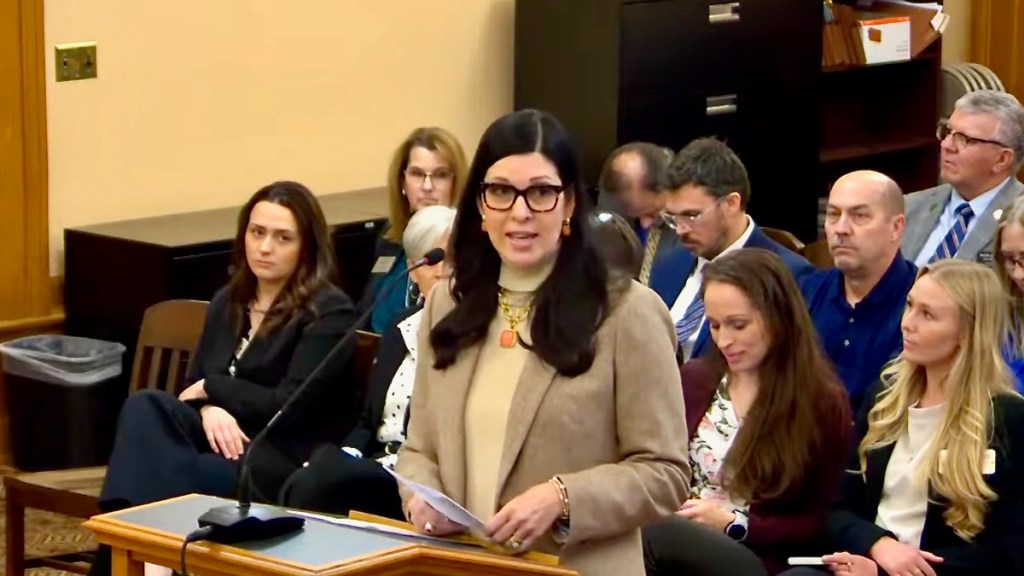
Testifying in January against the Kansas legislation, Rachelle Colombo, executive director of the Kansas Medical Society, told the state House Health and Human Services Committee that expanding the scope of practice of naturopathic doctors in the state would be “contrary to the best interest of patients.”
Under the bill, she said, naturopathic doctors “would be able to do traditional, conventional medical treatment, although they are nontraditional, alternative” medical providers.
Naturopathic providers have also faced criticism for recommending and sometimes selling dietary supplements and vitamins that don’t face Food and Drug Administration scrutiny for safety or effectiveness. And they have been criticized for recommending homeopathic products, which federal drug regulators have in the past warned consumers against using.
Beyond those concerns, other criticism about naturopathic care has been far more pointed.
In testimony two years ago against a Missouri bill to license naturopathic doctors, which was passed out of committee before it stalled, a Kansas City doctor testified that she had seen an infant near death after being under the care of a naturopathic provider.
In written testimony before the House Professional Registration and Licensing Committee, Dr. Joanne Loethen, representing the Missouri State Medical Association, described a severely malnourished 12-month-old child who came to her practice weighing the same as a 4-month-old.
After testing the baby for food allergies, Loethen testified, the naturopathic doctor advised the parents to “strictly avoid countless foods and formulas.” But the baby’s weight became stagnant and her development lagged.
“Rather than refer to a physician who specializes in growth failure and delays, or even to a board certified allergist if it was truly felt her food allergies were that severe,” Loethen said in the testimony, “the family was instead told to continue alternative remedies and avoid various foods.”
No regulation may be part of the problem
Supporters of states licensing naturopathic doctors contend that situations like the one Loethen described are precisely why states should be regulating the practice.
“In states like Missouri where there is no regulation at all,” said Laura Farr, executive director of the American Association of Naturopathic Physicians, “anybody can call themselves a naturopathic doctor. As a patient you wouldn’t know if someone has graduated from a four-year medical school, or if it’s somebody who has gotten a five-week correspondence certificate.”
On the other hand, states that do license naturopathic doctors can require certain levels of education and training and establish other standards that protect patients.
Missouri’s proposed bill establishes a board of naturopathic medicine that would determine the quality of education a licensee must have. The board would administer exams and establish continuing education requirements. And it would discipline providers for misconduct.
Emily Hudson, board president of the Missouri Society of Naturopathic Physicians, said many people who oppose the Missouri bill simply don’t understand the level of education naturopathic doctors receive.
“We are trained in evidence-informed medicine,” she said. “We want to provide good, safe, quality care. And keep patients safe.”
Under current law, Hudson and other naturopathic providers working in the state can only serve as something like health coaches to the patients they work with.
”We don’t act as physicians,” said Hudson, who lives in St. Louis. “We don’t diagnose. We don’t treat. I don’t do any physical exam. I don’t touch any of my patients. Basically, it’s generally health advice — speaking to people about the diagnoses they’ve already been given and how I can support them.”
Even in that limited capacity, Hudson said, her practice is full. She often works with medical doctors who refer patients to her for nutrition advice and other support. Patients who want to find a more holistic approach to their health also find her on their own.
“Many people are seeking naturopathic care,” she said. “They want more time for appointments, a more preventative approach. And more support for managing chronic conditions.”
All of those are at the heart of the naturopathic approach to health care, providers said. The practice emphasizes finding and treating the root causes of disease, and that often involves spending lots of time with patients, learning about their lives, including every part that could be affecting their health.
“We want to have 20 to 45 minutes, if not an hour, with our patients,” said Dr. Laura Rues, a naturopathic doctor in Johnson County.
The approach, she said, pays off in healthier patients who require less expensive care.

Similarities to MAHA
Naturopathic providers still face steep resistance in states like Missouri and Kansas.
But they have expressed hope that they might have allies in President Donald Trump and Health Secretary Robert F. Kennedy Jr. Kennedy’s rhetoric in favor of healthy eating and exercise and against highly processed foods match naturopathic principles.
And Casey Means, the doctor turned wellness influencer whom Trump nominated to be his surgeon general, has embraced functional medicine, which has similarities to the naturopathic approach.
Like the Make America Healthy Again movement, Kennedy’s political calling card, they both focus on healthy eating and lifestyle, including promoting vitamins and supplements marketed to support the body’s self-healing processes.
In fact, last year, soon after Trump took office, Farr sent a letter on behalf of the American Association of Naturopathic Physicians noting the similarities and urging federal policy changes that would promote naturopathic practices.
“For over a century,” the letter said, “naturopathic medicine has offered a distinct approach to health care, prioritizing disease prevention, health promotion and patient-center care.”
The letter went on to say that naturopathic doctors employ “a range of evidence-based, cost-effective therapies that resonate deeply with the MAHA platform’s vision.”
To be sure, not everything matches up. For example, accredited naturopathic medical schools follow evidence-based science, including related to vaccines, Farr said. But many in the Make America Healthy Again movement, including Kennedy, shun them.
“Vaccines are taught in all of our schools,” Farr said. “There is a heavy emphasis on having a doctor-patient conversation … related to vaccines, but that’s about informed consent, part of any doctor-patient relationship. We are not getting involved in the vaccine political controversy.”
Farr also did not mention the Trump administration’s moves to cut funding for healthy food programs, food assistance, Medicaid and health insurance subsidies.
While emphasizing that her organization was not endorsing MAHA or any other political movement, Farr said she sent the letter to point out that parts of the new administration’s proposed policies closely align with what naturopathic medicine promotes.
Her letter asked the administration to:
- Direct the Centers for Medicare and Medicaid Services to require states to credential licensed naturopathic physicians. Currently only some states’ Medicaid programs cover the alternative doctors.
- Allow the Veterans Health Administration to hire naturopathic doctors.
- Protect patient access to compounded medications “including those utilizing natural substances and botanical ingredients.”
- Promote “Food as Medicine” programs and appoint naturopathic doctors to boards and task forces that oversee those programs.
As for her assessment of what the MAHA movement has accomplished so far?
“It’s a mixed bag,” Farr said.
On one hand, the administration invited a naturopathic medical school representative to participate in a recent meeting about how nutrition is taught in medical schools, an important step in medical education, Farr said. On the other hand, Trump recently issued an executive order that promotes the use of glyphosate, a chemical used in weed killer and widely implicated as causing cancer.
But, still, Farr said, any new dialogue about nutrition, lifestyle medicine and food as medicine is “a breath of fresh air.”
“It’s something naturopathic doctors have been talking about for decades,” Farr said. “It finally feels like the rest of the world has caught up.”
