


As Missourians grapple with soaring utility bills, experts say recent legislation could enable utility companies to increase rates even more.
Between 2020 and 2025, the average summer bill for an Ameren residential customer rose 34.5%, about 6.1% annually.
The average winter bill for an Ameren residential customer rose 5.9% annually, or 32.9% overall, according to a report from the Consumers Council of Missouri, a St. Louis-based consumer advocacy group.
Those increases — including increases to rates and fees — outpaced both inflation and wage growth, which totaled 25.4% and 32%, respectively, according to the report’s authors. They say infrastructure investments drove the increase.
Takeaways
- Between rate increases and fees, Missourians are paying more for electricity, gas and water than they did a few years ago.
- Many families are falling behind on payments, leading some to have their utilities disconnected.
- A state law passed last year changed how utilities could recoup costs, in an effort to spur investment and growth.
- Those changes are expected to help utilities secure greater rate increases when they go before regulators this year.
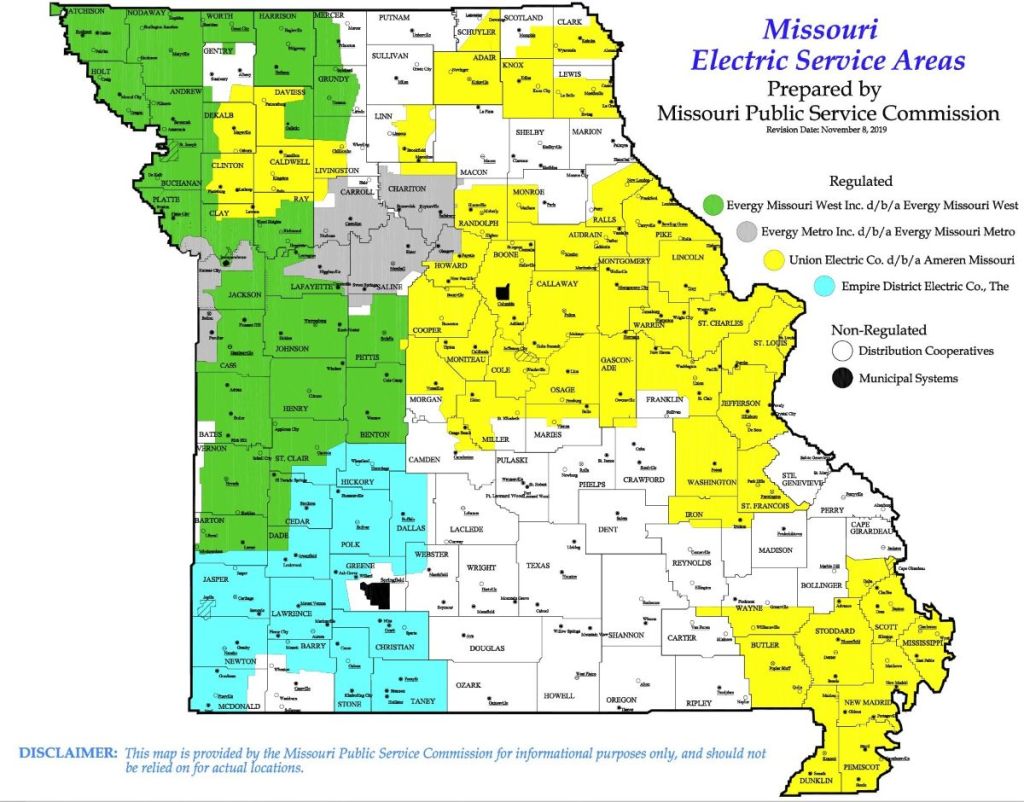
Evergy Missouri West raised rates 4.13% in 2022 and 6.93% in 2024, while Evergy Missouri Metro, which serves the Kansas City area, raised its electric rate 2.99% in 2022 — its only increase in recent years.
That’s about to change.
On Feb. 6, Evergy requested a 14.9% rate increase for its Missouri Metro service area, which includes the Kansas City area and areas around Higginsville and Marshall.
Although the rate increase comes amid a boom in data center construction, Evergy said on its website that “no data center costs are included in this request,” and that the money would be used for infrastructure investments.
Nonelectric utility rates have been increasing, as well. A Spire Missouri West customer’s average winter gas bill nearly doubled from $91 per month in 2020 to $177 per month in 2026, according to the Consumers Council’s report.
United Way, a nonprofit working across Missouri and the United States, runs a hotline that connects residents with resources to help them find work, housing, utility assistance and other services.
Between 2020 to 2025, the Kansas City metro area had the most utility assistance-related 211 calls of nine Missouri regions, while surrounding areas ranked third. In 2025, 211 received more than 31,000 utility-related calls from the two regions.
From March 2024 to December 2025, Missouri utilities disconnected more than 330,000 customers. According to data from the Energy and Policy Institute, utilities’ disconnections totaled:
- Ameren Electric: 183,525 disconnections
- Spire East: 42,008 disconnections
- Evergy Metro: 35,514 disconnections
- Spire West: 34,362 disconnections
- Evergy West: 32,603 disconnections
- Ameren Gas: 2,209 disconnections
- Summit: 1,201 disconnections
Those numbers could have been much higher, said Sandra Padgett, executive director of the Consumers Council of Missouri. She said that while Ameren has been a leader in disconnecting households, it only disconnected three in December 2025. At least some credit for that number could go to a cold snap.
“Utilities cannot disconnect a customer when temperatures are forecasted to be lower than 32 degrees over 72 hours, and that resets every day,” Padgett said. “So they have to look at the three days, from day one through day three, in order to find that three-day time period to disconnect. I expect they could not find that in December, and that’s why those numbers are so low.”
That requirement changed with the passage of a utility omnibus law, Senate Bill 4, in 2025. Previously, utilities couldn’t disconnect a household if extreme heat or cold were forecasted over the next 24 hours.
SB 4 extended that to 72 hours, according to Geoff Marke, chief economist at the Missouri Office of Public Counsel, a state agency that represents ratepayers in utility rate cases.
“What that has meant, in practice, is that you have a lot of days during the year when you just can’t shut somebody off,” Marke said.
But Padgett said that protection only goes so far.
“That means there could be — and I bet there are — a lot of people who are behind on their bills, and once the temperatures are consistently above 32 degrees … you’re going to see a lot of households disconnected, because they’ll have a backlog,” Padgett said.
In a typical month, about 10% to 11% of Evergy customers are behind on their payments, according to Jenn DeRose, a campaign strategist with the Sierra Club.
Padgett said that low- and fixed-income residents are particularly vulnerable.
“We’ve had conversations … with retired teachers, retired social workers, retired professionals, people who thought they had saved enough money to retire. They’re finding that they just can’t keep up with their utility bills,” she said. “I had one person tell me that she and her husband are on budget billing and their Ameren budget bill is $400 a month.”
Why are utility rates rising?
Senate Bill 4 faced fierce opposition from the Consumers Council, Sierra Club and other groups, which argued that several of its provisions could cause utility rates to skyrocket.
But the law only went into effect in August 2025 and hasn’t been applied to a rate case yet, so it isn’t responsible for current rates.
Data centers also aren’t responsible for current rates, said Marke, who said other forces, like growing demand for energy and rising costs of materials, are more to blame.
“Even if a data center never showed up in the state of Missouri … the costs would be larger than they otherwise would be because of the demand on the market,” he said, adding that utilities “would still have to build natural-gas plants. Unfortunately, they’re doing it at a time when everything is just really, really expensive.”
High demand for building natural-gas plants is complicated by the fact that only a few companies that can meet that demand exist, leading to higher prices and long wait times to get plants online, Marke said.
Missouri isn’t alone in facing these challenges, Marke said. But the pressure customers are feeling on their utility bills is also due to Missouri-specific laws and regulations.
One example is the “acronym alphabet” of surcharges that Missourians see on their utility bills, Marke said.
“There’s all of these other costs and other fees. … you’ve got an FAC … you’ve got an ISRS, you’ve got a PISA,” he said. “All of these are different acronyms for different riders or mechanisms to claw back specific costs on a quicker basis than they otherwise would be. That’s increased cost.”
One of those acronyms, PISA — short for plant-in-service accounting — was introduced in 2018 with the passage of Senate Bill 564.
That mechanism allows electric utilities to expand their “test year” — a year of expenses provided to the Public Service Commission during a rate case — so they can raise rates to compensate for, and earn a profit on, infrastructure projects outside of that one-year period.
That mechanism was “designed to accelerate replacement of the electric grid and its component parts,” Marke said.
Surcharges can be requested and approved outside of the longer rate increase process. That helps utilities raise money for projects faster, but also reduces consumer advocacy groups’ ability to review the prudency of fees, Marke said.
“A rate case might take 11 months. We open up all the books, and we audit and we go through this process. That acronym alphabet stuff … might be on a biannual basis or an annual basis,” he said.
“It leaves a lot less room for us to audit, and that’s by design,” he added. “That’s a trade-off for accelerated investment.”
How could Senate Bill 4 impact utility bills?
When SB 4 was passed last year, the Consumers Council estimated the law could increase households’ overall utility costs — including gas, water and electricity — by more than $1,100 annually.
About half of that estimated increase comes from the projected cost of building a nuclear power plant using “construction work in progress,” or CWIP. The mechanism allows utilities to increase rates — with regulators’ approval — to pay for the construction of power plants before they’re completed.
In 1976, Missouri voters passed an initiative petition prohibiting the use of CWIP after the Public Service Commission approved a CWIP rate increase for the Callaway nuclear plant before the project’s completion date was known.
SB 4 overturned that ban, allowing the use of CWIP for natural-gas plants and for projects approved by the Public Service Commission in an integrated resource planning case, according to John Coffman, utility consumer counsel for the Consumers Council.
“Integrated resource planning involves all power plants, so that … exception could apply to any power plant, including a nuclear power plant,” Coffman said. “So it’s mandated for natural-gas power plants (and) it’s permissive for nuclear power plants.”
Sen. Mike Cierpiot, a Lee’s Summit Republican who sponsored SB 4, told The Beacon last year that he believed the bill disincentivized using CWIP to build nuclear plants because it required utilities to pay consumers back with interest if a plant being built with CWIP was canceled.
But around that time, Ameren Missouri — which operates the state’s only nuclear plant — updated its long-term planning documents to explore ways to double its nuclear power generation over the next two decades.
Utilities are not the only ones interested in nuclear power. During his State of the State address in January 2026, Gov. Mike Kehoe told lawmakers that “I am proud to announce that Missouri, and this administration, is all in on nuclear.”
“With the governor’s emphasis on nuclear energy and the proposals for data centers, it seems like the electric utilities will use that as an opportunity to build a nuclear plant,” Padgett said.
“We also expect that if one of the electric utilities proposes a nuclear plant, they will use CWIP to fund it,” she added.
The first rate case with CWIP will not be for a nuclear plant, but for a natural-gas plant that Evergy is planning to build, Marke said.
“That will play out in prefiling testimony over the summer, and if it goes to a hearing, it’s likely to be sometime this fall,” he said, adding that the Public Service Commission still needs to go through the process of making rules for CWIP and other mechanisms in SB 4.
SB 4 also included a provision expanding on the existing PISA policy, allowing utilities to include infrastructure investments over a longer period in their test years.
“It’s primarily for Ameren Missouri and Evergy Missouri to be able to get extra recovery for distribution expenses over a five-year-plus period,” Coffman said.
The law also introduced a “future test year” mechanism, which allows gas and water utilities to base their rate increase requests on projected future costs. Previously, utilities had to present previous years’ expenses.
Missouri American Water is expected to file a rate case later this year, which Marke said will likely include a future test year, “our first test case of how that will work.”
Between the different mechanisms in SB 4, “all things being equal, it will enable more cost spend,” Marke said.
According to Coffman, despite utilities being shareholder-owned companies, ratepayers will bear the brunt of that increased spending.
In 2025, Evergy reported adjusted earnings of $894 million, or $3.83 per share. Ameren reported 2025 adjusted net income of $1.370 billion, or $5.03 per share.
‘One good provision’
While consumer advocacy groups opposed SB 4, “there was one good provision,” DeRose said.
“It allowed for the possibility of a low-income rate,” she said. “Considering the affordability crisis and the waves of disconnections and people in arrears that we’ve been seeing, I think it is absolutely urgent that the Public Service Commission create a low-income rate or a low-income discount, because people are already behind on their bills.”
While the law didn’t require the commission to create a low-income consumer class that pays a different rate, it did open up that possibility for households facing a high energy burden, according to the Missouri Coalition for the Environment.
SB 4 didn’t establish an energy burden threshold, but according to the Sierra Club and Renew Missouri, families paying 6% or more of their income on energy have a high energy burden.
While the PSC has opened a docket to begin studying a low-income rate, there’s been little action to move forward with implementing one, Padgett said.
“We’ve asked for support from the utilities in making that happen, and I think they do see the need for it, so they’re generally supportive,” she said, adding that she’s also asked legislators who voted for SB 4 — including Democrats and Republicans — to push the commission to take action.
“We know that the future test year will be applied. We know that the plant in service accounting piece … will be applied. I’m unfortunately very confident that the CWIP provision will be applied, too,” she said. “But we’re just hopeful that the low-income rate is established.”
