


Kansas Citians have repeatedly voted to increase sales taxes to support issues that are important to them. Voters have supported sales taxes for fire service, public safety, reinvestment in the central city, public transit and parks, along with fixing potholes and infrastructure in the capital improvement tax.
Takeaways
- Kansas City collects more than $100 million a year in taxes on online purchases. But unlike in-store sales taxes, none of that money goes to the special voter-approved funds for transit, parks, fire, public safety or infrastructure.
- A 1996 local use tax and subsequent legal changes created what one councilwoman calls a “loophole” that lets the city deposit online tax revenue into the general fund.
- The city says redirecting the money would create a $103 million hole in the general fund, and the city manager isn’t recommending any changes.
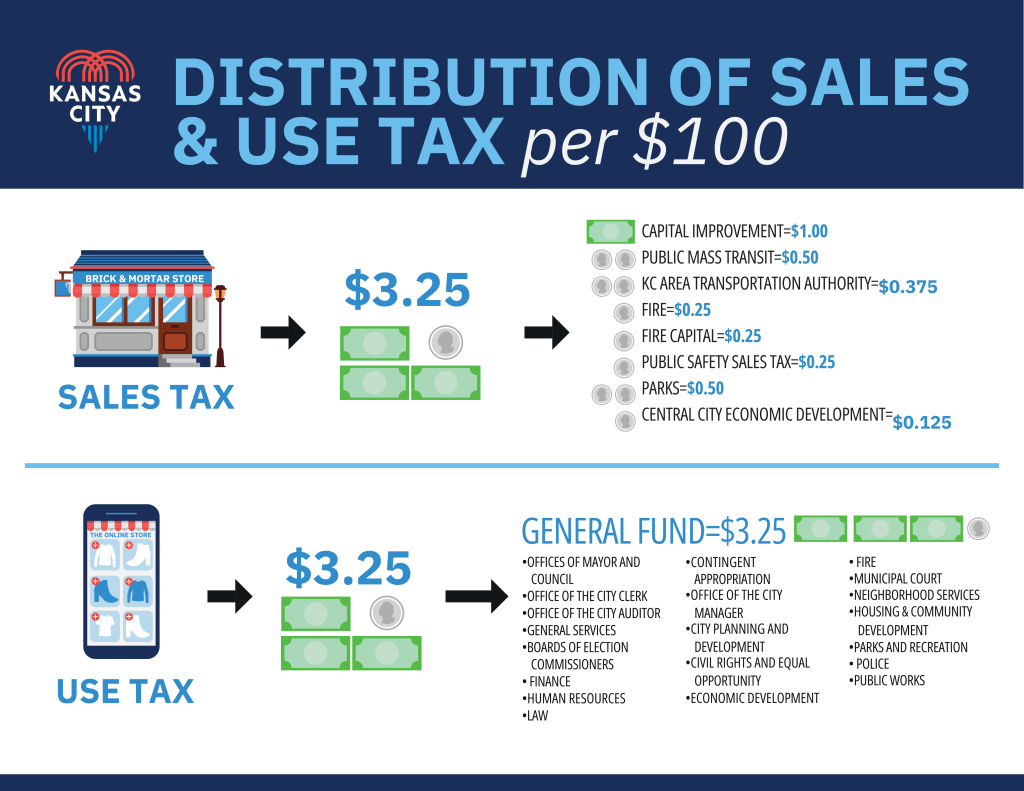
The result is that if you walk into a store in Kansas City and buy a $100 pair of shoes, you will pay $3.25 in local taxes that go into these specific “special revenue sales tax” funds.
But most people don’t realize that if you bought that same pair of $100 shoes from a large out-of-state online retailer like Amazon, you still pay $3.25 in taxes, but that money goes directly into the city’s general fund. Those tax dollars can then be spent on any city priority instead of the special uses that voters have approved.
“We cannot tell voters, ‘We want you to vote for this specific tax. But, oh, by the way, if you buy something online, we (the city) get to say how that money is being used,’” said 3rd District Councilwoman Melissa Robinson. “That’s not the contract that we made with the voters.”
In the most recently adopted city budget $102.8 million in “use tax” revenue from online sales was projected to be collected. That accounts for about one-eighth of all the revenue in the general fund.
Robinson told The Beacon she wants the city to “rightsize these funds” by treating local use tax dollars like other voter-approved special sales taxes — putting the money into the dedicated funds instead of using it to plug holes in the general fund budget.
Kansas City’s new proposed budget is expected to be presented by City Manager Mario Vasquez on Feb. 12. It starts the process of public hearings followed by amendments and a final vote by City Council before it’s adopted by the end of the fiscal year on April 30.
City officials say they can’t reallocate the $102.8 million in use tax funds without having to make equivalent cuts elsewhere in the budget. But Robinson said there’s a fundamental point to be made.
“We have to be truthful with the voters, and if voters know that this is happening that creates mistrust,” Robinson said. “We have to live within our means. This isn’t our money to do with what we will.”
How online tax dollars end up in the general fund
The discrepancy in where your local tax dollars go is because different types of taxes have emerged in recent decades as the city adapted to a changing economy.
Kansas City imposes a 3.25% sales tax — a combination of seven voter-approved special use sales taxes — on local in-person purchases. Most online sales are subject to a “use tax” at the same rate.
By law, money from in-person sales taxes goes to individual pots that fund each of the special uses that voters approved. However, contrary to common understanding, local use tax dollars from online purchases don’t have any stipulations about how the municipality must spend the revenue, meaning that money goes into the city’s general fund to spend as it wishes.
That split comes from a voter-approved tax 30 years ago and two subsequent legal changes.
In August 1996, Kansas City voters approved a local use tax under a Missouri law allowing the city to do so at the same rate as sales tax. The local use tax was designed to capture tax revenue from out-of-state purchases, mainly catalog orders from companies like J.C. Penney and Sears but also from then-emerging online sources. The ballot language placed no restrictions on how the money could be used, so the city has treated it as general revenue ever since.
At the time — for reference, Amazon had been selling books online for about a year — the amount of local use tax the city collected was less than $10 million a year, according to Robinson.
But rapidly evolving online shopping habits coupled with two legal changes turned the local use tax into a major revenue source.
In 2018, the U.S. Supreme Court ruled in South Dakota v. Wayfair Inc. that states could require online retailers to collect taxes even without a physical presence in the state. And in 2021, Missouri passed a law requiring large out-of-state retailers to pay local use taxes beginning in 2023.
Those changes had an immediate effect on Kansas City’s budget.
Kansas City’s local use tax revenue jumped from $44.2 million in fiscal year 2019-20 to an estimated $102.8 million in the 2025-26 budget. The upward trend is set to continue and the city projects it could approach $140 million collected from use tax by 2030.
“We’re not doing anything illegal. But through the local use tax loophole … the council gets to decide how we use these funds when we pass the budget every year,” Robinson said. “It is legal for us to do it, but it’s not right for us to do it.”
How each special revenue fund is affected
Using the numbers from the 2025-26 city budget, here’s how much more money each voter-approved special revenue fund would receive if online use tax revenue were distributed the same way as in-store sales tax.
Estimated additional money to special revenue funds if local use tax was distributed like sales tax:
- Capital Improvements – $31,629,562
- Public mass transportation – $15,814,781
- Parks – $15,814,781
- Fire Services – $15,814,781
- Kansas City Area Transportation Authority – $11,861,086
- Public Safety – $7,907,391
- Central City Economic Development – $3,953,695
Robinson, who is approaching her term limit on the City Council, points to real consequences behind those numbers.
She said the issue first came to her attention from the parks director when she asked why youths were being charged to use community centers. The director noted, “not receiving any Wayfair money,” a colloquial reference to the 2018 Supreme Court ruling affecting local use tax, as one of the causes.
The Kansas City Area Transportation Authority had also considered cutting routes or services when there are two potential funding sources totaling $27 million a year if the use tax was treated like sales tax.
“This came to a head for me when kids were being charged to go into community centers … and when we had to fight for the KCATA to remain open,” Robinson said. “This money is there. However, we’re having to have these real fights to get access to it, when in fact, the voters are paying for it every day.”
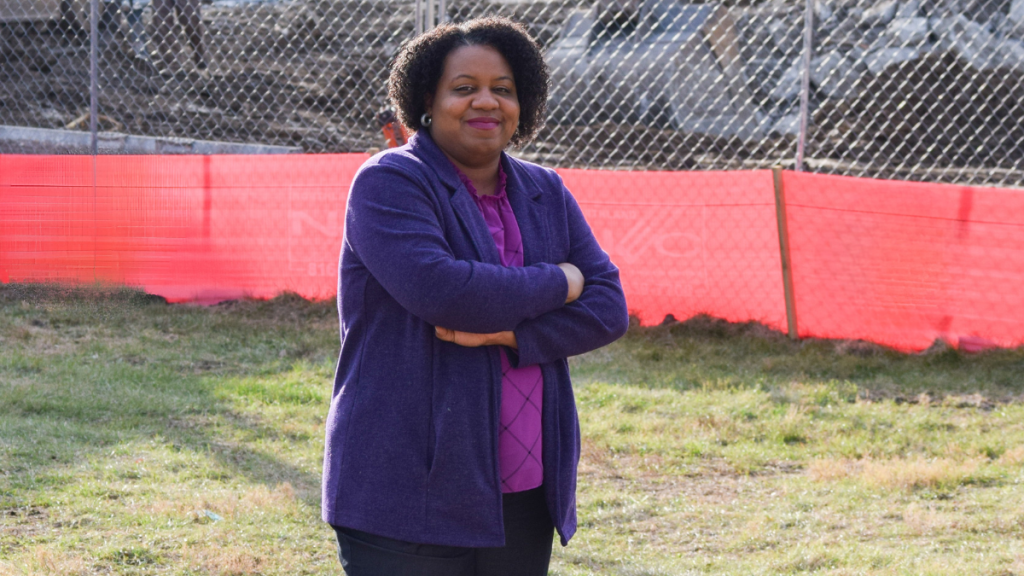
Robinson presented the issue at a Feb. 6 Urban Summit meeting of local civil rights leaders who were particularly bothered by taxes from online sales not going to the Central City Economic Development fund. The group organized and advocated for the tax that invests in redevelopment along the Prospect Avenue corridor.
“It’s a dereliction of duty,” said Urban Summit President Bishop James Tindall Sr. “We worked hard for it… that specific amount of money should be spent somewhere on the Prospect corridor or somewhere in the central city.”
What the city says
In response to questions posed to the city, including the mayor and city manager, public information officer Jordan Berger said in an emailed statement that the practice of allocating use tax into the general fund is entirely legal.
Berger wrote that the use tax when compared to sales tax “is a separate and distinct tax that when authorized by Kansas City residents, was not dedicated to a specific purpose.” Because the 1996 ballot language placed no restrictions on the money, the city deposits it into the general fund.
He said changing that would require an ordinance adopted by the City Council, and the city manager isn’t recommending one.
“The city manager doesn’t recommend any changes to the allocation of use tax revenue at this time,” Berger wrote. “If the use tax collections are redirected to special revenue funds, this would increase the operating deficit in the general fund by approximately $102 million and require further expenditure reductions in this fund.”
Those budget cuts would likely hit the departments that make up the bulk of the general fund. According to the city, the police, fire and public works departments account for almost 78% of the general fund budget.
The police department is required by Missouri law to receive 25% of Kansas City’s general fund where the use tax money sits. Berger said even if the council passed an ordinance to redirect use tax to special revenue funds it would still be classified as general revenue for the purpose of calculating the police department’s mandated 25% share.
Effort to match sales tax and use tax
After last year’s budget passed, Robinson introduced a resolution in April 2025 to examine how the city spends its local use tax funds.
Finance Department Interim Director William Choi presented to the Finance Committee and broke down the local use tax numbers for the fiscal year running from May 1, 2025, to April 30, 2026.
“Reallocation of use tax revenue will create a deficit in our general fund,” Choi said. “With our most recently adopted fiscal year ’25-’26 adopted budget, we estimate that to be $102.8 million.”
Robinson said she didn’t want to pull all the money out of the general fund at once — that would destabilize the budget and city services — but was looking for a plan. She said that voters don’t differentiate between online use taxes and in-person sales taxes, and the discrepancy in how it’s spent — not expressly on special issues they voted on — can lead to distrust among voters.
Sixth District at large Councilwoman Andrea Bough said that priority-based budgeting can account for the will of citizens and that voters passed the local use tax in 1996, which sends funds to the city’s general fund.
Mayor Quinton Lucas said that while he welcomes discussion of budget priorities, his view is that allocating use tax is a policy question for the council. He also noted that the use tax is an “important fund” that goes towards issues that are voted on each year in the budget cycle.
“It’s not as if the money isn’t going to a public purpose,” Lucas said. “It is going to one that is dictated by us and determined by us.”
Citing “potential fiscal challenges” in the future and process concerns, Lucas moved to hold Robinson’s resolution to study how the city could redirect use tax money like sales taxes off the docket.
Bough, Lucas and 4th District at large Councilman Crispin Rea voted to hold the issue off docket and only 5th District at large Councilman Darrell Curls voted no. That resolution was never brought back up and died in the committee in January.
Robinson said there are a few paths forward to have use taxes distributed like sales taxes. But she added that any effort will take time.
The City Council could pass an ordinance, but Robinson views that as unlikely given a lack of council support for her resolution to study how to move the funds. The issue could also be cleared up by a ballot measure — something she’s looking into with the Show-Me Institute. But that would require organizing and gathering petition signatures before a public vote. She also noted that residents could make their voices heard to their council members during the upcoming budget process.
“As we go into this budget session, we have to demand that these (special revenue funds) are being made whole,” Robinson said. “That the city lives within its means, and that when we say we’re going to use taxes for a certain use, that we do that.”
How to weigh in on the city budget process
Here’s how you can share your thoughts on how the city spends taxpayer money. The city has three upcoming budget meetings, where residents are invited to offer feedback on their priorities for the city’s spending. If you are intimidated by the process or budget jargon, you can read about the city’s budget process and this 2023 explainer from The Beacon before heading out to a budget meeting.
Budget meeting schedule:
Monday, Feb. 23, at Ruskin High School, 6 to 8:30 p.m.
Monday, March 2, at Guadalupe Community Center, 6 to 8:30 p.m.
Saturday, March 7, at Winnetonka High School, 9 a.m. to noon

