


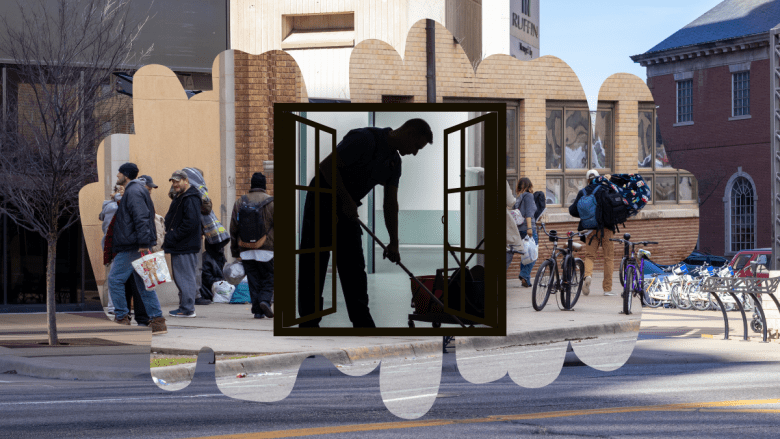
Five mornings a week for the past few months, Jalisa Bennett runs through the halls of a Kansas City homeless shelter with a singular mission — find someone with car keys willing to drive her to work.
“I go up and down, running around this whole building. Everybody who comes past with car keys (I’m asking), ‘Hey, you want to make $10?’” Bennett said. “I’m going to work, and I’m going to make it there on time.”
Takeaways
- About half of people in homeless shelters work at least part time, challenging the assumption that employment prevents homelessness.
- The minimum wage is $15 an hour in Missouri, but the living wage in KC requires $22.75 an hour — a gap that makes working families more susceptible to slipping into homelessness.
- An estimated 80% of people experiencing homelessness are “hidden” — couch surfing, doubled up or living in cars — making them hard to count and harder to help..
Bennett, a single mother of two young boys, arrived in town nearly two years ago after leaving an unsafe domestic situation. Money was tight, but at first she found a way to get by. Since then she’s navigated a sequence of setbacks that led her to living in a shelter. Through it all, though, she kept working.
“I’m very determined,” Bennett said. “I have to provide for my kids, because I am the only provider they have.”
Bennett is not alone. She’s part of a widely unacknowledged community of working homeless people.
Brooke VanHecke is chief development officer for reStart, one of the city’s most prominent nonprofits serving the homeless population — including the shelter where Bennett has been getting back on her feet. VanHecke estimates that “roughly half, if not a little more than half” of the people in their shelters are working at least part time.
“I still get those looks,” Bennett said. “It doesn’t matter how many times I tell a person I have a job. If they have a preconceived notion in their mind about you, that’s how they treat you.”
The numbers behind working homelessness
Stephanie Boyer, CEO of reStart, says the organization has seen an increase in working families needing assistance. She sees the trend as an indicator of underlying weakness in the economy.
“We’ve definitely seen an uptick, particularly in our families who, yes, absolutely are working,” Boyer said. “I think we should be concerned. This isn’t about people making poor choices or decisions, it’s about economics.”
As the costs of basic needs like housing and child care rise faster than wages, roughly four in 10 people in Kansas and Missouri aren’t making enough to live comfortably.
“Working a job while being homeless is tough, because a lot of people, even in the workforce, never talk about it,” Bennett said. “You’ll never know who’s dealing with housing issues at work.”
“Working a job while being homeless is tough, because a lot of people, even in the workforce, never talk about it. You’ll never know who’s dealing with housing issues at work.”
Jalisa Bennett
This gap can also be measured by the United Way’s ALICE (Asset Limited, Income Constrained, Employed) metric. The ALICE metric tracks households that earn more than the federal poverty line but less than what’s actually needed to afford housing, child care, food, and health care.
When the ALICE metric is combined with traditional poverty figures, that number is called the ALICE threshold. In 2023, an estimated 38% of Kansas households lived below this threshold. In Missouri, it was 40%.
These are the families falling through the cracks in the economy. In Missouri and Kansas, there were just less than 1 million households that made too much to qualify for assistance, but too little to afford their basic needs.
“Your job isn’t keeping up with your housing, which is the biggest issue,” said Kansas City Houseless Prevention Coordinator Josh Henges. “We’ve seen over the last five years that wages are not even coming close to matching the cost of housing.”
In Kansas City, that math is stark.
According to the MIT living wage calculator, a single adult with no children needs to make $22.75 an hour working full time to pay for typical expenses. A single parent with two children needs to earn $49.92 an hour. While the minimum wage rose this year in Missouri to $15 an hour, it’s only $7.25 in Kansas.
The ‘hidden homeless’ are hard to count
The annual Point-in-Time Count was conducted locally the night of Jan. 28-29. The survey provides a snapshot of homelessness — counting people staying in shelters, transitional housing or places not meant for human habitation on a single night.
While people living in shelters like Bennett or in known street encampments are counted, many of the working homeless are hard to reach and count because they are often not visibly unhoused.
“Homelessness is a spectrum,” Henges told The Beacon. “The overwhelming majority of people who are homeless are folks who are housing unstable but you don’t see them.”
Henges, who helped write the city’s Zero KC plan to end homelessness, explains that there are roughly four types of homelessness.
- Chronic homelessness is what most think of and see. This group is made up of people who’ve been on the street the longest — at least a year. Very few in this group have formal employment and a higher than average number have a serious mental illness or substance use disorder.
- Episodic homelessness is when someone is cycling in and out of homelessness, often with many of the same characteristics of people experiencing chronic homelessness. Henges says chronic and episodic homelessness account for roughly 20% of people experiencing homelessness.
- Transitional homelessness is when someone goes through a shorter period of homelessness of a few months often due to a crisis, like losing a job.
- Hidden/invisible homelessness is the most common. This is when a person or family is staying with friends, couch surfing or temporarily doubling up. According to Henges, they make up nearly 80% of the city’s homeless population and heavily overlap with the transitional homelessness category.
The most recent HUD Annual Homelessness Assessment Report to Congress found 771,480 people were experiencing homelessness in the 2024 Point-in-Time Count. That was the highest recorded number nationally since it began being counted in 2007.
Journalist and anthropologist Brian Goldstone wrote in his 2025 book “There is No Place For Us” that a true measure of homelessness would likely be far higher than official figures. When accounting for the hidden homelessness population — those omitted from official statistics who are staying in cars or extended-stay hotels or are doubled up with family — Goldstone estimates the full number would be more than 4 million homeless people in the U.S.
Research from the University of Chicago in 2021 estimated that nationally 53% of people living in homeless shelters and 40.4% of the unsheltered population were employed during the time they experienced homelessness. The U.S. Interagency Council on Homelessness puts the figure of working homelessness between 40% and 60%.
Henges said local statistics on working homelessness are largely anecdotal because data systems and federal funding are both focused on helping the chronically homeless population.
Challenges of working homelessness
For Bennett, the biggest obstacles have been child care and transportation.
To get to her full-time job as a production operator at a construction site in the Northland of Kansas City, after sending kids off to school Bennett starts looking around the shelter for anyone willing to give her a ride to work.
She doesn’t have a car and the bus doesn’t get very close to her workplace. If she took the bus, it would require a 35-minute walk from the last stop to her job site. So each week she sets aside $50 from her paycheck for car rides.
That lesson was learned from when she first moved to Kansas City.
Bennett connected with Avenue of Life, which helped get her and her two children settled into her own place after a temporary stay with her mother. She took a job as a housekeeper and had an arrangement with her mother to help pick up and drop off her kids from the school bus.
Not long after moving in, her car was stolen. Bennett then needed to take a three-hour bus ride each way to work. The six-hour daily commute plus work hours meant her mother was watching her kids much more than planned, and before long it became burdensome.
Child care for two children costs an average of $24,131 a year in Kansas City, according to the MIT living wage calculator.

Bennett didn’t realize how much she was relying on her mother until she said she couldn’t watch the kids anymore. Now she had to rearrange her life again, and had a tough talk with her manager.
“I would hate to lose this job, but I would also hate to lose my kids,” Bennett recalled. “At this point, I have to make an extremely important decision, and I’m gonna choose my children.”
Bennett is a licensed cosmetologist, so she did hair, sold art, did graphic design projects and did anything she could to make ends meet while still being able to watch her kids. But she wasn’t making enough money and fell behind. After a few months she was evicted and bounced between shelters before being placed in reStart’s program.
Boyer and VanHecke said the biggest issues they see contributing to homelessness among working people are housing costs, low wages and high child care costs with limited options.
“You have to think of three things: housing, transportation and child care,” said Henges. “If you have those three things covered, you will reduce or eliminate a huge portion of folks who fall into homelessness.”
Possible solutions
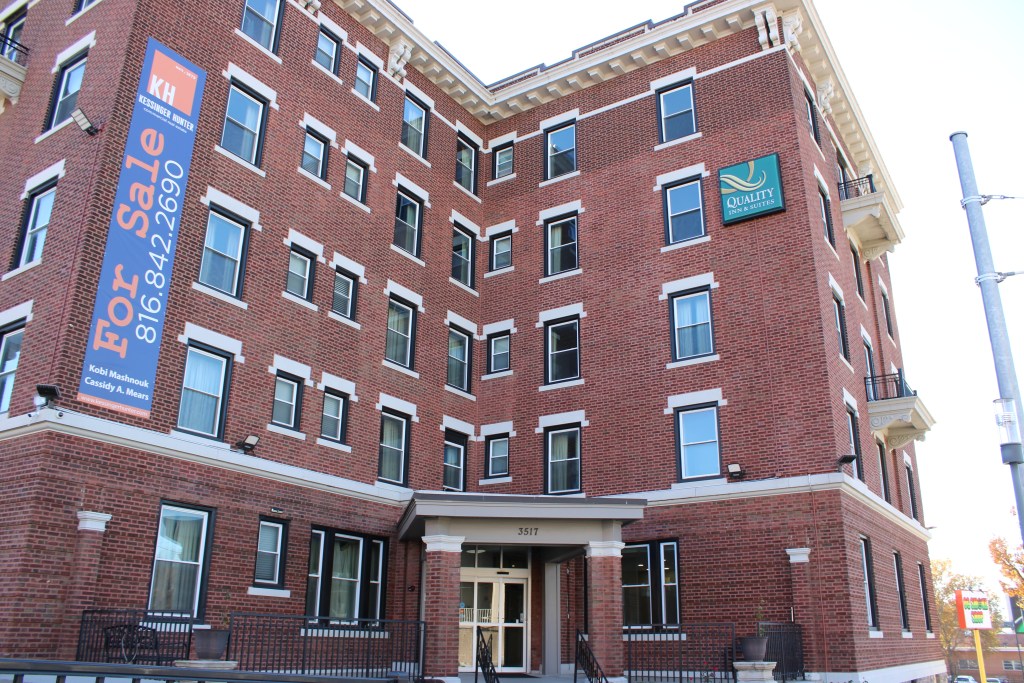
Restart recently purchased the former Quality Inn in Midtown with plans to add support for 44 more suites for transitional housing by April.
Although this expansion means reStart can serve more people, Boyer said the organization doesn’t have the capacity to solve the issue alone. She says reStart had to turn away 414 families in 2024 and 600 in 2025.
“We’re making a dent, but that doesn’t touch the 600 that called,” said VanHecke. “This is a great step for our city but with continued prices, with the current economic situation … we’re just going to see that number continue to rise.”
The metropolitan area has a shortage of 64,000 affordable housing units, according to 2023 research from the Mid-America Regional Council.
While a myriad of possible remedies exist, increasing the amount of affordable housing is widely considered a key action to help stave off rising homelessness.
Henges notes that housing prices will not likely come down without applying an external force to the market.
He pointed to successful models used in other cities like Houston, which went “all-in” on a housing-first approach in 2012. Since then, CBS news reported in 2024 that homelessness in Houston is down 63% and more than 30,000 people have been housed. The city used roughly $100 million in COVID aid to help pay for rentals, buying apartments so they could move people from encampments to permanent housing quickly.
Boyer said she’d like to see more accessory dwelling units, which are small lower-cost housing units that can be built “by right” — meaning without a special-use permit — in the city on an owner’s existing property. She’d also like to see by-right duplex or multiplex conversions of large older houses in the urban core.
Kansas City’s Housing Trust Fund, Henges said, is a promising start but still relatively small compared with places like Boston. He’s “really glad” it exists but stresses that “we’ve got a while to go” before it’s fully built out. He argues the fund should be used not just to finance new construction, but to create affordable housing quickly with tools like master leasing existing apartments or creating a municipal voucher program.
“If you care about crime, if you care about education or you care about the workforce, then you need to care about housing, because homes are where all those people live,” Boyer said. “Once communities decide to heavily invest in housing, everything changes.”
Henges said from a cost perspective, prevention is much preferable to intervention. He suggests a city flex fund as a homelessness prevention tool to catch issues at the earliest moment possible. He said that unless wages increase or housing becomes more affordable, Kansas City will see more working people slip into homelessness due to only being a crisis away from it.
“These folks are working extraordinarily hard. There’s just very little reward for their work in the ability to live their lives,” Henges said. “We’re not even talking about taking a vacation or buying boats. We’re talking about the ability to buy name brand cereal. That’s not asking too much.”
‘I’m optimistic for the future’
The path forward is coming into focus for Bennett.
After months of saving while at reStart, she’s found a 24-hour day care that accepts state assistance, has landed a better job with room for advancement, and has several apartment viewings lined up.
“I’m positive, I’m optimistic for the future,” said Bennett. “I really think that people who are going through a hardship or trial like this, it boils down to mindset.”
But she is quick to note that mindset alone isn’t enough. She says the shelter’s services like meals, case management and a stable address helped her get back on her feet.
“Most of the people who are working while homeless … they’re working for a reason,” said Bennett. “They’re working to get out of the situation that they’re in, so given the adequate resources, people will be able to make a positive transition.”
