


The numbers are staggering when said out loud.
Three large data center projects — buildings packed with power-hungry technology used to facilitate cloud computing and AI — are being considered in Wyandotte County. Combined, they would burn through roughly 1,000 megawatts of electricity — enough to power about 750,000 typical Kansas City-area homes.
Takeaways
- Three proposed data centers could triple Wyandotte County’s electrical load, requiring infrastructure investments that BPU officials insist won’t raise rates for existing customers.
- Similar utility promises in Virginia, Georgia and other states have failed, with residential ratepayers seeing projected rate increases of up to 25% by 2030 despite assurances.
- BPU officials say they have learned from other utilities’ mistakes and will require data centers to pay 100% of their on-site costs upfront, among other consumer protection measures.
The Board of Public Utilities system that serves most of Wyandotte County and parts of northern Johnson County currently peaks at about 500 megawatts. If all three data center projects came online, the BPU would need to generate and transmit roughly three Wyandotte Counties worth of power.
“The elephant in the room … is what (data center) projects might be coming,” BPU board member David Haley said during a Dec. 3, 2025, meeting where the board voted not to increase rates for 2026. “I know at this point in time it doesn’t look as if that’s going to occur too soon. … But there are many forces at work.”
The Unified Government and the BPU are in the pre-development phase with three proposed data center projects code-named Project Red Wolf, Project Yardbird and Project Linda.
BPU Chief Financial Officer Andrew Ferris told The Beacon that securing all three large-scale data centers is unlikely in the near term. But depending on which project is approved first, they could see one or two data centers come to the county.
If any of the proposed data centers came to Wyandotte County, there would be a surge in electricity demand of at least 200 MW capacity — more than what the BPU currently offers. That means BPU would need more power and the infrastructure to deliver it.
Generally, new infrastructure and higher electric demand mean higher utility bills. But BPU officials say existing ratepayers will be protected and won’t see their utility bills go up because of the data center projects.
Ferris said they’re still in talks, but data center developers would not receive special rates or subsidies of any kind from the utility. He said developers will pay their fair share to BPU, including all on-site costs and electric substations for their needs.
He said that the BPU wouldn’t move forward with a project if they think there’s “any detrimental impact” to ratepayers and that the board would ensure developers bear “100% of every cost that goes into this.”
Data centers have raised bills elsewhere
Across the country similar assurances have been given, but then a large-scale data center is followed by a utility bill increase for residents.
According to a June 2025 analysis from Carnegie Mellon, in parts of Virginia, home to the most data centers in the country, electric bills are projected to increase by up to 25% if data center growth continues as expected through 2030. The study projected an 8% increase in electric bills nationwide.
Ferris says that BPU is in a good position because officials have seen what works and doesn’t work in other regions for other utilities.
“It’s the best learning tool there is,” Ferris said in a June 2025 BPU work session. “We are absolutely setting all of those approaches to make sure that we’re using best-in-class processes … to make sure that we hold ourselves harmless from a customer-based standpoint.”
A March 2025 Harvard Law research paper reviewed nearly 50 regulatory proceedings nationwide and found that utilities often promise ratepayer protection, then shift costs to captive residential customers.
BPU General Manager Jeremy Ash told The Beacon that many factors frequently lead to rate increases, including inflation and variable fuel costs, which would be present with or without data centers.
“We are working really hard to protect our customers,” Ash said. “If it were really easy and we didn’t care about the customer, we would already have agreements in place and there’d be dirt moving.”
Wyandotte County seems poised to test whether their municipal utility can deliver on promises that other utilities have broken.
How utility rates work
Understanding whether a data center would increase your bill requires understanding how utilities set rates.
When BPU builds a power line or buys electricity on the regional market, it recovers those costs through rates charged to customers. The guiding principle is “cost causation,” meaning customers should pay in proportion to what it costs to serve them.
In practice, this gets more complicated. BPU groups customers into classes — residential, commercial, industrial — and spreads costs across each group based on usage patterns. For example, a factory running equipment 24 hours pays differently than a house that has usage spikes during summer afternoons.
The system works when costs are predictable and shared broadly. It can strain when one massive new customer requires infrastructure that benefits mainly itself.
Large and hyperscale data centers present a new challenge that utilities have scrambled to understand in recent years. They consume enormous, steady amounts of power — which actually makes them predictable customers who qualify for lower rates per kilowatt hour.
The proposed data center projects would pay more into the BPU ratepayer pool than any other customer. The costs of capacity, infrastructure and maintenance must be balanced against money coming in from data centers. The positive or negative difference impacts the rest of ratepayers.
Here are Wyandotte County’s the three data center project proposals:
- Project Red Wolf is the largest, stretching over 548 acres near Kansas Speedway. At 600 megawatts, it would demand more power than BPU’s entire current system. The project would split across Parallel Parkway — 300 MW north and 300 MW south. A lawsuit filed by residents challenging the zoning process is pending.
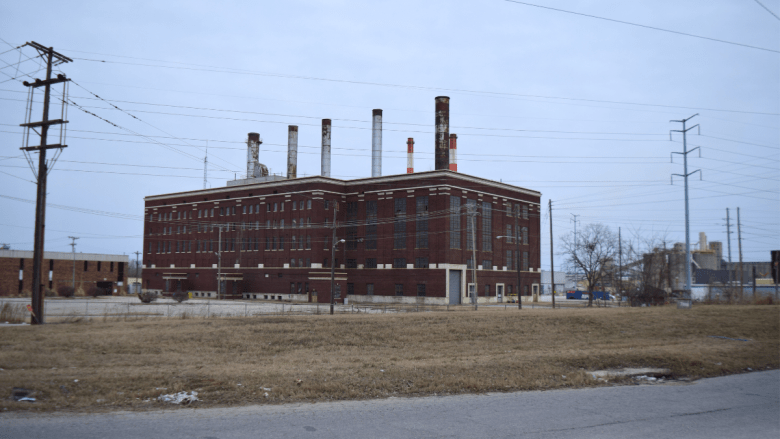
- Project Yardbird would convert the former Quindaro Power Station into a data center that would consume 200 MW. Houston-based PowerTransitions agreed to an option to buy the decommissioned coal plant for $13.6 million and handle environmental cleanup, work BPU would otherwise need to fund.
- Project Linda is also estimated to have 200 MW capacity demand, but the location and other details are not yet publicly available.
None of the three has final signed agreements with BPU or the Unified Government, and the end users — typically deep-pocketed companies like Google, Meta or Microsoft — are not publicly known. Data center developments have become notorious for secrecy and not publicly revealing information like energy and water usage estimates because they say that could reveal systems and practices that are regarded as trade secrets.

Data center developers’ race for capacity
Data center developers are racing to secure power for AI systems that they believe will reshape the economy. BPU officials say that in previous years, the deciding factor for a data center developer’s site selection was utility rates. Now, they say, it’s resource capacity and speed.
“Three years ago it was how cheap can I get it,” Ash said. “Today it’s how fast.”
Darrin McNew, BPU’s executive director of electric operations, outlined the capacity thresholds during the June work session.
He said the first 100 MW of new load requires no system upgrades — BPU can handle it with existing infrastructure. Adding up to 300 MW requires capacitor banks for voltage support, a “relatively minor” investment.
But costs climb when including new internal transmission lines and potentially a new tie to the regional grid. An additional 500 MW capacity or more would likely require upgrading to 345-kilovolt transmission systems — higher than BPU’s current 161-kilovolt maximum.
McNew said that the BPU has an advantage that appeals to data center developers eager to get online. BPU has two substation transformers already available, at a time when new ones take two to four years to procure.
The state of Kansas sweetened the appeal. In April 2025, the legislature passed a 20-year sales tax exemption for data centers investing at least $250 million.
The first project to sign a deal in Wyandotte County will consume available transmission capacity. A second would require new infrastructure and longer timelines. Ferris said that may discourage developers chiefly interested in speed to market, which is why they don’t anticipate all three developments coming to fruition.
Generation is harder to add than transmission capacity.
New thermal power plants take five to six years to build. Ferris says the first data center electric load past their current capacity would likely be served by renewable projects already in development — solar and wind farms in central and western Kansas that can come online faster. That power would come through one of BPU’s five major transmission lines that connect to the Southwest Power Pool, the regional grid spanning 14 states.
BPU’s case for data centers lowering bills
Ash and Ferris say not only will the proposed data centers not raise utility bills, they could lower or flatten them.
Ferris said a single 100 MW data center building would generate roughly $57 million in annual revenue — about as much as half the houses in Wyandotte County combined.
That revenue, if it is beyond the cost of upgrades, would help cover BPU’s other fixed costs and spread the net benefit across the customer base. The same calculation would be true in reverse — if costs outweigh rates paid by the data centers, that deficit would be spread to the public.
“New large users must carry their financial weight so costs aren’t passed to existing ratepayers,” Ferris said.
In the best-case scenario, Ferris said, residential rates could actually drop slightly because data center surplus revenue going to the rate pool before leveling off as continued inflation would cause rates to creep back up over time.
“You actually pay $1 today. You may pay 98 cents tomorrow,” Ferris said. “That might be something that is able to extend for a year or two before it climbs back to the current rate.”
The worst-case scenario, which Ferris defined as a project that doesn’t materialize, looks like continued increases driven by inflation and rising regional costs.
“Probably three years of the next five being 4% increases each year,” Ferris said.
BPU raised residential electric rates 2.5% in both 2023 and 2024, plus a 6% water increase each year between 2023 and 2025.
Ash says this shift in priorities coupled with learning from missteps in places like Virginia means the BPU is in a good position to make a deal that helps existing customers.
“It’s kind of like when the first plasma TV came out,” Ash said. “It was $4,500 bucks for a 32-inch TV. But two years later you could get that thing for $800. We want to be the $800 people.”
Aside from seeking to make data centers pay for all on-site infrastructure, Ferris says BPU will adopt protections so the utility and ratepayers aren’t worse off, even if a data center goes bust after signing agreements.
He says BPU will require up to $140 million in collateral, backed by the parent company — not a shell LLC that could disappear. Contracts would include exit fees if projects fall through. BPU also won’t sign power generation contracts until customers commit first.
“We won’t materially sign any new generation for these customers until we have an agreement in place,” Ferris said. “Because I’m signing up to take 20 years of power off a solar farm and if this doesn’t materialize, we’d have to share that cost.”
What happens next
No final agreements have been signed. Ferris said BPU expects to finalize rate structures for large customers within weeks.
Project Yardbird’s developer remains in due diligence under a May 2025 option to buy the Quindaro Power Station and is completing environmental assessments. Project Red Wolf near the Kansas Speedway faces ongoing litigation and zoning questions. Project Linda is preparing to submit for a regional grid study through the Southwest Power Pool — a required step before any project can proceed.
Amber Oetting, BPU’s director of communications, said the utility will look to the Unified Government for public engagement.
“Our job is to fulfill service while the UG determines what types of business and zoning they want to pursue, and what development agreement makes sense for the city,” Oetting said via email.
The UG also recently announced new rules about public testimony in their regular commission meetings. Starting Feb. 5, public comments will be limited to standing committee and planning commission meetings.
While details are being ironed out the utility is asking residents to trust that the BPU can deliver — that the protections are real, that the math works, and that Wyandotte County won’t join the list of communities where promises of insulation from data center costs didn’t hold.
“We do not receive any benefit by bringing in a negative customer to the system,” Ferris said. “It’s all about that positive contribution.”
