


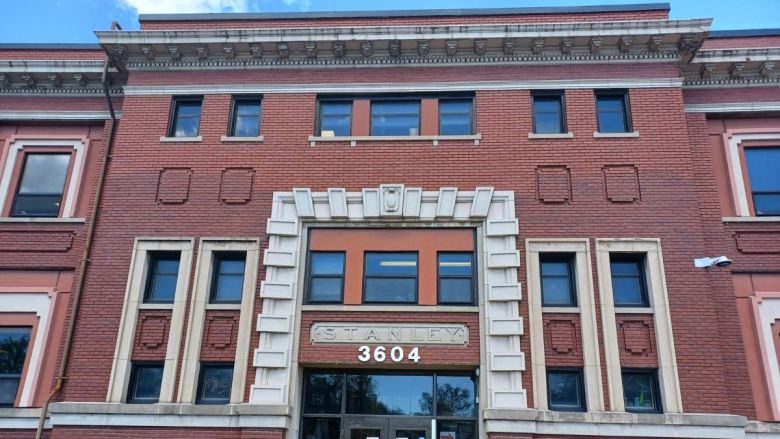
Rodolfo Valladares sent his oldest child to New Stanley Elementary School because he wants his kids to learn his native language.
Takeaways
- A plan presented to the Kansas City, Kansas Public Schools board would close New Stanley Elementary School and consolidate it with two other schools.
- The district said the building is more than 100 years old and has space limitations and accessibility concerns.
- Some families want the school to stay open because they are worried about losing the tight-knit community that supports students.
The school serves about 70% neighborhood students assigned based on their addresses. Another 30% come from elsewhere in Kansas City, Kansas Public Schools, attracted by the growing Spanish-English dual language program.
Valladares’ family is one that doesn’t live in the neighborhood. When he first saw the 100-plus-year-old building, with detached temporary classrooms added to make enough space for its fifth graders, he was hesitant.
“I’m like, ‘Why are we not fixing this?’” he said. “But then we got to know the teachers, and we got to know everyone else, and we got to know the community.”
He can tell that the teachers know all of the kids, not just the ones in their own classroom. His son, a first grader, is progressing well.
“And they care,” he said. “You can tell that they care. It’s not just like, ‘I’m here from 7 to 3, and I leave and I forget about it.’”
When KCKPS asked voters to pass a $420 million bond for school construction and renovation in 2024, the district invited The Beacon to tour New Stanley because the school exemplified some of the problems with aging school buildings.
That bond proposal, meant to replace or consolidate six schools including New Stanley, failed at the polls. Later that year, voters approved a smaller bond, with no tax increase, that didn’t affect New Stanley.
So some parents were surprised to learn this fall that New Stanley might close after all, as part of a plan to adjust school attendance boundaries and incorporate new buildings.
A recommendation presented to the board Nov. 11 called for New Stanley to be consolidated into a bigger, brand new elementary school along with Silver City and Noble Prentis elementary schools. Depending on where the district’s dual language program is moved, some New Stanley students could end up at Emerson Elementary as well.
“New Stanley is one of the district’s oldest buildings — over 100 years old — and has significant space and facility limitations,” the district said in a statement emailed by Markl Johnson, director of communications and marketing. “Some classrooms are in detached structures, which raises safety and accessibility concerns. The district’s broader plan aims to balance enrollment, improve efficiency, and replace aging buildings that are costly to maintain or renovate.”
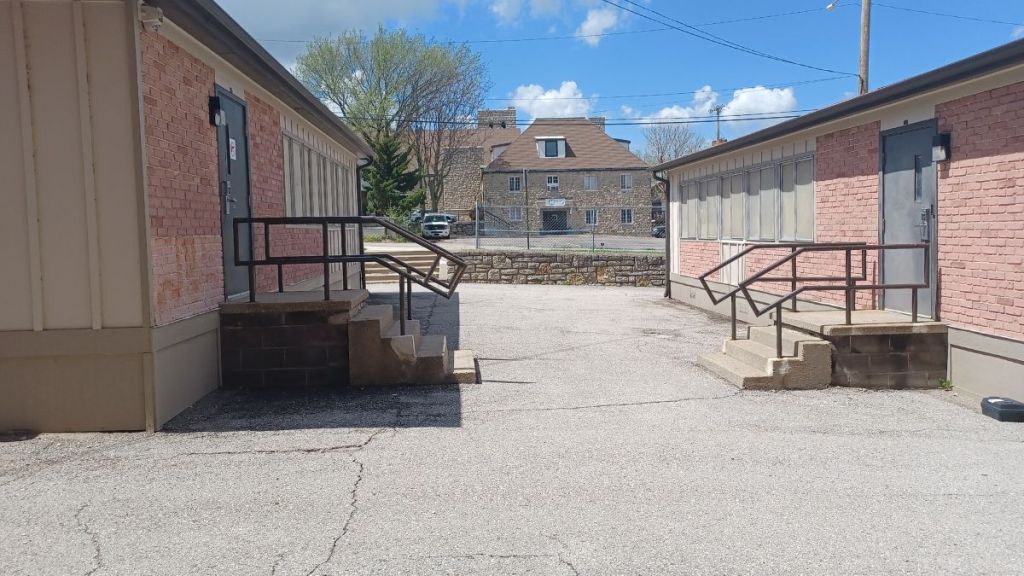
Despite the concerns the district has laid out about the New Stanley building, some families are apprehensive about losing the tight-knit community at their small neighborhood school, which had about 250 students in 2024-25, according to state data. The new elementary school would have room for about 675 students.
Kurt and Emily Rietema have lived in the neighborhood for 17 years. Their youngest graduated from New Stanley last year, but they still feel invested in the school that all three of their children attended. They have been speaking out in favor of keeping it open.
They say the district’s calculations about school capacity and efficiency can’t capture the benefits of a school where people know one another, many families can walk to school and the community is invested in students’ success.
“We’ve had great experiences and good memories, but I don’t think it’s out of nostalgia or not wanting things to change,” Emily Rietema said. “I think this community model is what’s best for students and their families.”
The plan
The proposal to close New Stanley comes as part of an overarching plan to adjust attendance boundaries and feeder patterns for the districts’ 28 elementary schools, seven middle schools and four comprehensive high schools.
The board could reject the proposal or make changes ahead of a planned vote during its Dec. 9 meeting.
The plan, which factors in new building projects, aims to redistribute enrollment so that some schools aren’t overflowing while others have extra space.
For example, Wyandotte High School has considerably more students than the other comprehensive high schools and is over capacity.
Carl B. Bruce Middle School, Grant Elementary School, Claude Huyck Elementary School and John F. Kennedy Elementary School also have too many students for the buildings’ sizes or are forecast to be overenrolled during the next five years.
Under the plan, which proposes that changes would go into effect in 2027-28:
- Students in the current Silver City, Noble Prentis and New Stanley areas would attend a newly built elementary school near the Harmon High School campus.
- New Central and Argentine middle school buildings would open.
- Quindaro Elementary School, which currently feeds into Carl B. Bruce Middle School and Wyandotte High School, would instead feed into Gloria Willis Middle School and Schlagle High School.
- Whittier Elementary School would feed into Rosedale Middle School and Harmon High School, and Grant Elementary School would feed into Central Middle School and Wyandotte High School. Currently that feeder pattern is reversed.
- Other schools would see more minor boundary changes.
Those changes would shrink Wyandotte High enrollment and increase enrollment at F. L. Schlagle High School, while maintaining a relatively streamlined feeder pattern and disrupting fewer students than some of the alternatives, according to the Nov. 11 presentation.
The resulting feeder system would include three elementary schools — Lowell Brune, Welborn and Hazel Grove — where not all of the students advance to the same middle school. Eisenhower Middle School would also be split between Schlagle and Washington when students advance to high school.
That’s more complex than the current feeder pattern, which is entirely streamlined with the exception of Douglass Elementary School students being divided between two middle schools.
The district still needs to decide where to offer the dual language program. The program is currently phasing in, one grade at a time, at New Stanley and Frances Willard Elementary.
The Nov. 11 presentation said the program could be offered either at Emerson Elementary School or part of the new elementary school. It’s possible the district would build an addition onto Emerson to allow the program to grow.
Communication issues
Valladares feels the district “botched” its communication with families about the plan.
“I wish they would have communicated more, and I wish they would have communicated sooner,” he said.
According to the email from Johnson, the communication director, the district offered multiple avenues for engagement, including “committee meetings, public forums, website updates, and community surveys,” including a meeting for parents and community members at New Stanley.
“However, we understand that some families were surprised by the inclusion of New Stanley and felt that communication about the change came late in the process,” the email said. “We continue to encourage individuals to reach out to board members or district leaders with any questions or concerns.”
Emily Rietema said she attended the New Stanley meeting on Oct. 1 but wished it had happened sooner and that there had been more clear communication leading up to it.
The Rietemas said that describing the proposed changes as a boundary plan might have failed to convey that it could involve something as drastic as closing an additional school.
“I think there would have been more parent involvement, also, if people really understood what was on the line,” Emily Rietema said.
The district reported during its Nov. 11 meeting that 154 people took a boundary plan survey in a district of about 20,000 students. The majority of survey-takers supported the elementary, middle and high school aspects of the plan, but support was weakest for the elementary plan.
During the board meeting, member Rachel Russell and board President Randy Lopez, who were on the boundary committee, acknowledged communication could improve but said closing New Stanley was an idea that emerged during the committee’s process, not a secret plan from the beginning.
Russell said she’d also like to see more community members take the initiative to engage.
“In my time on this board, 150 folks responding to a survey is the highest I’ve seen,” Russell said. “When we host in-person events, because that’s what people say (they want), and we bring food, and we have all these things, we get the same folks, and we get a very small crowd. … We’ve tried, and we’ve just not reached people.”
Family and neighbor concerns
Three people spoke against the plan to close New Stanley during the board’s Oct. 28 meeting and five people — including one repeat speaker — spoke at the Nov. 11 meeting.
A common theme was the value of the school community, especially for students who might otherwise be vulnerable.
Amanda DeVriese-Sebilla said her son, who is autistic and has ADHD, relies on his relationships with teachers and staff to succeed.
“We immigrants are suffering from the fear of having our blood family separated and now being separated from a school family.”
Erika Gudino, public comment during the Nov. 11 Kansas City, Kansas Public Schools board meeting
“These relationships are not casual or replaceable. They are built on trust, consistency and compassion,” she said. “The teachers and staff at New Stanley are unlike anything I’ve ever seen. Many have been there decades, and they’ve created something truly special, a family.”
In her public comments, Erika Gudino agreed that New Stanley is a family.
“We immigrants are suffering from the fear of having our blood family separated,” she said, “and now being separated from a school family.”
She worried that the new, bigger school won’t offer the same sense of community.
“We need quality of care, not quantity of care,” Gudino said. “It’s not the same to be part of a small school where everybody knows one another (as it is) to be part of the school where you fight to survive and be noticed.”
Emily Rietema, who lives about a block from New Stanley and is a former PTA leader, told The Beacon that the school helped her meet her neighbors.
“I would think almost all of my relationships in the neighborhood are because of New Stanley,” she said.
The Rietemas are also worried about what happens to the New Stanley building.
Johnson’s email acknowledged schools can be difficult to repurpose, but said the district has a plan to make sure they don’t remain vacant.
“The same factors that make certain schools difficult to operate such as age, condition, accessibility, and high maintenance costs also pose challenges for repurposing,” the email said. “The district will carefully evaluate whether renovation for a new purpose is practical or if demolition and redevelopment offer a more sustainable solution.”
In the case of New Stanley, the current plan is for it to continue housing students.
“The district has not finalized a plan for the existing (New Stanley) building, but possible uses include repurposing it for another district function,” Johnson wrote. “Because we are not currently exploring the option of fully closing an attendance center, New Stanley is expected to continue housing students or educational programs in some capacity.”
Kurt Rietema said it’s better for the building to remain in use, but he can’t imagine a use as beneficial as a neighborhood school. For example, even an early childhood center serving a broader area wouldn’t bring as much “local ownership from immediate neighbors,” he said.
“The impact on the neighborhood, in a positive way, of its current purpose I think is the best use of it that does bring the most vitality,” Rietema said. “All of the other ones just do drive the neighborhood down in some way. It just doesn’t bring the same kind of life.”
Valladares said he sees both the pros and cons of having a new school but leans toward keeping New Stanley open.
“We need better infrastructure, but at the same time, we don’t want to break up the community and the small-school atmosphere of what we have now,” he said.

