


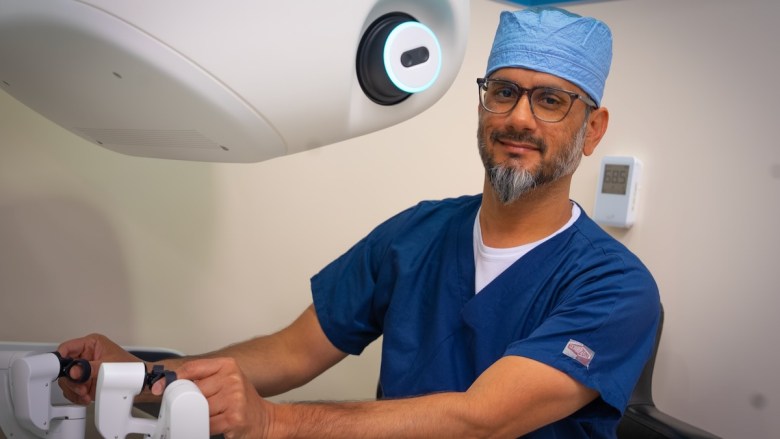
Dr. Moben Mirza, a urologic oncologist at the University of Kansas Health System, has taken to telling the medical residents he works with that he loves them.
He hasn’t always. And the people who trained him never did. But then Mirza lost three people to suicide — a student, a resident and a colleague.
Takeaways
- Kansas City’s medical community is trying to raise awareness about physician suicides.
- They hope to erase the stigma that has long kept some doctors from seeking mental health care.
- Medical schools and hospitals are adding support services and education resources.
He learned very personally that doctors need room to be human. And they need permission to ask for help without shame. Mirza hopes his small gesture relieves some of the pressure on his students, pressure that is tightly woven into the medical profession.
“I tell them what my expectations are and what I am going to teach them,” Mirza said. “But I start from a place of care and love.”
Mirza is not unique. According to the organization that sponsors National Physician Suicide Awareness Day on Sept. 17, more than half of doctors know a physician who has considered, attempted or died by suicide.
It is the leading cause of death among male medical residents and the second among female residents. Practicing female doctors, a February study found, are more likely to die by suicide than the general female population.
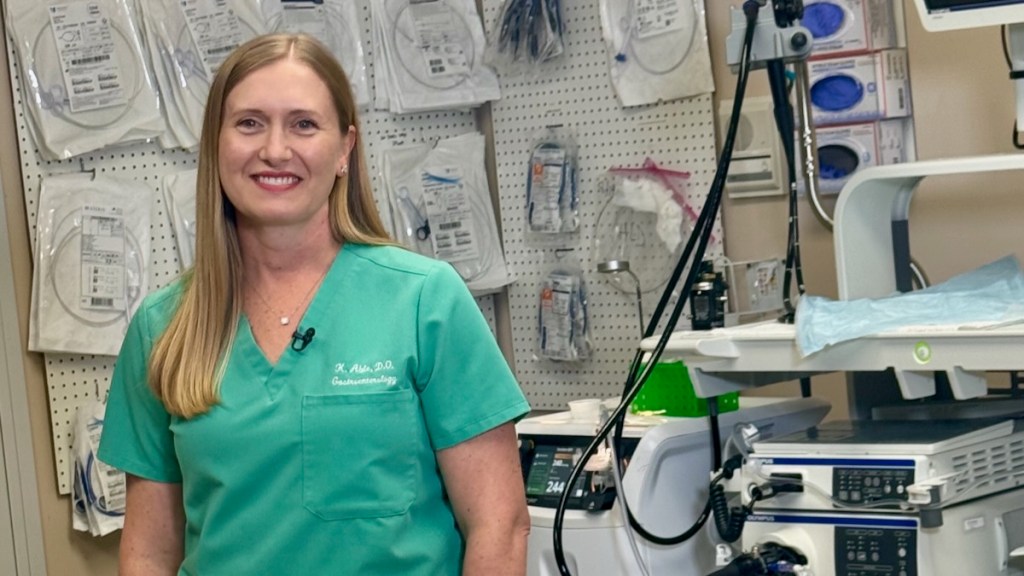
“It’s too many,” said Dr. Kelsey Able, a Kansas City-area gastroenterologist who also lost a colleague to suicide. “‘Far too many.”
Suicide is not a new problem in the medical profession, which has long supported a culture that discouraged physicians from seeking mental health care. But after the COVID pandemic fell heavily on doctors, nurses and other health workers, there has been growing recognition that the profession needs cultural and systemic change.
In Kansas City, hospitals, medical schools and physicians are working to raise awareness and make changes. They are now giving medical students behavioral health training, providing students and professionals increased access to therapy and other resources and addressing some of the structural reasons many in the profession believe asking for help is not an option.
“The more we talk about it, the more we have programming and the more we have discussions, the more we’re going to reduce that stigma,” said Dr. Carlie Nikel, director of medical staff wellness at University Health.
No one knew
Two years ago in August, Able’s medical practice partner died by suicide. They had shared an office and worked closely together on a daily basis, but Able had no idea her colleague was struggling.
“It seemed like everything was fine,” she said. “None of us were prepared.”
Mirza said the same was true for him after his colleagues’ suicides. They all had families who loved them. They were engaged and involved. And outwardly, they seemed happy and motivated.
“But obviously there was something inside that was affecting them so deeply,” Mirza said. “Even when they were achieving and doing well for others, they were not doing well for themselves.”
Estimates differ about how many physician suicides occur each year, but some are as high as 400. One recent study found that the rate of suicides among female physicians outpaces the suicide rate among nonphysician women, while the rate of male physician suicides was lower than the rate among men who aren’t doctors.
Experts said one of the biggest reasons so many doctors are dying this way is that they don’t feel safe admitting they’re anything other than fine. And they are often afraid to ask for help.
“We get embarrassed because we’re supposed to be the healers,” Able said. “If something happens to us or our colleagues we feel like it’s a failure.”
Corey Feist, chief executive officer and founder of the Dr. Lorna Breen Heroes’ Foundation, a national organization focused on improving the mental health of health care providers, said ultimately that is how his sister-in-law felt when she died by suicide at the start of the COVID pandemic.
Breen was a physician in one of New York’s busiest emergency departments, trying to treat patients when supplies were limited, beds and ventilators were running out and, often, there was nothing she could do to help.
Eventually, Breen had a mental breakdown and wound up leaving her post and getting psychiatric care. But she couldn’t get past the idea that her mental illness made her a failure in the eyes of her profession.
“That was the key thing my sister-in-law was concerned about when she took her own life,” Feist said.
He and his wife, Breen’s sister, started the Lorna Breen Foundation after learning that institutional stigma about asking for help or admitting ever needing it was a common reason doctors were dying by suicide.
Bureaucratic obstacles
And they found that long-followed bureaucratic practices, which could be easily changed, were exacerbating that stigma.
Many states, for example, asked doctors applying for licenses vague, open-ended questions about their mental health history. The same was true of many hospitals when doctors applied for credentials and insurance companies when they sought coverage.
Doctors feared that admitting to any history of mental health treatment on the applications could jeopardize their careers, so they simply avoided seeking care in the first place.
“They’re looking at the black-and-white question” on the applications, Feist said, “and they’re saying, ‘I don’t know what will happen if I answer yes, so I’m just not going to get mental health treatment.’”
The Lorna Breen Foundation along with other professional organizations has pushed many states and organizations to change their application questions to be less vague and stigmatizing. More often now, questions about mental health are written to reflect a physician’s current situation and only ask if the applicant has any issue that could affect their ability to care for patients.
At the end of May, about 10% of hospitals around the country had verified that their credentialing applications do not include intrusive mental health questions. The foundation is working to help make changes at many others. And the foundation will soon announce that 40 state licensing boards, including Missouri and Kansas, have updated licensing questions about mental health.
“Those in charge see they can fix this,” Feist said, “and they’re moving quickly to do that.”
What else is being done?
Across the profession, work is being done to change attitudes about mental health in the health workforce. That includes $120 million in federal funding, which Congress allocated during the Biden administration for training and other programs to promote mental health.
Congress is considering the Dr. Lorna Breen Health Care Provider Protection Reauthorization Act, originally adopted in 2022, which could bring additional federal funding to the cause.
Kansas City University received a three-year, $1.6 million federal grant in 2022. The medical school used it to launch its THRIVE program, aimed at teaching medical students how to build resilience and make connections.
The curriculum begins during students’ first year at KCU. They are taught that when they mess up a test or don’t understand a topic the first time, it doesn’t mean they’re not cut out for medical school.
“It just means you’re going to have to pick up different studying skills,” said Carlton Abner, associate provost of campus health and wellness who oversees the program. “There are a lot of things that will be out of their control. … What they can control are their own thoughts.”
Today’s students need different kinds of support than earlier generations, Abner said. And medical schools have the opportunity to give them permission to take care of their mental well-being.

Although the federal money has run out, KCU has continued to fund the THRIVE program. The school also gives students access to free in-person therapy and to online care through a platform that offers all types of health consultations that can be accessed almost immediately.
Of the 900 online encounters students have with the service each month, Abner said, three-quarters are related to behavioral health issues.
It’s emblematic of what many see as a different — and healthier — attitude younger generations have about mental health care. Those working to improve mental wellness in health institutions hope that new doctors coming into the profession will continue to be willing to seek care and talk about their challenges. And they hope that will rub off on older medical providers.
A worsening shortage of doctors, combined with an aging population that will increase demand for care, add to the urgency to change attitudes.
‘It woke me up’
The challenges start in medical school, Mirza said. But they don’t go away. Understanding how to care for your mental health only becomes more important.
“You’ve got to hit it … every day,” Mirza said. “‘I can’t get it wrong. That’s the pressure on me every day when patients see me. I can’t screw it up.”
Able said the people who taught her “sacrificed everything for medicine.” And she, like many of her peers, picked up the message that she should do the same.
“There’s a level of guilt that comes with sticking up for yourself,” she said. “In training, the narrative is you say yes to every opportunity and you never tell anyone no.”
It wasn’t until her practice partner died by suicide that Able decided to reject that expectation and create a different one for herself.
“It woke me up,” she said.
She stopped worrying that taking vacation would look bad. Or that going to therapy would make her look weak. And she made a point to talk to her peers and the medical students she worked with about her choices to take care of herself.
That’s a big part of what is needed to help turn around the physician suicide rate, many said. The Kansas City Medical Society, working with area hospitals and medical schools, has a public information campaign with resources about where to get help that is working to share that message.
Where to find help:
- 988 Suicide and Crisis Lifeline
- Physician Support Line: 888-409-0141
- National Alliance of Mental Illness Crisis Text Line: Text “SCRUBS” to 741741
Visit the Kansas City Medical Society’s support page for additional resources.
University Health has instituted a peer support program, which trains physicians to listen, care and act as a support system to peers. The hospital also makes counseling available to doctors.
Similarly, the University of Kansas Health System incorporates professional well-being education into medical students’ curriculum, provides a counseling center for students and residents and provides other support resources for students and staff.
Both hospitals, along with three others in the Kansas City area, have been awarded the American Medical Association’s “Joy in Medicine” designation. The program recognizes institutions for focusing on the well-being of their workforce and striving to reduce physician burnout.
The hope is that all of the efforts will ultimately reduce the rate of physician suicides. But most acknowledge that the stress won’t be going away.
Matthew Bennett, a 30-year-old second-year medical student at KCU, came to medical school with two bachelor’s degrees, a master’s and a strong belief that his mental health should be a priority. He waited to go to medical school until he knew he was ready emotionally.
Bennett appreciates the effort his school is putting into helping him and his classmates cope with the inevitable stress that comes with medical school. And he is glad to see that change is starting to ripple through the wider industry.
But as he navigates year two of medical school, along with serving as class president and being a husband and new father, he has to admit that he isn’t immune to stress.
“Yes, mental health is my priority,” Bennett said. “But realistically my priority right now is the test I have coming up on Friday.”
