This story has been updated.
The federal government is trying to claw back $10.4 million from Kansas.
Kansas Republicans said the state is at risk of losing money for food assistance programs because Kelly ignored a request from the federal government to turn over names, birthdays, personal addresses and Social Security numbers of Kansans who have received
Supplemental Nutrition Assistance Program benefits since Jan. 1, 2020.
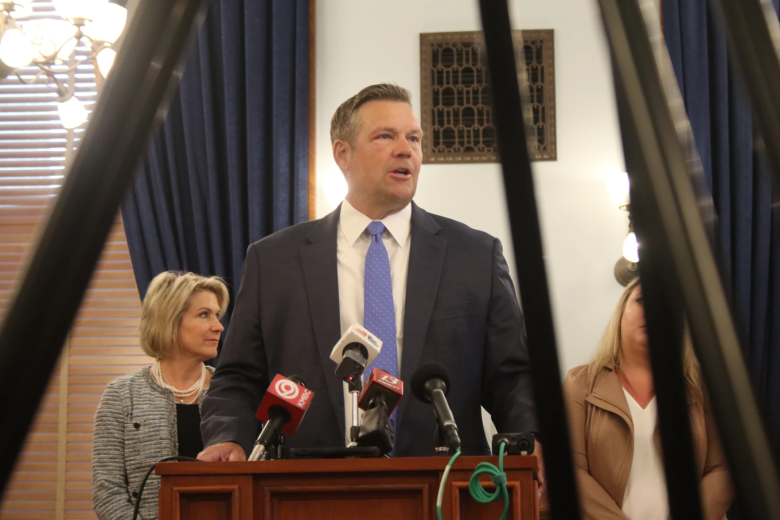
“If action is not taken or she does not change her behavior, the amount of food we’re able to provide to needy Kansans will immediately drop by $10.4 million,” Republican Attorney General Kris Kobach said at a press conference weeks ago. “And there’s no way to get that money back.”
Takeaways
- The federal government is asking for recipients’ personal information to root out errors in the food assistance program. Gov. Laura Kelly said she can’t hand over the data because of privacy concerns.
- Kansas Republicans say the federal government will take $10.4 million on Sept. 19. The governor’s office says that won’t happen.
- The request for data has led to lawsuits.
Kobach sued Kelly trying to force the data to be turned over, but a judge on Thursday didn’t make the state to comply with the request.
Kelly has consistently said handing over the requested information could break the law.
“The attorney general is known for not doing his homework or placing priority on protecting Kansans’ private data,” Kelly said in a press release. “I have always worked to protect Kansans, especially from federal overreach, and I will continue to do so.”
The federal government wants to lower SNAP error rates
President Donald Trump signed an executive order in March demanding more data from the states about the Supplemental Nutrition Assistance Program. The federal government says getting this data will help them analyze SNAP databases and reduce error rates.
The U.S. Department of Agriculture sent multiple letters to Kansas asking for the data. The state declined to provide it multiple times.
Republicans point to state law that says Kansas must “cooperate with the federal government on any … federal program providing federal financial assistance and services in the field of social welfare.”
That means turning over data when asked — and data transfer is something states do regularly. The governor’s office says this request is unprecedented and no similar request has been made in the 60 year history of the program.
Laura Howard, secretary of the Kansas Department for Children and Families, said the agency has to protect the privacy of Kansans, and this data is being shared to create a database to share with other government agencies. It isn’t clear if those agencies can legally review the data.
“DCF is required by state and federal law to protect personal identifiable SNAP data except when strictly necessary for the administration of the SNAP program – and that’s a responsibility we take seriously,” Howard said in an August press release after denying a request for the data.
It could also cost $100,000 to gather all the information needed, she said. The request is larger than any previous requests, which means current systems aren’t prepared for this data transfer. And the data requires “additional validation,” the agency said.
Lowering SNAP error rates
The Beacon reported in July that Kansas has a higher SNAP error rate than in previous years, in part because of staff turnover. Qualified staff members leave and newer employees make mistakes.
In one example, state officials said the food assistance program asks if someone is paid biweekly or bimonthly. Clicking the wrong box leads to overpayments or underpayments to the recipient.
People applying for food assistance also make mistakes that can lead to incorrect payment amounts.
The state is creating teams who receive cases to ensure they are accurate — something other states with the lowest error rates do. The agency is also adjusting case management teams to assist other locations if they are busy.
Nowhere in the Kansas plan do state officials say Social Security numbers or addresses from someone’s old apartment will help.
The USDA said in May that SNAP applications, enrollment and transaction data is not shared between agencies, adding that keeping this information secret makes it harder to ensure “the integrity of the program.”
Will Kansas lose money on Sept. 19?
The federal government said it’s taking the money back, but the governor’s office said there is an appeals process with the federal government to keep the $10.4 million.
There’s also a lawsuit challenging the legality of the USDA’s request.
Howard said in August that DCF doesn’t want to comply with the request before the courts rule on its legality. Doing so could violate the Kansas Cybersecurity Act, state officials said. Kansas asked the federal government to delay the request until after litigation is complete.
The USDA isn’t budging, though.
The USDA said it will fine Kansas every few months if the data isn’t turned over, which means the $10.4 million would not be the final price tag. The state’s SNAP error rate is 9.98%. The $10.4 million figure is 9.98% of the state’s total SNAP contribution divided by four because it’s calculated quarterly.
Kansas has the money for now, but Republicans are still urging the governor’s office to comply with the request. That’s why Kobach is suing.
“The state of Kansas losing that money is bad enough,” he said. “But when that money is being taken out of the pockets of needy Kansans trying to put food on the table, that is unthinkable.”