


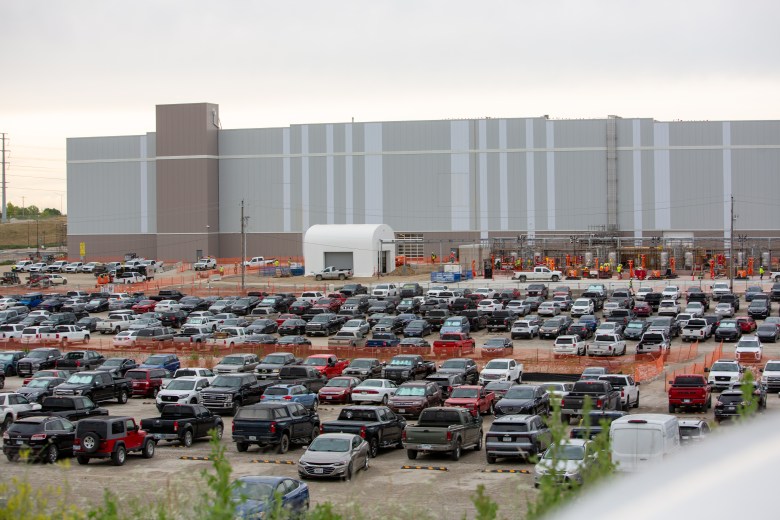
Kansas lawmakers in 2022 approved a one-of-its-kind incentive to bring a Panasonic battery plant to De Soto, Kansas.
It currently makes 50,000 battery cells a day and will bring $2.5 billion in new economic activity annually, the state said. It can bring 4,000 jobs, making it the largest private business investment in Kansas history and giving the state a stake in an industry set to expand: electric vehicles.
Gov. Laura Kelly even proclaimed that Monday was Panasonic Day in Kansas. Lt. Gov. David Toland was also excited.
“This is a once-in-a-generation move that will power our economy, support thousands of Kansas families and spark opportunity for decades to come,” Toland said the day the factory officially opened. “It’s bold. It’s historic. And all Kansans can feel pride today in seeing that our state can do big things again, and that our best days are ahead of us.”
There’s just one problem — there is no guarantee that will happen. Panasonic doesn’t have to hire 4,000 people and the company isn’t required to pay workers a decent wage. The factory doesn’t have to produce batteries and the company can still collect over $800 million in taxpayer incentives.
That’s because the contract Kansas signed with the company doesn’t have job or pay requirements.
The 300-acre facility was supposed to be running at top capacity in March 2027, but slumping Tesla sales and cuts to EV tax credits by congressional Republicans have convinced Panasonic to push that date back.
That delay in full production comes one month after The Beacon asked Panasonic if they were worried about the future of the EV market because of slow sales and cuts to tax credits. The company brushed aside those concerns and said they were committed to De Soto. Then the company announced reduced production plans in Kansas.
What does Panasonic have to do to get taxpayer incentives?
Panasonic has a host of incentives from the state. Kansas will reimburse the company to relocate employees and reimburse the company for employee training.
The largest incentives require Panasonic to:
- Spend $4 billion on the factory to get an estimated $500 million in incentives.
- Have an annual payroll of $234 million. It’ll then get $234 million in rebates over 10 years.
- And the company must stay in Kansas for at least 15 years.
The governor’s office deferred any comment to the Kansas Department of Commerce. Department spokesperson Theo Stavropoulos said all those incentives are performance-based and must be earned. No cash was awarded up front.
But the contract would allow Panasonic to theoretically hire one employee with a salary of $234 million, never produce a single battery and still earn hundreds of millions of taxpayer dollars.
Panasonic has already benefited from a sales tax exemption and investment tax credits. It isn’t clear how much sales tax exemption money the company received, Stavropoulos said. He said the company is likely due around $377.3 million in investment tax credits because the company has already invested $3 billion.
What has Panasonic done so far?
Stavropoulos said Kansans should be excited the company has already hired more than 1,100 people. That’s about one-fourth of its original promise but more construction is being done on the facility to expand capacity.
In June, the Kansas Department of Commerce said 660 people were hired by the company. That number nearly doubled in just one month.
The company told reporters at the grand opening that it had already started to make batteries. Commerce staff told The Beacon last month that the company has added more car manufacturers as customers — expanding on the original plan to focus on Tesla and Toyota.
The factory is already running and the jobs will follow, economists and EV experts told The Beacon in June, but that doesn’t mean the future outlook of the factory is guaranteed.
Greg LeRoy, executive director of Good Jobs First, previously said that the contract should have been tied to performance metrics. He’s criticized Kansas before for what he saw as a bad deal.
“Performance-based incentives just make more sense,” LeRoy said. “They’re more precise, they’re more calibrated, they’re more politically feasible.”
