


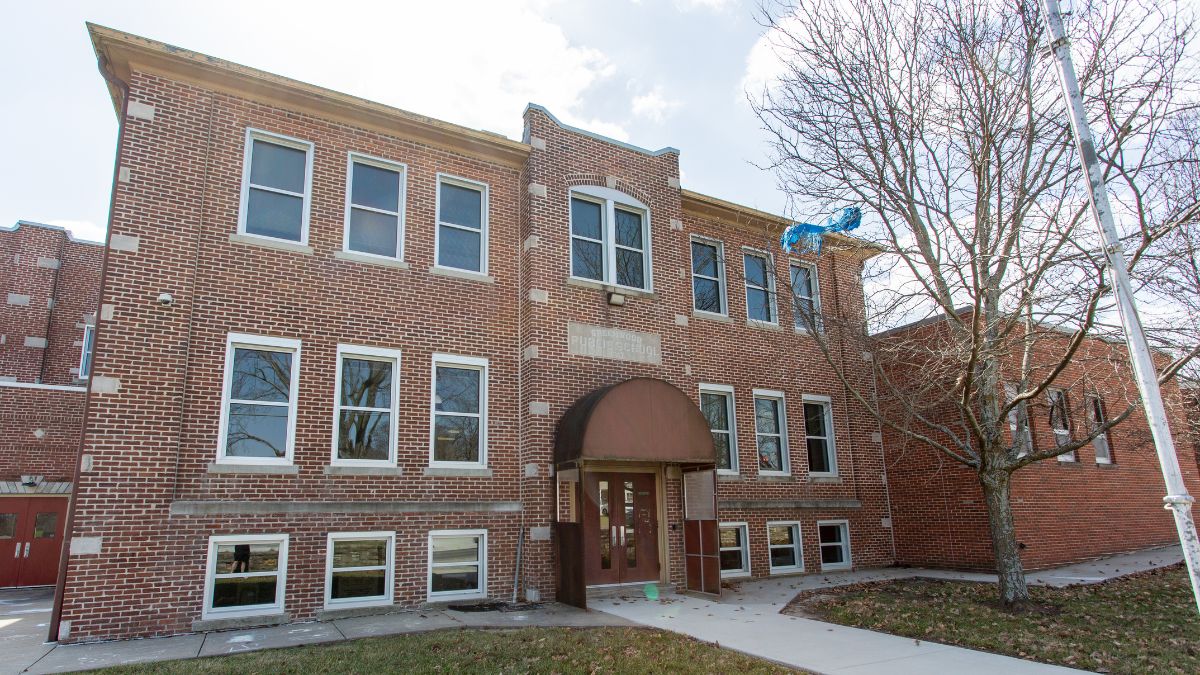
The Lee’s Summit R-7 School District is asking voters to approve a $225 million bond that would allow it to update school buildings and address deferred maintenance.
If the bond passes, the district would replace Hazel Grove and Greenwood elementary schools, do major work at a yet-to-be-determined elementary school, expand Pleasant Lea Middle School and upgrade some high school athletic fields, among other projects.
While Lee’s Summit schools need voter approval to borrow the money, the district says passing the bond wouldn’t raise the tax rate, nor would rejecting the bond immediately lower it.
However, passing the bond would add to the district’s debts that taxpayers are committed to repay. Property tax bills can also still go up for other reasons, such as home value increases.
All four Lee’s Summit school board candidates support the bond and the current board unanimously approved putting it on the ballot.
It would allow the district to update buildings that fall short of modern standards for accessibility, safety and learning, said Steve Shelton, the district’s associate superintendent of operations.
Feedback from the district’s teachers has influenced how the district designs its most updated buildings, he said.
“It’s not because somebody wants to have a certain type of building look,” Shelton said. “It’s because our teachers have said, ‘These are the things that we want to do with our students, and this is the type of space we need to do those things.’”
Lee’s Summit serves nearly 18,000 pre-K-12 students as of the current school year. It has grown from a district of around 9,000 in 1991. Enrollment peaked at about 18,400 in 2019.
Here’s what to know ahead of the vote on April 8.
What would the bond cover?
Some of the largest expenses would be:
- Building a new Greenwood Elementary at a new site ($44.5 million).
- Building a new Hazel Grove Elementary at a new site ($44.5 million).
- Building a sixth grade addition and other renovations to Pleasant Lea Middle School ($32 million).
- Smaller improvements and deferred maintenance projects spread throughout the district ($72 million).
Greenwood and Hazel Grove were originally built in 1910 and 1940, respectively.
The plan also calls for:
- Building an Aerospace Academy classroom at Lee’s Summit Municipal Airport Hangar 2 ($1.2 million).
- Improvements to Miller Park Center, including a secure entry ($6 million).
- Upgrades to high school athletics and activities facilities ($9 million).
The district is still finalizing part of the plan after parents pushed back against an initial proposal to close Lee’s Summit Elementary School and merge it with Westview Elementary School.
Depending on the results of community feedback and the board’s final decision, the district could use bond funding to do a major project on Lee’s Summit Elementary, Westview Elementary or Pleasant Lea Elementary, Shelton said.
No matter the result, those buildings would all still receive necessary repairs, such as a roof replacement for Lee’s Summit Elementary, he said.
Why were those bond projects chosen?
A committee of about 160 staff members and stakeholders identified priority areas and $560 million worth of needs in the district, Shelton said.
The smaller Citizens Advisory Committee then narrowed that list down to $311 million worth of projects that the district could afford if it passed a $225 million bond, he said.
Shelton said Greenwood was selected for replacement because it’s the oldest building in the district, with a small campus and an inaccessible layout for people with mobility issues — requiring them to leave the building to access the gym or main office.
Because of space constraints, Shelton said, about 150 students who would otherwise attend Greenwood go to Woodland Elementary, which is about four miles away. A new elementary school would be big enough to serve those students, located on land the district has picked out in the Greenwood attendance area.
Renovating the building would have cost about $36 million, 80% of the cost of a new building.
Hazel Grove is also one of the district’s older elementary schools and has similar size and accessibility problems, Shelton said. The district is still identifying the location for a new school.
At Pleasant Lea Middle School, Shelton said the district wants to build an addition specifically for sixth graders. Lee’s Summit has found that grouping students by grade is beneficial, so other building changes would also give seventh and eighth graders their own sections of the building.
High school athletics and activities upgrades would affect baseball and softball fields at Lee’s Summit North and Lee’s Summit West and add soccer and band fields to all three high schools.
The project at the airport is meant to support the district’s Aerospace Academy.
“Our students will be there at the airport, in a hangar, working around the industry,” Shelton said. It will “kind of immerse them in that experience.”
Other spending would include taking care of basics like roofs, HVAC systems, parking lots and outdoor lighting and projects to improve security and accessibility.
The district also wants to purchase land for future schools in anticipation of predicted population growth as the Church of Jesus Christ of Latter-day Saints sells off land within Lee’s Summit.
Will my vote affect whether Lee’s Summit Elementary School closes?
The decision about whether to close Lee’s Summit Elementary is a separate question from whether the bond passes, Shelton said.
The ballot language doesn’t specify a list of projects, so the board would have leeway to leave Lee’s Summit Elementary open or to close it.
What happens if the bond fails?
If voters reject the bond, it will severely constrain what the district can accomplish, Shelton said.
The district would have to find money in its budget for the most essential projects only, focused on keeping buildings warm, safe and dry.
How does the bond affect my taxes?
Lee’s Summit says it can afford to pay back the bond without raising the tax rate.
A bond still means that the district is taking on more debt that has to be paid off with property taxes over time.
But rejecting the bond won’t immediately lower tax rates.
Shelton said that’s because the district is still paying off past bonds. As a result, the portion of the tax rate devoted to paying off debts would hold steady until 2035 even if the bond is rejected. Passing a bond further extends the time frame that voters are committed to the current tax rate.
What will I see on my ballot?
Here’s the language you’ll see on your ballot:
“Shall Reorganized School District No. 7 of Jackson County, Missouri (Lee’s Summit R-7) issue its general obligation bonds in the amount of $225,000,000, estimated to result in no increase to the District’s debt service property tax levy, for the purpose of acquiring, constructing, improving, repairing, renovating, furnishing and equipping new and existing school sites and facilities and the purchase of land?
“If this question is approved, the District’s debt service property tax levy is estimated to remain unchanged at $0.87 per $100 of assessed valuation of real and personal property.”
Where can I find more information?
The district has a web page about the bond with more information.
