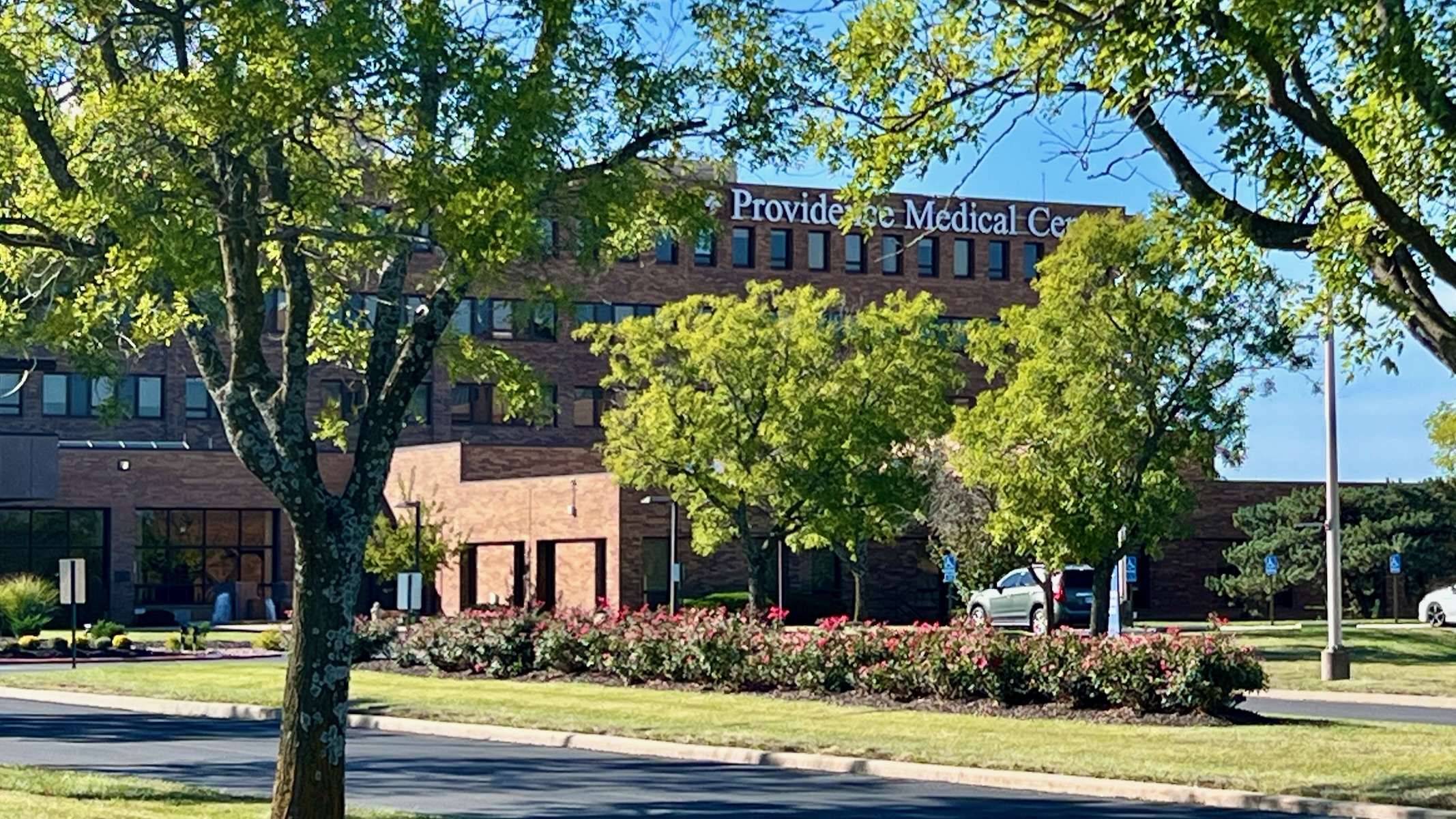
This summer, Providence Medical Center in Wyandotte County joined the growing list of community hospitals that no longer deliver babies.
The for-profit hospital in a residential corner of northwest Kansas City, Kansas, said a decade of declining birth numbers prompted its decision to shutter its labor and delivery department at the end of June.
Since then, expectant parents who live nearby have had to look farther from home when it comes time to give birth.
It’s a “troubling trend” in Wyandotte County, said Dr. Sandra Stites, chief medical officer of Vibrant Health, a community clinic that cares for patients in the area, many of them uninsured.
“Our community members and patients already face numerous barriers to accessing health care,” she said in an emailed statement, “and each closure further limits their options for critical care.”
It’s also a familiar trend.
In a world where hospitals say they’re struggling to recruit enough doctors and nurses, public and private insurance reimbursements are lagging and other expenses keep rising, maternity care tends to end up on the chopping block.
In the last two years, one in 25 obstetric wards across the country closed down, according to the March of Dimes.
That has left a third of counties — home to one in 12 women — “maternity deserts.” Those are areas without any obstetric hospital or birth center and a shortage of doctors. In Kansas, 48% of counties fit that definition. Just over half of Missouri counties do.
“We’re not getting paid any more when we have higher bills for water and gas and food,” said Cindy Samuelson, spokeswoman for the Kansas Hospital Association.
And obstetric care, even in routine cases, tends to come with higher overhead, requiring more staff and, often, more expensive medical malpractice insurance.
Maternity deserts home to poorer people
People in maternity deserts generally make less money, lack health insurance and live in rural areas. But the lack of maternity care is also a problem in cities, especially in lower-income areas which tend to have more Medicaid patients in their payer mix.
Now that Providence has closed its maternity ward in Kansas City, Kansas, its California-based owner, Prime Healthcare, doesn’t offer labor and delivery care in any of its four Kansas City-area hospitals.
Prime bought St. John Hospital in Leavenworth from Sisters of Charity of Leavenworth Health System in 2013 when it acquired Providence. In 2015, the company bought St. Mary’s Medical Center in Blue Springs and St. Joseph Medical Center in Kansas City from Ascension.
Prime Healthcare, which markets itself as a savior of financially struggling hospitals, only offers labor and delivery care at about a third of its U.S. hospitals. The private company closed St. Joseph’s maternity ward in south Kansas City eight years ago, saying there weren’t enough deliveries to cover the cost.
That is a common reason hospitals give for closing maternity wards.
The birth rate in the United States has been on a steady decline for two decades.
Kansas has seen a similar trend. In 2023, the state’s birth rate of 11.6 per 1,000 people was the lowest it’s been since 1911, when the state began keeping centralized records. But Wyandotte County saw births rise to a rate of 14.4 per 1,000 last year.
Hospitals contend that it’s difficult to cover their overhead costs if they aren’t seeing a high number of births. Insurance doesn’t always pay enough, they said, and that’s especially true for Medicaid, publicly funded insurance for people with low incomes.
According to the nonprofit Health Care Cost Institute, Missouri Medicaid spent about $4,100 for a birth in 2020, compared with more than $11,000 spent by private employer-sponsored insurance. In Kansas, Medicaid spent just over $5,700, while private insurance spent closer to $12,000.
That discrepancy can help explain why some hospitals shut down maternity care in hospitals with large Medicaid populations.
National Nurses United analyzed the labor and delivery units that Ascension, the St. Louis-based health care chain, closed over the last decade. It found that the chain tended to close units in low-income neighborhoods with more Black and Latino residents.
A Harvard University professor looked at predominantly Black neighborhoods in Washington, D.C., after the only maternity wards closed and found that low-income Black and Latino patients faced hospital overcrowding and were sometimes being forced to change hospitals while in labor.
A major complication
At the same time, pregnancy-related deaths have more than doubled in 30 years. And the rates of maternal mortality are significantly worse among Black patients.
Losing a nearby maternity hospital and having to deliver a baby farther from home can become a major complication.
“When moms don’t receive quality care or they lack access to early adequate care,” said Kara Hamilton-McGraw, director of the March of Dimes’ Maternal & Infant Health Initiative, “we know that can come with poor health outcomes for the birthing person and the baby.”
Jennifer Allen-Caudle, the maternal child health social worker for the Wyandotte County Public Health Department, called Providence’s maternity ward closure “a very big loss.”
“It’s impactful,” she said. “You have to have transportation to get to someplace farther away.”
And when hospitals drop maternity care, doctors also leave. That means prenatal care and postnatal care can be harder to find. More than half of Missouri and Kansas counties don’t have an obstetric physician, according to the March of Dimes.
“When those resources have closed, they leave a gap in care,” said Sharla Smith, an associate professor at the University of Kansas and director of the Kansas Birth Equity Network.
Resources in Wyandotte County
Getting early prenatal screenings and education about health care during and after pregnancy is vital for a healthy delivery, experts said. It can also protect the person giving birth.
Anyone can come to the Wyandotte County Public Health Department for family planning help. County social workers will help them get a pregnancy test and understand options.
If a person wants to move forward with a pregnancy, the county can help them get signed up for Medicaid if they qualify. If they don’t qualify, the county’s Prenatal Care Collaborative can provide lower-cost care to county residents.
Services include screenings, routine prenatal lab tests, prenatal vitamins, radiology testing like ultrasounds, prenatal education and prenatal appointments at the University of Kansas Health System.
How to get help
Walk in: Wyandotte County Public Health Department, 619 Ann Ave., Kansas City, Kansas 66101
Call for an appointment: (913) 573-8855
Transportation is available.
All that costs $725 through the health department’s grant-funded program. That price does not include the delivery, but other funds may be available to offset that cost.
“There is a big push for us here in the county to educate women about the importance of prenatal care,” Allen-Caudle said, “and give them the information about where to go now that Providence isn’t an option anymore.”
People stand a much better chance when they know about health complications, including cardiovascular diseases, syphilis, HIV and hepatitis C, said Christina VanCleave, who manages Wyandotte County’s maternal child health grant.
“There’s no stigma to wherever they’re at,” VanCleave said. “Whatever is going on in their life, we will do our best to get them the services that they need.”