Update: This story was from the 2023 Legislative session, but it has been updated for the 2024 Legislative session and is up-to-speed on Statehouse action as of Jan. 31, 2024.
Kansas lawmakers failed to cut Social Security taxes in 2023. But lawmakers are trying again — this time with more bipartisan support.
Last year, Gov. Laura Kelly vetoed legislation approved by the Kansas Legislature that would have – gradually over five years – increased to $100,00, from $75,000 the total annual income a taxpayer may have and not pay state income taxes on the portion that is Social Security income. Though Kelly supported the change, she opposes the larger bill that would have created a flat income tax of 5.15% for all filers.
Lawmakers tried passing a bill that included tax plans that Kelly both supported and opposed. The effect of bundling the differing plans meant that every tax cut proposal last session died. A similar tactic was tried this year, and the governor has once again vetoed the tax cut proposal.
Did Kelly veto Social Security tax cuts?
Kelly vetoed a bill that would completely eliminate the tax on Social Security benefits. Both Kelly and GOP leadership support the tax cut, but Kelly said a flat-tax on income was a dealbreaker.
GOP leadership said at a virtual town hall meeting Monday that it is one vote short of overriding the veto.
Is Kansas tax-friendly for retirees?
Not all states tax Social Security and retirement benefits the same. Kansas is considered one of the least “tax-friendly” states to retirees – and both Gov. Laura Kelly and leaders in the Kansas Legislature want to change that.
Are Social Security payments and pensions taxed in Kansas?
Currently, Kansas fully taxes income from private retirement plans, such as IRAs and 401(k)s, and out-of-state pensions. The state also taxes Social Security income for households with adjusted gross incomes (AGI) above $75,000.
This tax treatment is not an issue for most Kansas retirees living off nothing but Social Security income. Their incomes would fall below the threshold of being taxed by the state.
But, according to IRS data, 165,000 Kansas filers over the age of 65 had incomes of $75,000 or more — representing nearly 40% of households filing tax returns.
Does Kansas tax retirement income?
Under current Kansas law, recipients of Social Security must pay state tax on all their Social Security income benefits if their adjusted gross income exceeds $75,000, even by $1. This means that a retired couple with $75,001 AGI could potentially owe $1,500 in more in state taxes than a couple earning $75,000.
“Tax cliffs like this one create fairness concerns because there is no reason two taxpayers with only one dollar difference should have such stark differences in state tax liability,” said Katherine Loughead of the Tax Foundation, a nonpartisan national tax policy nonprofit, in testimony to the special committee on taxation last year.
What is the Social Security tax cliff?
To fully understand the impact of the existing Social Security “cliff,” some math is required.
In Kansas, the average retiree’s monthly benefit was $1,722 in 2021, Eric Adell, a tax policy research analyst with the Kansas Legislative Research Department, said in 2023. One retiree making this would receive $20,664 annually. A married couple, both making the average amount, would receive $41,328 annually.
That’s a long way from $75,000 — the threshold at which Social Security income is taxed — so why is that number important? Retirees often have more sources of income than Social Security. One or both might still work, receive additional pensions or draw down retirement savings from investments.
If all of that adds up to $75,001 they would owe taxes on all their Social Security – or about $1,500 in additional state taxes for a retired couple both receiving the average benefit.
According to Adell, in 2021 Kansas had more than 60,000 filers with Social Security income already over the $75,000 cliff. An additional 15,000 filers reported Social Security income of less than $75,000 – a group that includes more people at risk of going over the cliff.
Could Social Security COLAs push you over the cliff?
Every family’s income changes from year to year for a variety of reasons. Social Security recipients can see annual cost-of-living adjustment increases to their benefits. Due to high inflation, those adjustments increased benefits by 5.9% in 2022 and 8.7% in 2023.
So now our hypothetical average Kansas retirees who received $1,722 a month in 2021 are getting $1,982 a month in 2023. That’s an increase of more than $6,000 annually – a significant amount for retirees nearing the cliff.
“The (COLA) increase would likely raise some people over the $75,000 income threshold,” triggering the tax on their Social Security benefits, Adell said in 2023. It would be difficult to determine exactly how many Kansans might be affected by this because there are so many variables at play in their overall income picture.
Get free help with taxes in Wichita
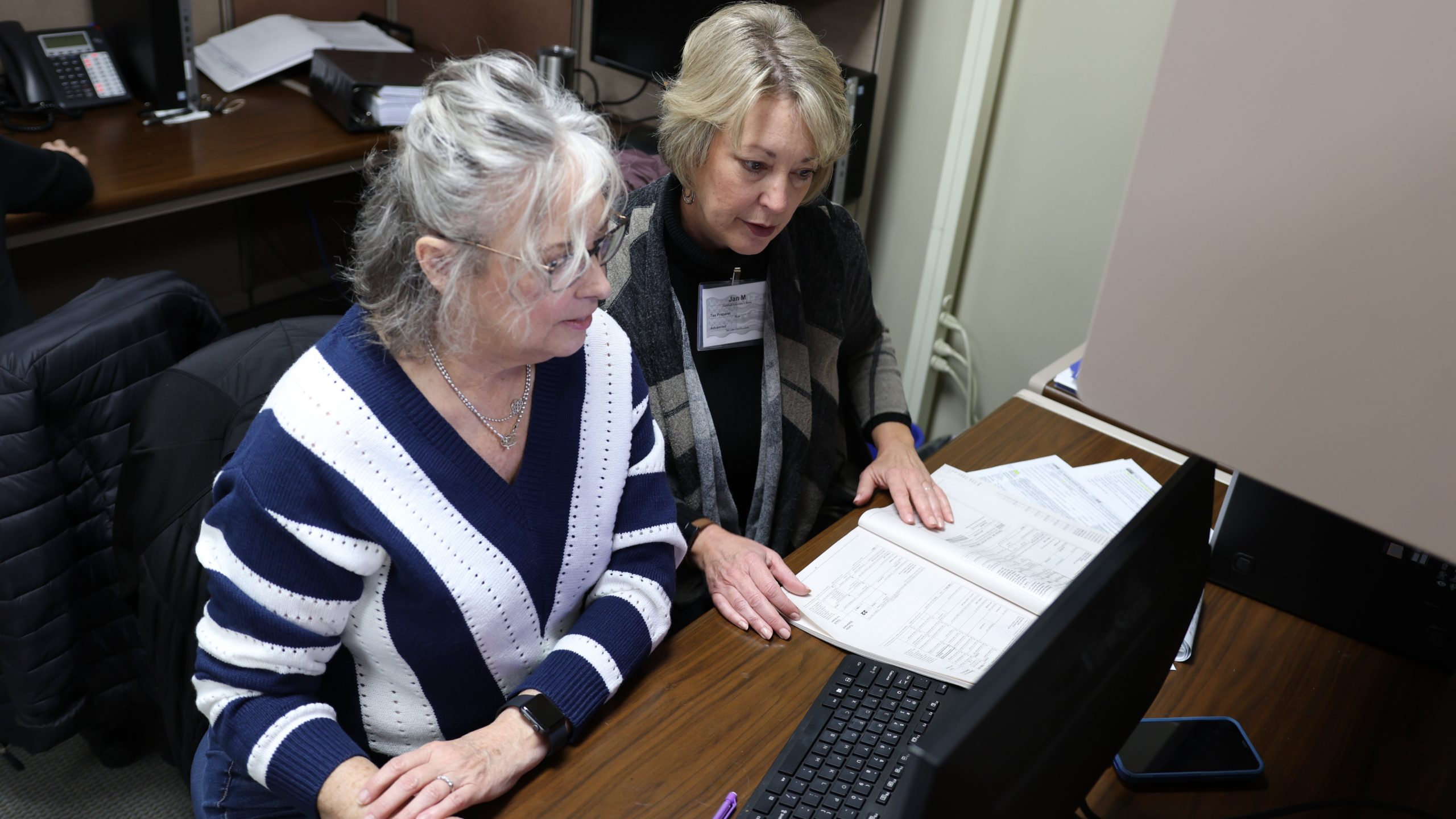
For households earning less than $60,000 annually, the United Way of the Plains offers free tax preparation help at locations across Wichita, Sedgwick, Butler, Cowley, Geary and Marion counties. Call 211 to schedule your appointment. Help is also available for Spanish speakers. The deadline to file 2023 income taxes is April 15, 2024.