


Editor’s note: We updated this story on June 11, 2021, with additional data received from City Planning and Development.
Kansas City is in the process of gathering feedback from residents about how it should approach the city’s growth and development in these four areas over the next 20 years: mobility, serviceability, livability and visibility.
It’s part of the city’s plan to update its comprehensive plan, which hasn’t been done since 1997. Yet, the 4,900-plus residents who have responded to surveys and provided feedback in the last year are mostly from more affluent ZIP codes, where fewer people of color live.
According to data provided to The Beacon from City Planning and Development, there has been little to no engagement from residents living in ZIP codes east of Troost Avenue, the historic northeast and neighborhoods north of the river.
These neighborhoods are among the most diverse in the city, and where more lower-income families live.
Jeffrey Williams, director of the Department of Planning and Development, said the plan will only be successful if feedback is received from all communities across Kansas City.
“We need to hear from everybody across the city,” Williams said. “I think that is the way in which we assure the highest degrees of equity possible.”
The City Planning and Development department began working on the latest comprehensive plan, called the KC Spirit Playbook, in 2019.
Engagement from residents is a crucial part of the comprehensive plan — but because the pandemic prevented in-person community outreach last year, the department is seeing disparities in the residents participating in the process.
Some of the ZIP codes with the highest number of responses are located downtown, Midtown and the Brookside area south of the Country Club Plaza — among the more expensive places to live.
Because of the pandemic, engagement on the comprehensive plan has primarily taken place online. Right now, residents must register for an account on the KC Spirit Playbook website to participate.
Data from the city showed 13 ZIP codes registered zero responses in the last two months, and 24 ZIP codes registered less than 50 responses in the least year.
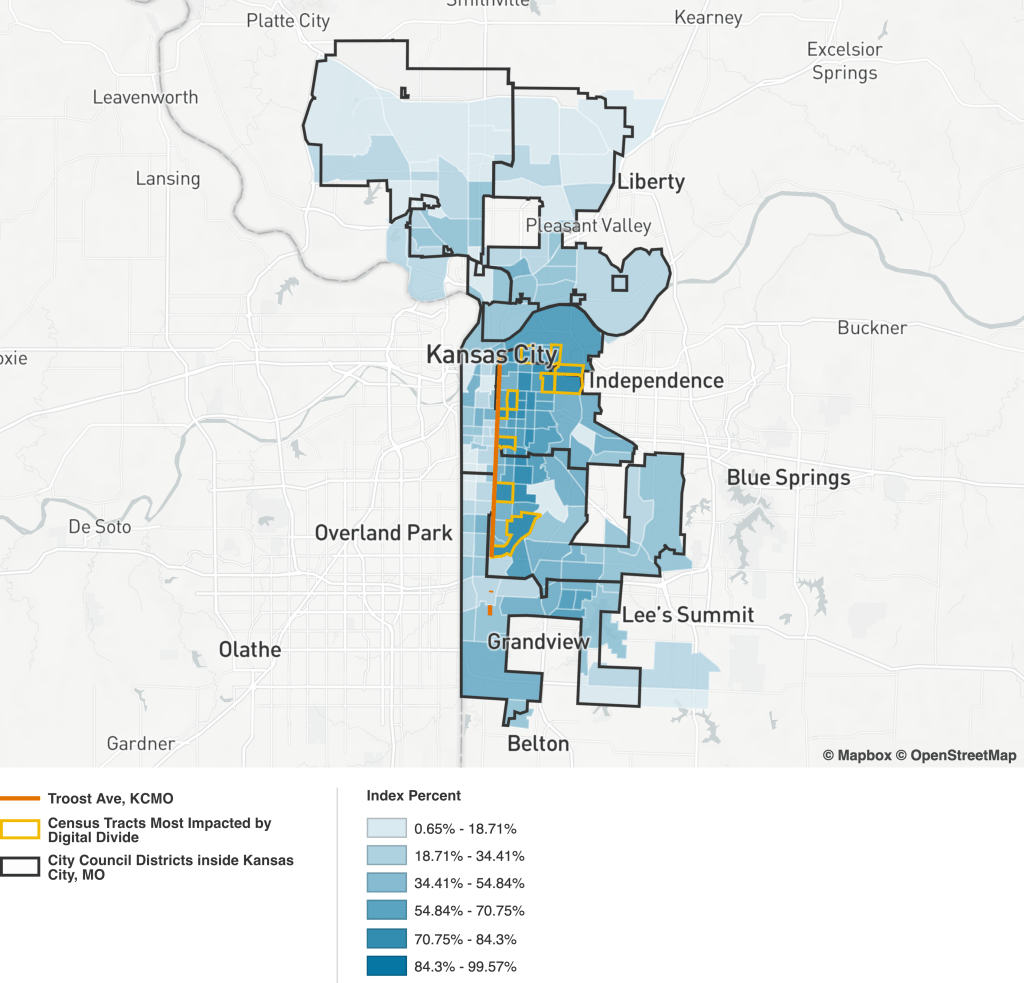
According to Census data collected by mySidewalk, the neighborhoods east of Troost Avenue and in the historic northeast are more likely to not have internet access or a computer at home.
Williams said planning and development is working with public engagement consultants to broaden outreach and engagement efforts.
“That’s understanding what different outreach techniques might be more effective in areas to make sure we’re hearing from everybody, because that is what needs to happen,” he said.
Putting together a plan in a pandemic
The four overarching themes in the playbook cover issues ranging from infrastructure to public transportation to affodability and presevation.
Putting together the comprehensive plan is split into three stages: inspire, engage and enact. Resident feedback and input is integral to the first two stages to set a framework for the KC Spirit Playbook.
But the pandemic impacted the planning and development department’s outreach efforts. Williams said the department wanted to meet people where they are: at school, sporting events and more.
We need to hear from everybody across the city.
Jeffrey Williams, City Planning and Development
The pandemic and public health orders meant scrapping those plans.
So the planning and development team turned to online outreach as the alternative, holding a virtual town hall last spring and using social media channels for engagement. Williams said the department also inserted blurbs into people’s water bills.
In lieu of not holding in-person events, the department has also connected with local organizations to hold presentations on the KC Spirit Playbook. For instance, the planning department has given presentations to groups that include BikeWalkKC, a local nonprofit advocating for safe streets, and the local Sierra Club chapter.
Challenges to online-only engagement
Michael Kelley, the policy director of BikeWalkKC and a member of the public engagement team with the KC Spirit Playbook, said online outreach made clear the digital divide in Kansas City, between those who have access to internet and those who do not.
Census data gathered by data organization mySidewalk found that 14% of households in Kansas City, Missouri, do not have internet access. Another 10% do not have a computer at home.
“There was only so much that could be done through things like Facebook and Twitter and LinkedIn,” Kelley said. “Trying to find additional ways to work with groups, like neighborhood associations, and using things like phone trees, I think became a little bit more of an innovative way to try to reach people that the city wants to hear from.”
Requiring a ZIP code to register can be a barrier for unhoused people who do not have stable housing.
“If they don’t have a ZIP code, then how are you able to get that input into the system?” Kelley said. “Because their voices still matter.”
Williams said the planning department has looked at registration alternatives that would not require a ZIP code.
With COVID-19 restrictions lifted in Kansas City as vaccinations continue, more residents are returning to public spaces. Williams said the planning department hopes to conduct more in-person engagement.
The city still has time on its side. The goal is to have city council adopt the plan in mid-2022.
“I think that the city is starting off from a good place,” Kelley said. “They’re asking the right questions, they’re talking to a lot of the right people, I think it’s just a matter of continuing to expand their efforts as much as they can, and as much as the pandemic allows them to do.”
How you can participate in planning
Information about the comprehensive plan update can be found at playbook.kcmo.gov. Residents can provide feedback to the city online by completing surveys and online question prompts.
To complete a survey or answer a prompt, you have to complete the online registration form on the KC Spirit Playbook website. The form will ask for your name, email address and your ZIP code.
Once you’re registered, you can complete surveys, post in message boards on topics from housing to transportation and use the mapping tool to pinpoint areas of Kansas City that need improvement.
If you’re part of a local organization and want your members to learn more about the KC Spirit Playbook, you can request a presentation for your group by emailing playbook@kcmo.org.
About the four comprehensive plan themes
Mobility: This covers public transportation, streets and, generally, how people get around Kansas City. Some of the feedback the city has received so far include a desire to improve the quality and efficiency of public transportation options, make it more available to neighborhoods that lack transit options, extending the streetcar line and better connecting sidewalks and trail systems.
Serviceability: This encompasses city infrastructure, city services and sustainable development. Resident feedback so far has highlighted concerns with incentives for developers.Other priorities include maintaining public infrastructure like streets and sidewalks, preparing the city to withstand the impacts of climate change and supporting small, start-up businesses in Kansas City.
Livability: This includes focusing on housing affordability, development and the health of neighborhoods in Kansas City. Resident feedback so far has highlighted the need to increase the availability and affordability of housing stock, promote policies that do not lead to the displacement of residents, preserve and update existing housing and clean up blighted neighborhoods.
Visibility: This includes taking care of public spaces, urban planning and preservation efforts.
