


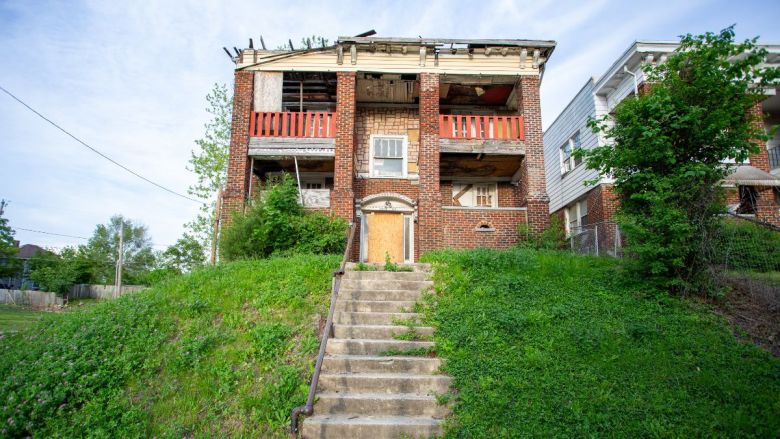
Take a walk through some of Kansas City’s oldest neighborhoods east of Troost Avenue or in the Historic Northeast, and you’ll see evidence of once-dense and vibrant neighborhoods.
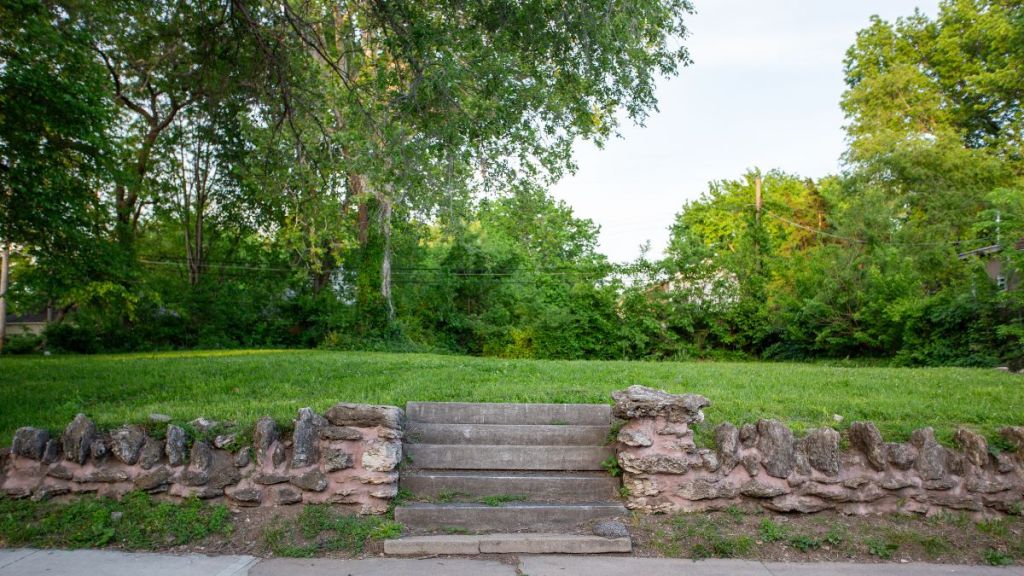
A handful of houses are surrounded by a sea of empty lawns or boarded-up buildings. You might see a basement or foundation poking out of overgrown grass, or some rubble left behind by a sloppy demolition. Or even the burned-out shell of a beautiful home.
Takeaways
- Some of Kansas City’s older neighborhoods east of Troost Avenue and in the Historic Northeast are filled with vacant buildings and empty lots. Neighbors say that it undermines a sense of community and public safety.
- Mayor Quinton Lucas has introduced three ordinances that aim to stop the practice of “demolition by neglect” and create a registry of owners of these vacant properties.
- Advocates say that while holding owners accountable is a good first step, the city can do more to support the owners with home repair assistance and legal aid, as well as more economic development opportunities.
It’s the result of decades of population decline in Kansas City’s urban core. Within its pre-1945 boundaries, stretching from the Missouri River south to 75th Street, Kansas City has lost more than half of its population over the past 70 years, according to an analysis by economic development researcher Dion Thompson-Davoli.
Mayor Quinton Lucas has introduced a trio of ordinances he hopes can both pump the brakes on the loss of historic buildings and start to replenish the population in those emptying neighborhoods.
Those three ordinances are now being considered by the City Council’s Neighborhood Planning and Development Committee.
- Ordinance 260399 would require property owners to “mothball” their vacant buildings — which means insulating them against weather and pests, as well as securing them to prevent unauthorized entry. If the owner doesn’t do it, the city may perform the work and file a lien on the property to recoup the cost.
- Ordinance 260400 would allow the city to intervene when a property owner wants to demolish a historic building, even when it has been designated a “dangerous building.”
- Ordinance 260401 would require owners of vacant property to register their properties with the city, provide emergency contact information and designate someone to personally inspect the property at least once a month.
Katherine Nace, the policy director for Lucas, presented the three ordinances to the Neighborhood Planning and Development Committee on May 5. She said the city is gathering feedback and that Lucas will likely introduce some revisions in the coming weeks.
What the ordinances do
The first two ordinances target a practice that city leaders and advocates call “demolition by neglect.”
That’s when a property owner is prohibited from bulldozing a historic building, so they neglect the property and purposefully let it deteriorate.
After a while, the property begins to crumble. The ceiling leaks, pests chew holes in the walls, and the structure becomes unstable. At that point, the property owner asks the city to list it as a “dangerous building,” which allows them to bulldoze it, regardless of its historic status.
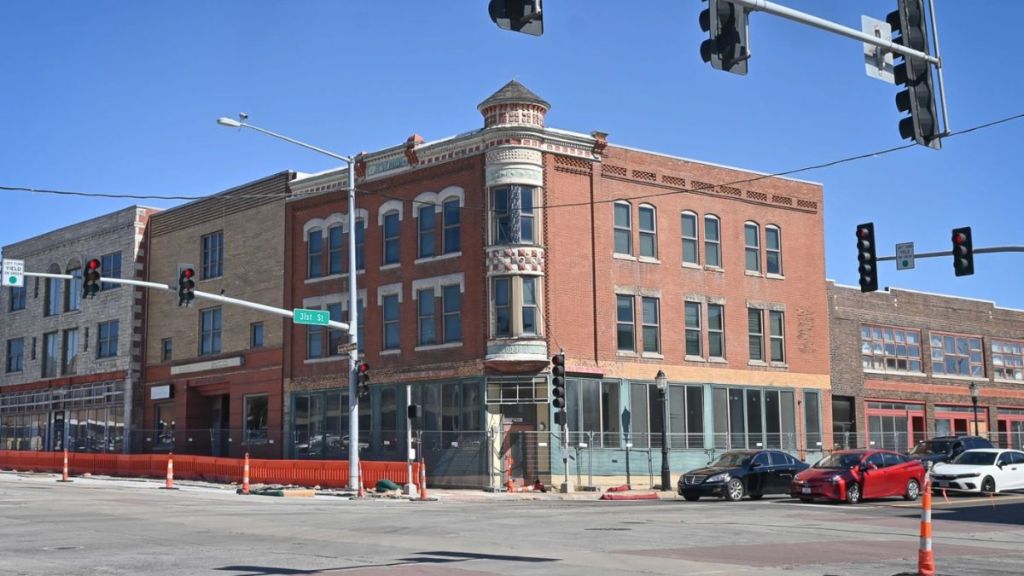
Advocates have pointed to the historic Jeserich building at 31st and Main streets, which was bulldozed in December, as an example of “demolition by neglect.” The developers had sought to have the building demolished in 2022, until the City Council nominated it for historic status. Three years later, it was designated a dangerous building, allowing the demolition to proceed.
The third proposed ordinance targets absentee owners of empty lots and buildings to hold them accountable for whatever blight the properties may cause.
Many of those absentee owners control property through limited liability companies, or LLCs, which can obscure the person who is responsible for the land. Some states, like Delaware, have sparse business record requirements that allow property owners to be effectively unreachable.
In the past, that has made it difficult for the city to prosecute code violations, like broken windows or overgrown weeds, or to address hazards before they cause fires.
The proposed ordinance would require anyone who owns a building or lot that has been vacant for longer than 90 days to register the property with their name, a phone number, a mailing address and a statement with their intent for the property. The mailing address cannot be a post office box.
If they fail to comply, the city could levy a fine that’s attached to the property as a lien. This means that even if the owner doesn’t pay it immediately, they will need to pay the fine before they can sell the property.
The issue of vacancy
Vacant lots dot the city.
The Valentine neighborhood, centered on Pennsylvania Avenue between 33rd and 39th streets, has been in conflict with Kansas City Life Insurance Co. for decades over its demolition of dozens of houses around its headquarters.
And the rest of midtown Kansas City has seen its population decline by 60% since 1950.
But the issue is particularly felt in some of Kansas City’s older neighborhoods east of Troost Avenue, an economic and racial dividing line created by racist housing policies.
Those neighborhoods, including Ivanhoe, Lykins, Santa Fe, Wendell Phillips and Washington Wheatley, experience some of the highest rates of vacancy in the city.
In Wendell Phillips and Washington Wheatley, located between 18th and 27th streets, the Paseo and Interstate 70, vacant properties make up about a quarter of the neighborhoods’ footprint — including more than 1,700 parcels in just 1.27 square miles.
And that hurts the quality of life for residents of these neighborhoods, said Alana Henry, the executive director of Ivanhoe Neighborhood Council.
Councilmember Melissa Patterson Hazley “said it well, I believe in her State of the 3rd District address,” Henry said. “When you have widespread vacancy, whether we’re talking about land or physical structures or both, it’s reflective of a dying community, and that feeling of stagnation or death can be absorbed by the inhabitants. And I think it leads to a disengagement from your community.”
If you’re living next door to an empty lot, there’s no one to ask for a cup of sugar. And if you live next door to an abandoned house, you may not feel safe letting your children play outside.
Councilmember Melissa Patterson Hazley, who represents the 3rd District at large, said that vacancy can have a snowballing effect.
“It starts to feel like you really can’t dig out of it,” she said, “because they can become so numerous they rival the number of healthy properties in the neighborhood. So it has this kind of daunting effect where you can give up, be overwhelmed.”
Patterson Hazley, who serves on the Neighborhood Planning and Development Committee, has been working closely with city staff on vacant land policy, including how to address contaminated land to bring development to these neighborhoods.
“The city having strategy and signaling to both neighborhoods and property owners that this is not something that we’re going to tolerate is a good message,” she said. “A lot of times that activism is left up to the people that actually live near it, and you shouldn’t have to live near it in order to want to solve the problem.”
Neglected neighborhoods seek attention
At the same time, Henry said that it may not be the best approach to simply punish the property owners who let lots and buildings sit vacant for years.
Some properties — particularly those empty houses owned by out-of-state LLCs — are speculative investments. In those cases, the owner may very well have the financial resources to repair the property or develop the land but is choosing not to.
But others might have inherited a dilapidated property from aunts and uncles or grandparents. It might be a financial resource problem for those owners, who might even be renters in another neighborhood because the house they own is uninhabitable. Levying a $500 fine for broken windows won’t get them any closer to having the money to actually fix the windows.
Or, sometimes the problem is with the legal title for the property, Henry said.
“Especially in the Black community, because there were so many restrictions to where folks could purchase land,” Henry said, “there was a lot of handing down of land and property without paperwork.”
And without that paperwork, the property owner can’t get permits for repairs or apply for home repair assistance programs that require a clean title.
“Your grandma had it, or your great-auntie had it, and she intended it for the nephew, and then the nephew gave it to the cousin,” she said, “and you can get to a situation where someone doesn’t have proper title and ownership to even do what they want to do.”
Henry has passed along some of this feedback to the mayor’s office and the members of the Neighborhood Planning and Development Committee, who she said have been “very gracious and open to comments and feedback.”
The committee voted to hold the three ordinances for two weeks before bringing them back on May 19. At that time, the committee members expect to see some amendments.
One of those amendments will likely create a carve-out for native plant gardens and urban agriculture, which under the current draft would be considered “unimproved land.”
Patterson Hazley said another important part of the conversation is economic development projects that can bring jobs and foot traffic back to these neighborhoods. She used the example of the midtown Costco and Home Depot deal, which generated excess revenue for home repair and street improvements along 31st Street.
“We don’t have productive (tax-increment financing) districts like that in the 3rd District because of the development pattern,” she said. “Arguably, we need the incentives the most, because we need to kick-start it.”
But most of the “marquee projects” of the past few years, she said, have been concentrated in the 4th District. That includes the KC Current development at the riverfront, the proposed Royals ballpark in Crown Center, the SomeraRoad redevelopment of the West Bottoms and the KC Streetcar.
“It’s difficult for neighborhoods to get attention,” Patterson Hazley said. “They’re waving their hands and we’re just not paying attention because our attention is elsewhere.”
Kansas City Councilmembers Melissa Patterson Hazley and Darrell Curls, who represent the 3rd and 5th Districts at large, respectively, will be hosting community listening sessions to discuss these three ordinances.
The 3rd District listening session will be at 6 p.m. Monday, May 11, at the Mary Williams-Neal Community Center, 3801 Emanuel Cleaver II Blvd.
The 5th District listening session will be at 6 p.m. Wednesday, May 13, at Hickman Mills Middle School, 9010A Old Santa Fe Rd.

