


Public Works & Safety Committee: Unified Government of Wyandotte County and Kansas City, Kansas (Feb. 17, 2026)
By Phoebe Roberts, Kansas City Documenter
These notes were produced through Kansas City Documenters, which trains and pays community members to take fact-checked notes at public meetings, strengthening transparency and accountability in local government.
Summary
- Transportation director Deasiray Bush, with assistance from deputy budget director Michael Peterson, identified existing funding for RideKC operating and capital costs, including IRIS zone maintenance and World Cup-related transit expansion.
- Sarah Shafer of Public Works said the county’s Vision Zero project is moving into implementation and will identify the top 20 priority locations as part of the final Safe Streets for All (SS4A) federal grant phase.
- An ordinance presented by business license administrator Jason Ulrich was approved, exempting vendors who participate in five or fewer special events from licensing and fees, while still requiring organizers to report all vendors for tracking.
Notes
Meeting Attendance
- Andrew Tyler Kump, committee chair/commissioner
- Philip J. Lopez, commissioner
- Evelyn Hill, commissioner
- Christian Ramirez, commissioner
- William (Bill) J. Burns Jr., commissioner
4.1: Resolution: Agreement with Downtown Shareholders for additional police patrol
- Casey Meyer, the UG’s deputy chief counsel, presented this item.
- Meyer said a similar agreement had been approved for the prior six months and was successful. The parties extended the agreement for one year with slightly different conditions and the option to renew it annually for four more years.
- Kent Anderson, a deputy chief with the Kansas City, Kansas, Police Department, was present to answer questions.
- One KCKPD officer will patrol from noon to 8 p.m. Monday through Friday. The officer assigned to Minnesota Avenue will assist as needed.
- The contract amount is about $83,900, Anderson said. Meyer said that was the average annual salary for an officer.
- Lopez asked about the possibility of invoicing at the contractor rate. Anderson said that there were no plans to do that and that the goal of the contract was not to make money but to provide a service.
- There was no public comment on the resolution.
- It was recommended for approval.
4.2: Resolution: 2026 Violence Against Women Act application for Kansas City, Kansas, Police Department Victim Services Unit
- Wendy Medina, program supervisor of the Victim Services Unit, presented this item. She was assisted by program coordinator Ramat Abanishe and a captain with the Kansas City, Kansas, Police Department’s Special Investigations Division.
- The resolution is for application for federal matching grant funding to continue the program.
- The captain explained the process of lethality assessment, immediate intervention and follow-up calls, which are all part of the program.
- Abanishe described the follow-up and referral process and statistics about victims served. In 2025, 412 victims were served.
- Burns asked whether there had been any improvement in the rate of protection from abuse filings. He estimated that while he was a district court administrator, about 65% of victims never filed Protection from Abuse orders. The captain said that officers were trained to avoid discouraging victims from completing the process and that homicides related to domestic violence appeared to have decreased since the pilot (13 homicides in the year of the pilot and one this year).
- Lopez asked about the grant matching number to clarify the proportions. The federal government matches 75% of the total program cost of $155,000, and the remaining amount is part of the two officers’ salaries who work on the program.
- There was no public comment on the resolution.
- It was recommended for approval.
4.3: Resolution: Fiscal Year 2027 KDOC Juvenile Services comp grant application
- Philip Lockman presented the resolutions, which he said were very similar.
- These are ongoing allocations provided by the state of Kansas, with no matching required.
- There was no public comment on the resolutions.
- The resolutions were recommended for approval.
4.5: Ordinance: Amending the special event code of ordinance regarding small vendor fees
- Business license administrator Jason Ulrich presented the ordinance. He was assisted by neighborhood resource coordinator Rachel Miskec.
- Ulrich said that the proposed ordinance was in response to concerns from promoters and organizers that vendors were discouraged and disengaged by the permit application process and that the ordinance was intended to simplify the special event process.
- Vendors participating in five or fewer events are not required to apply for a license, but the event coordinator provides a vendor list to the Business License Department.
- Burns expressed concern about unlicensed vendors who were not part of an event but appeared without warning on the street to sell things and caused traffic safety problems. He recommended citing and fining unlicensed vendors. Nisky said she also received those complaints but clarified that those people would not be covered by the proposed ordinance.
- There was no public comment on the resolution.
- It was recommended for approval.
4.6: Presentation: Federal Transit Administration (FTA) 5307/Congestion Mitigation and Air Quality (CMAQ) funding update and World Cup preparation
- Director of transportation Deasiray Bush presented. She was assisted by deputy budget director Michael Peterson.
- Fixed bus routes continue to increase in popularity, especially the route between the Legends and downtown Kansas City, Missouri (101 State).
- RideKC Freedom ridership decreased in 2024 but otherwise steadily increased year to year. RideKC Freedom is door-to-door paratransit for disabled people.
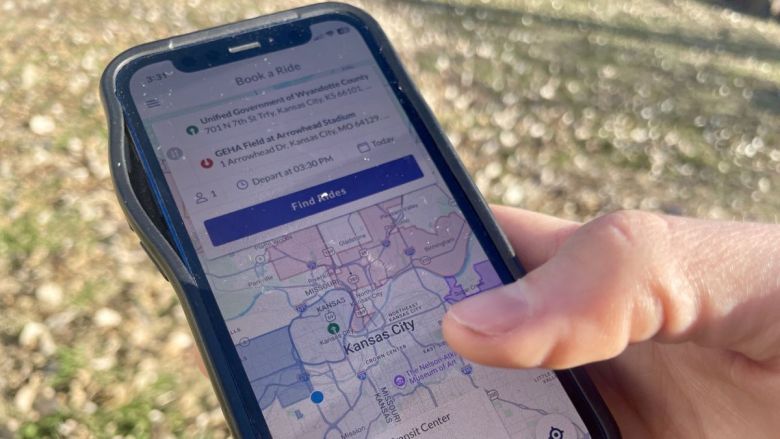
- Microtransit has been used since 2020, though it recently became IRIS. Within IRIS zones, riders can pay a $3 fare for an Uber-like service. IRIS popularity increased in 2025.
- Additional supported programs are RideKC Bikes and non-emergency medical transportation.
- Operating needs were identified for IRIS because KDOT funds will run out sometime in early March. Additional funds were identified to cover the amount needed in the form of CMAQ Operating Microtransit Funding and Urbanized Formula Funds 5307 funding.
- Capital needs were identified for replacement of vehicles that were at the end of their usable lifespans. Additional funds from the same sources, Urbanized Formula Funds 5307 funding and CMAQ capital funding, were identified to cover these needs.
- World Cup projects include expanding IRIS countywide, as well as point-to-point on the Missouri side, weekend availability, the Legends loop pilot project to connect hotels and entertainment venues, wayfinding (signs along the routes), frequency increase to 20 minutes for fixed routes and extension to weekends until 2 a.m.
- KDOT World Cup allocation along with matching funds from the UG City General Fund budget, which is covered by unexpected COVID funding (ARPA).
- The presentation was informational only, so no vote occurred.
4.7: Presentation: Safe Streets for All Vision Zero Action Plan
- Sarah Shafer of Public Works presented.
- Vision Zero’s goal is to achieve no traffic fatalities.
- The Vision Zero project is approaching the implementation phase. Funding is supported by a U.S. Department of Transportation grant and a Kansas Department of Transportation match.
- Previous project phases involved reviewing local, state and federal crash reports and getting public engagement. Survey participants were given a map to put pins on and describe problems they’d had at certain intersections, including accidents, near misses or something they had witnessed. The project also partnered with organizations for deaf or hard of hearing individuals, The Whole Person and other nonprofits.
- Shafer said that funding was limited and that therefore, along with the stated goals, it was important to be competitive and ensure eligibility for the funding.
- Based on research, there will be a list of 20 locations to target first.
- Municipalities assess these further to ensure projects are completed in a timely manner.
- Coordination may be needed when multiple jurisdictions are affected.
- The intent is to build a plan — after documentation and implementation information are finalized — that qualifies for USDOT’s SS4A Implementation Grant funding.
- Up to five locations would be selected.
- Adoption by the commission binds none of the governments involved to anything but allows them to compete for grant funds.
- The presentation was informational only, so no vote occurred.
Observations & Follow-Up Questions
- What were the original conditions for the officer contract mentioned in 4.1, and what changed? Was it the total number of hours or just which hours, or particulars like what should be done if the officer isn’t available, or something else?
- Was the lack of public comment because these issues were known but generally uncontroversial, or was it because citizens weren’t aware of the meeting or which items would be discussed?
- For the grant applications, what follow-up steps are taken after a committee approves the application? Is the funding available or is there a further application process to the entities that dispense the grant money?
Read more about this meeting and see all Kansas City Documenters notes here.

