Dr. Stefanie Ellison often gives her patients a “prescription” for the food they should be eating.
Fruits, vegetables and other healthy unprocessed food, she tells them, are among the most effective treatments for many chronic illnesses, like diabetes and high blood pressure.
Takeaways
- “Food is medicine” programs provide patients with access to free healthy food and coaching about nutrition and health.
- Doctors in Kansas City are referring patients with diabetes and other chronic diseases to food is medicine pilot programs.
- Even proponents of the approach in health care worry about how participants will fare once the program ends if they can’t afford healthy food.
But Ellison, an emergency medicine doctor at University Health, knows her prescription often will come to nothing.
In an era of growing food insecurity, fueled by declining government assistance and expanding food deserts, many of her patients don’t have access to the food she tells them they need.
“When I prescribe a medicine,” she said, “I know Walgreens is going to have that. When I write down the meal plan that they should have, there are many questions. Can they afford it? And where can I send them to find it?”
In recent years, a trend in medicine aims to address that problem by giving patients direct access to the food they need.
“Food is medicine” programs, which are being studied around the country as a potential solution to climbing chronic disease rates, have found their way into doctors’ offices and community health clinics across Kansas City. An estimated 90% of the country’s $4.5 trillion health care tab goes toward treating chronic conditions, many of which are tied to diet.
Advocates backing food is medicine programs say data show they are bringing results.
KC Fresh RX, a pilot program administered by the Mid-America Regional Council, for example, reported that 60% of 43 participants had reduced A1C levels, an indicator of diabetes, by the end of a six-month course offered in 2024, while 45% of 49 participants saw lower systolic blood pressure.
For Food 4 Life, a pilot program offered to patients at Vibrant Health, nine out of 12 participants in 2024 left with lower A1C levels.
“We know that this works,” said Kelsey Gardiner, an assistant professor at the University of Missouri-Kansas City’s School of Nursing and Health Studies, who is studying University Health’s Food Farmacy program along with six other food is medicine efforts across the metro.
Researchers are still determining details of food is medicine programs, such as the ideal duration and the best way to connect participants to food. But the research is overwhelmingly positive, said Gardiner, who studies how food insecurity affects health.
“We know that healthy food is a direct contributor to positive outcomes,” she said. “That shouldn’t be a mystery to anyone at this point.”
How the programs work
Every food is medicine program is set up a little bit differently, but all of them involve helping patients with chronic health conditions — often diabetes — get access to healthy food.
Patients need a doctor’s referral to participate, and they must meet various requirements established by each program, such as having a certain health conditions or a lack of access to food.
To participate in Food 4 Life, the program offered through Vibrant Health with Food Connect and The Kansas City Food Hub, participants must have a diabetes diagnosis. Through the six-month program, they receive a weekly box of fresh produce, eggs and other items sourced from local farms and delivered to their homes.
KC Fresh RX, the program the Mid-America Regional Council administers, provides patients referred from four different doctors’ offices, with a spending card they can use to buy fresh produce.
In both cases, the financial barrier that often prevents people from buying produce goes away. And both programs try to educate participants about how to prepare and store food, and about how nutrition affects their health.
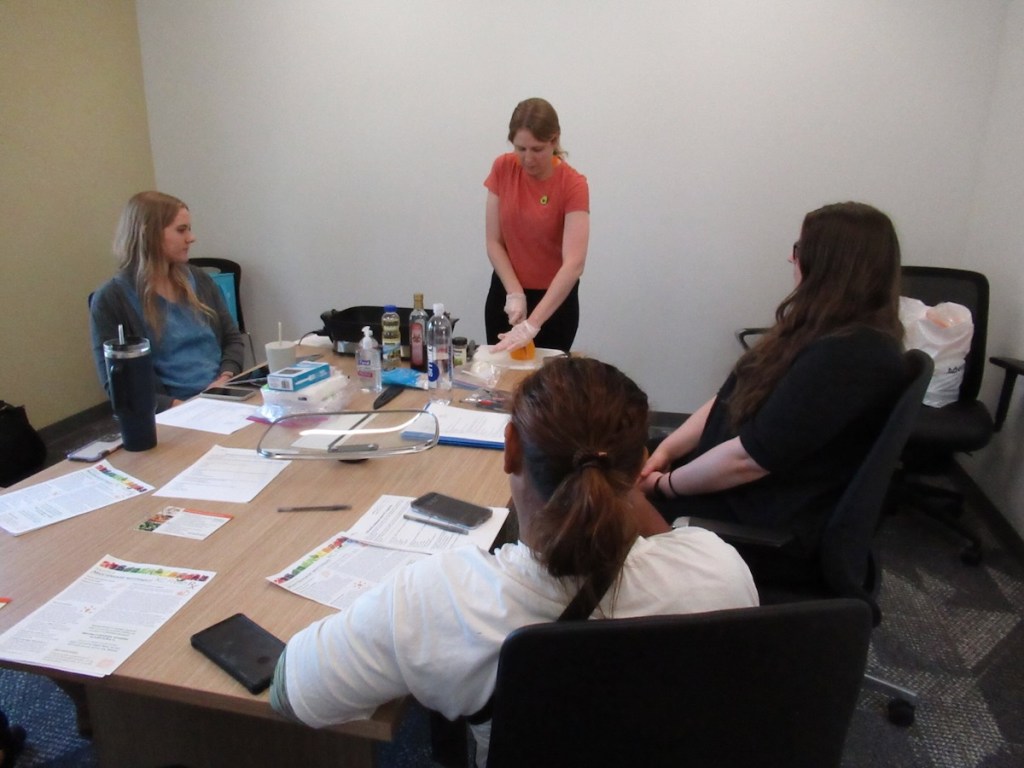
“We explain why you want to get five servings of fruits and vegetables a day and how you can look at it,” said Alissa Cunningham, a registered dietitian who helps oversee KC Fresh RX. “It doesn’t need to be intimidating.”
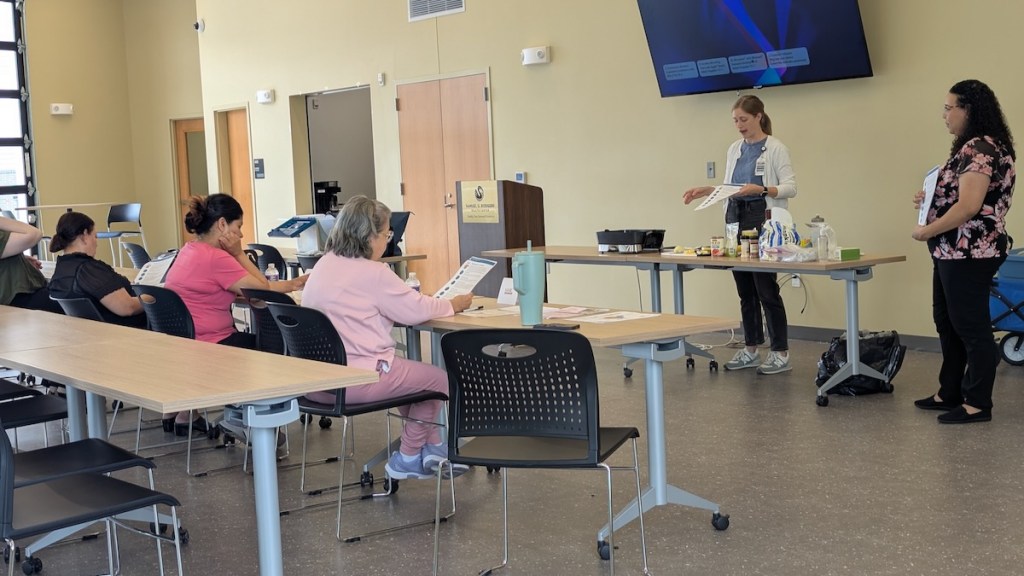
KC Fresh RX, a program administered by the Mid-America Regional Council, offers its education programs in person at several locations around the city or online. (Provided photo)
Sometimes participants aren’t familiar with certain vegetables, Cunningham said, so they don’t know how to cook them. They may have immigrated from a different country where other types of food are grown and sold. Or they may have grown up eating only a small variety of food.
The point of the classes, which are optional, Cunningham said, is to help participants be more comfortable cooking for themselves.
“We want them to be less intimidated, to go out to the store and try something,” she said.
Support and education
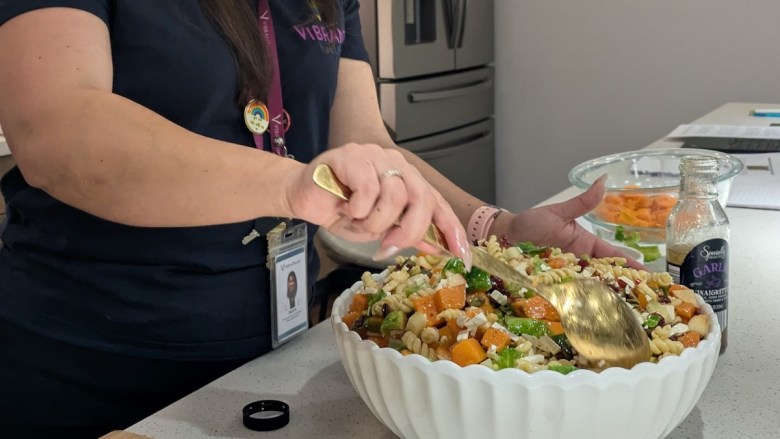
Talia Heredia recently taught participants in Food 4 Life, Vibrant’s program, to make harvest salad with the root vegetables, apples, nuts and dried cranberries that arrived in their weekly food delivery.
“It was the first time for some of those patients who had never tried something similar,” said Heredia, a community health worker with Vibrant Health.
Next time, participants will come together to learn from Vibrant’s behavioral health director about dealing with mental health challenges.
“We give them a lot of different aspects for how to deal with diabetes,” she said. “They’re not only getting the food, but we also provide different things that can better their health. One of them is stress control.”
Heredia meets with participants twice a month for class, but she also works one-on-one to coach them and help them meet personal objectives they establish for themselves at the start of the program. It could be cutting soda out of their diet or adding physical activity to their days.
“Consistency is one of the main focuses,” Heredia said. “It’s hard to maintain. So we try to keep it simple. … We don’t want to overwhelm them.”
And Heredia tries to help them understand their disease.
“When they have a diagnosis like this,” she said, “they feel lonely.”
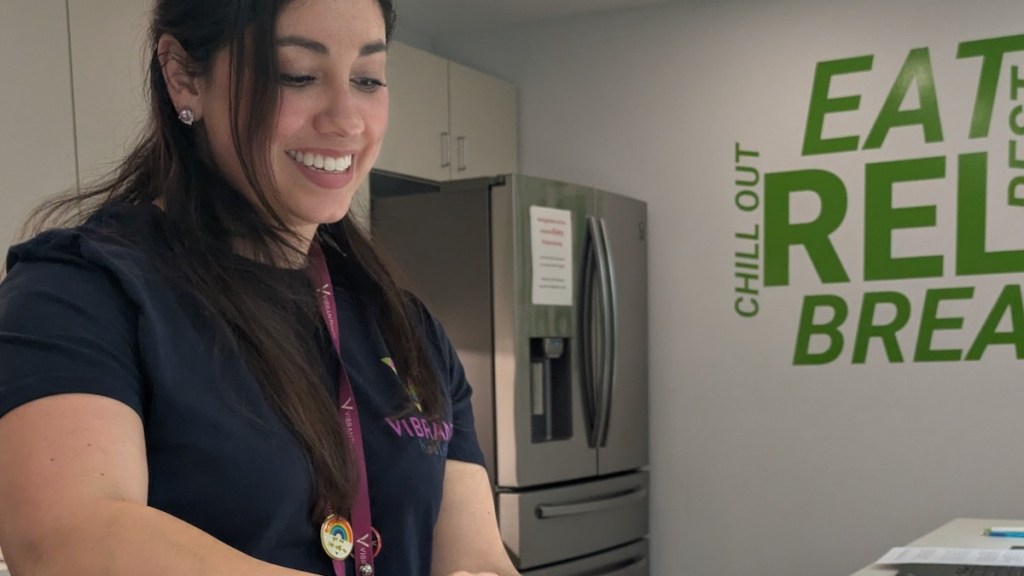
Heredia remembers one participant who was having trouble maintaining good eating habits because her kids were picky eaters. She didn’t have time to cook her own food and theirs, so she cooked what they liked and ate it, too, even though that made her diabetes worse.
“We ended up inviting her whole family to the program,” Heredia said. “We talked to the kids and tried to get them to try new things.”
Eventually, the kids started eating some of the food coming through the program. The result was a healthier diet for the whole family.
Success in a short window
Health care experts have shown growing interest in food is medicine programs for several years, driven in part by a shift in how providers are paid for care. Rather than fee-for-service reimbursement, payment models shifted toward value-based payments, which emphasize health outcomes.
The Affordable Care Act, passed in 2010, also supported food is medicine approaches by requiring many health systems to conduct community needs assessments, which brought attention to social needs like food insecurity.
The Biden administration also emphasized food is medicine approaches through an initiative on nutrition and health, and it encouraged funding to study them. The American Heart Association and the American College of Cardiology have focused on food is medicine as a way to help prevent heart disease. And medical schools, including the UMKC School of Medicine, are starting to add the topic to their curriculum.
Ellison, a professor and associate dean at UMKC’s medical school, said students are learning how they can help patients understand the links between diet and health.
“We are building a scientific and evidence-based curriculum in food is medicine and so it’s individualized,” she said. “What is my ideal amount of protein versus yours?”
Incorporating it in the curriculum involves teaching students, but also making sure the school’s instructors are familiar with how nutrition and health intersect, which will spill into exam rooms, she said.
Sunflower Foundation in Topeka has been funding food is medicine initiatives across the state since 2022. So far, 500 people have gone through the programs, which last between three and six months.
For the most part, participants’ health measures improve, said Brandon Skidmore, the foundation’s president and CEO.
“When you look at the evidence, food is medicine has shown a lot of success in a short window of time,” he said. “We’re not talking about an intervention that takes four years. This can show promise for a patient in three to six months.”
The next step, he said, is finding a way to sustain participants’ access to healthy food once they leave the programs.
To that end, Sunflower Foundation has invested in helping food banks and food pantries across the state so they can afford to continue supplying fresh food to people in need. They’re also supporting programs that help people who qualify for the Supplemental Nutrition Access Program (SNAP) or other government-supported assistance programs get access.
“The goal is to blend and braid all that is available at the state and community level,” he said.
But he acknowledged that government food aid has been a weak link in the support system, which means food insecurity is growing.
In November, SNAP aid was suspended amid a prolonged federal government shutdown. And new work requirements added to the program under the Trump administration are expected to lead to more disruption in coming months and years.
Insurance coverage
There is growing interest in getting insurance coverage for food is medicine programs — both through government programs like Medicare and Medicaid and through private carriers. That would mean a prescription for healthy food that would be paid for by your insurance.
“My glass-half-full brain wants to believe it’s closer rather than further away,” Skidmore said. “We’re not trying to prove that food is good for people. We’re trying to figure out how it interacts with a system it wasn’t really built for.”
Sixteen states currently have waivers for food is medicine programs through the Centers for Medicare and Medicaid Services. That means some state Medicaid programs are paying for groceries and medically tailored meals for people with certain chronic conditions.
Proponents of the program are hopeful that the Trump administration’s “Make America Healthy Again” campaign will embrace food is medicine and make it more widely available.
“We’re hoping that, because of the MAHA policies, that they will be really on board,” said Donna Martin, project director for KC Fresh Rx.
But that could be problematic for an administration that has also worked to pass major cuts to federal Medicaid spending, added obstacles to people getting food assistance and cut federal food aid.
KC Fresh RX, which got funding through a three-year federal grant from the U.S. Department of Agriculture that just expired, is waiting to see if the grant program will be offered again in 2026. It was not available this year.
Other obstacles
Despite the abundant number of food is medicine pilot programs and work to study health results, not everyone is convinced of their value. In an article published two years ago in JAMA, researchers from Johns Hopkins University and the University of Pennsylvania argued that the programs are unlikely to make a meaningful difference in efforts to fight chronic disease.
Rather than expecting patients to take on the burden of adjusting their eating habits, a task often hindered by the high cost or lack of availability of healthy food, public health officials need to work to strengthen existing nutrition programs, such as SNAP and school lunch programs, the article’s authors argued.
They also said that shifting responsibility to patients could absolve food manufacturers, who profit off of highly processed, unhealthy food, of their role in a growing health crisis.
“It took decades for researchers and advocates to educate the public and policy makers about the role of our toxic food environment in driving inequity in chronic diseases,” the article said. “The food is medicine movement risks undoing this work by casting a social problem as a medical one and further shifting public discourse away from commercial interests as major drivers of disease.”
And even the biggest proponents of food is medicine programs acknowledge that long-term food access could be an issue that will hamper ongoing health benefits once someone leaves a cohort.
Although some allow people to reenroll, most programs only last for six months to a year. Regardless, access to healthy food goes away when the program is over. That could prove to be a barrier for people who live in food deserts or simply can’t afford the high price of fruits and vegetables.
Heredia said she does worry about her participants and what they will do when the food deliveries stop.
She continues coaching participants who want the extra support. But she has seen backsliding. Losing the free food and the support from peers in the program could both be factors. But Heredia said she is confident that people can get back on the right track.
“They know what they need to do,” she said. “At the end, they do feel like they have control of their health. And they can make those choices. I think that we are making a difference.”